UK road signs explained
Road and traffic signs is the largest single category in the theory test question bank. Once you can read a sign by its shape and colour you can work out most answers even when you have never seen that exact sign before. Each page below explains what the sign means, what you have to do at the wheel, and how examiners test it.
Browse signs by category
We group signs the same way the DVSA and the Highway Code do, so you can revise one category at a time.
Warning signs
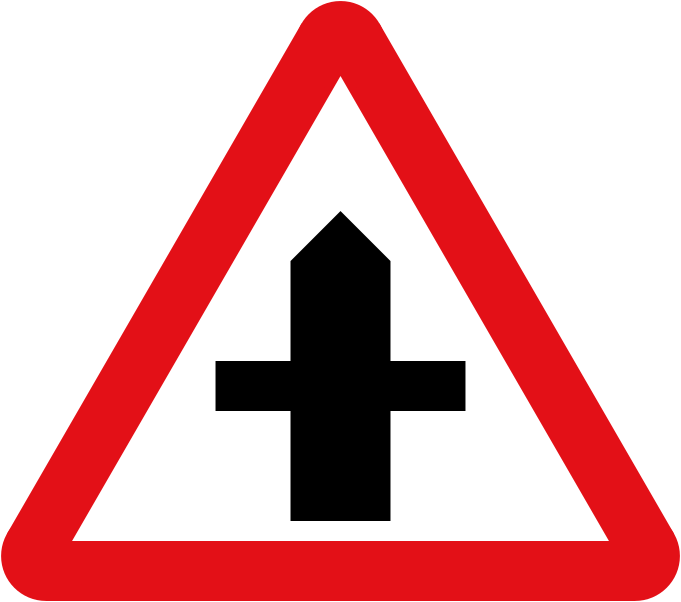
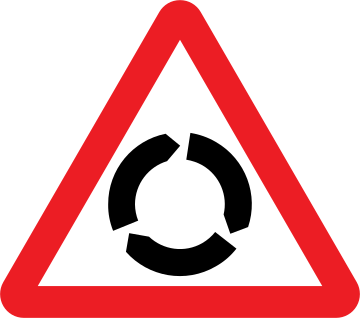
Triangular signs with a red border that tell you what is coming up on the road ahead.
2 signs coveredRegulatory signs
Circular signs that give orders. Red rings prohibit; blue circles compel.
4 signs coveredSpeed limit signs
Circular signs that set the maximum legal speed for the road.
2 signs coveredRoad markings
Painted lines, symbols and coloured surfaces that work with signs to control traffic.
0 signs coveredMotorway signs, signals and road markings
Blue-background signs and signals used on motorways and high-speed dual carriageways.
0 signs coveredInformation signs
Rectangular signs that tell you about the road layout, services and facilities.
2 signs coveredTraffic signals
Light signals at junctions, crossings and roadworks that tell you when to stop and go.
0 signs coveredLevel crossing signs and signals
Signs, signals and road markings that warn of and protect railway crossings.
0 signs coveredSigns for road works and temporary situations
Temporary signs and cones that change the normal rules while work is carried out.
0 signs coveredOn-street parking control
Signs and road markings that show where and when you can and cannot park.
0 signs coveredPedestrian, cycle and equestrian crossings
Signs, signals and markings for zebra, pelican, puffin, toucan and equestrian crossings.
0 signs coveredPedestrian zone signs
Signs that restrict or control vehicle access in pedestrian-only areas.
0 signs coveredBus and cycle signs
Signs that mark bus lanes, cycle lanes and shared-use routes.
0 signs coveredDirection signs on all-purpose roads
Green, white and brown signs that point you towards destinations and junctions.
0 signs coveredDirection signs for cyclists and pedestrians
Blue and white signs that guide cyclists and pedestrians along routes and crossings.
0 signs coveredLow bridge signs
Signs and markings that warn of height restrictions ahead.
0 signs coveredTram signs
Signs, signals and road markings that warn of and control tram routes.
0 signs coveredTidal flow lane control
Signals and markings that change which lanes carry traffic at different times of day.
0 signs coveredTraffic calming
Signs and road features that slow traffic in residential and village areas.
0 signs coveredThe signing system
How UK traffic signs are organised by shape, colour and purpose.
0 signs coveredMiscellaneous signs
Signs that do not fit the main categories but still appear in the theory test.
0 signs coveredWarning signs
View allRed-bordered triangle. Heavy exam focus.
Regulatory signs
View allCircle. Heavy exam focus.
Stop sign
The only sign in the UK with eight sides, and the only one where slowing down isn't good enough.
Give way sign
An inverted triangle that asks for judgement, not a guaranteed stop, and that's exactly why it trips learners up.
No entry sign
A solid red circle with a white bar, and one of the few signs where breaking the rule can quickly become dangerous, not just illegal.
No waiting sign
A red X on a blue circle that stops learners more in the DVSA test than any parking-related question deserves to.
Speed limit signs
View allCircle with red border. Heavy exam focus.
National speed limit sign
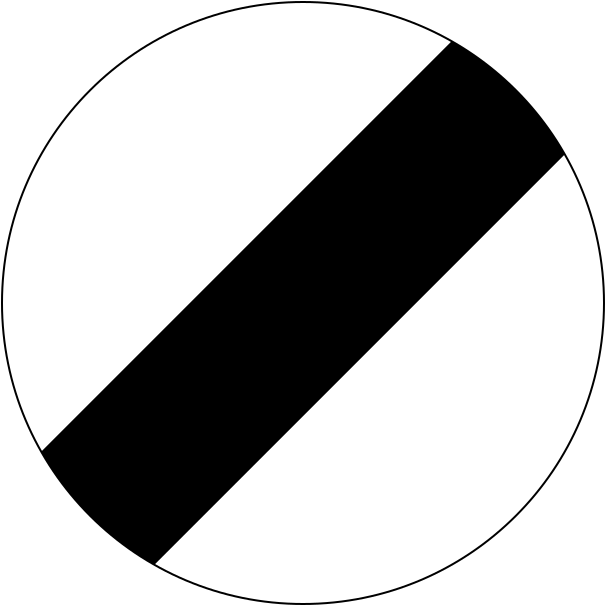
A plain white circle with a black diagonal stripe that hides one of the most misunderstood rules in the whole Highway Code.
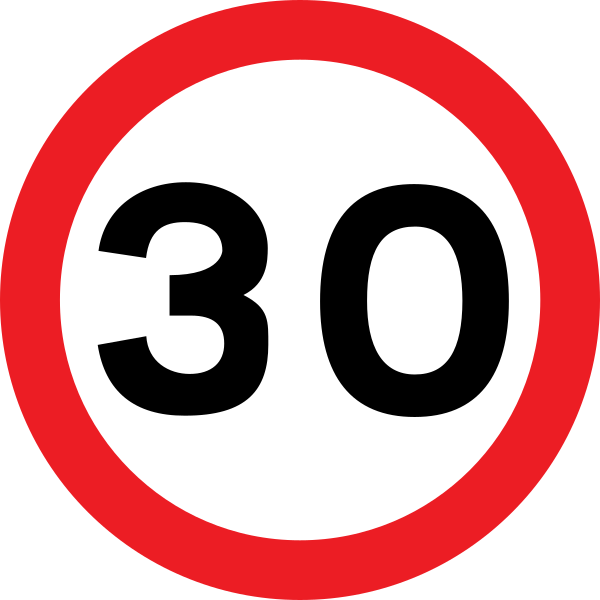
30 mph speed limit sign
The most common speed limit in built-up Britain, and one the theory test expects you to recognise even without a sign present.
Information signs
View allRectangle. Medium exam focus.