
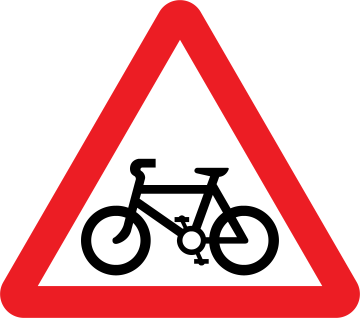
This red-bordered triangle shows a bicycle and warns that a cycle route joins or crosses the road ahead. It is used where a traffic-free path meets the carriageway.
Riders may emerge at speed and at an unusual angle, which is why the warning exists.
What this sign means
Cyclists will be joining or crossing your road, often from a path that is set back from the carriageway and partly hidden.
A plate below may show the distance to the crossing point.
What to do when you see it
Slow down and search the verges and path entrances.
- Reduce speed on the approach.
- Look for riders behind hedges, fences and parked vehicles.
- Be prepared to give way at a marked cycle crossing.
- Leave plenty of room when passing riders who have joined.
How this sign is tested
Questions ask what the triangle warns of, distinguishing it from the blue circular cycle route sign that gives an instruction.
Shape and colour are the key to the answer.
Common mistakes
Mixing up the triangular warning with the blue circular cycle track sign.
Maintaining speed because no cyclist is currently visible.
Test yourself on this one
Road and traffic signs is the biggest category in the question bank with 102 questions, and signs turn up inside other categories too. Work through them free, no sign-up needed.
Practise road sign questionsFrequently asked questions
Do cyclists have priority at a cycle crossing?
Where the crossing is marked with give way lines against the road, drivers must give way.
How is this different from the blue cycle sign?
The triangle warns of cyclists. The blue circle instructs which route cyclists must use.
Where do cycle routes usually join?
At the ends of traffic-free paths, park entrances and towpath links.