
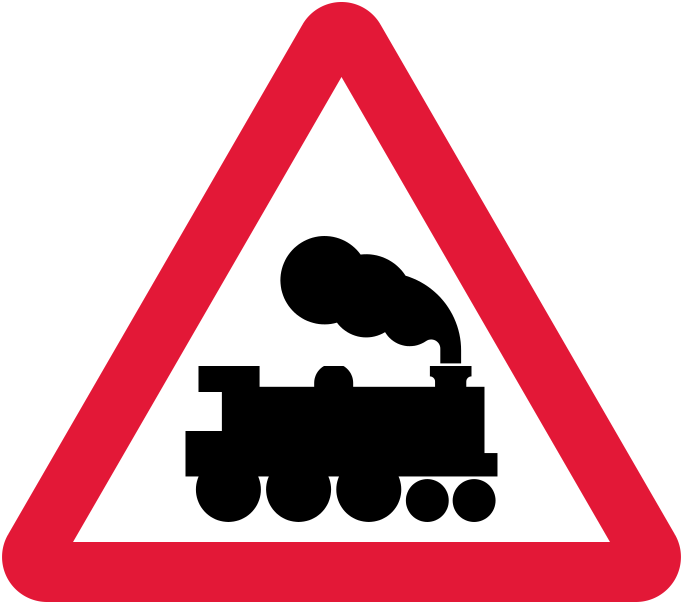
This warning triangle carries a locomotive symbol and tells you that the railway crossing ahead has no barriers or gates at all. Nothing physical will stop you driving onto the line.
Open crossings of this kind are usually found on quiet rural roads, and the responsibility for judging whether it is safe sits entirely with the driver.
What this sign means
The locomotive symbol is the standard British marker for a railway crossing with no barrier. Some open crossings have flashing red lights, others rely only on a give way sign and clear sight lines along the track.
Where lights are fitted they behave exactly as they do at a barrier crossing, with a steady amber followed by twin flashing reds.
What to do when you see it
Reduce speed well before the crossing and prepare to give way to trains at all times.
- Slow right down and look both ways along the track.
- Obey any give way markings painted on the road.
- Cross only when you can see the line is clear in both directions.
- Check the far side is clear before you move onto the rails.
- Cross without stopping and do not change gear on the crossing.
How this sign is tested
Questions in the road and traffic signs category ask you to identify the sign and to say what precaution matters most, which is looking along the line in both directions before you commit.
Hazard perception clips also feature open crossings, rewarding candidates who slow early rather than braking hard at the rails.
Common mistakes
Assuming that a crossing with no barrier means a disused line. Many open crossings carry regular fast services.
Stopping on the crossing to look for a train instead of assessing the line on the approach.
Test yourself on this one
Road and traffic signs is the biggest category in the question bank with 102 questions, and signs turn up inside other categories too. Work through them free, no sign-up needed.
Practise road sign questionsFrequently asked questions
Does an open crossing always have lights?
No. Some have flashing red lights, others rely only on give way markings and clear sight lines.
How fast should I cross?
Cross steadily in a gear that will not stall. Do not race across and do not crawl.
Who has priority at an open crossing?
Trains always have priority. You must give way.