
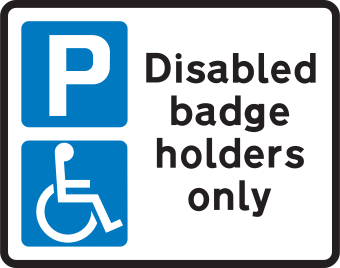
Bays reserved for Blue Badge holders are marked with the wheelchair symbol on the road and on an upright sign. They are wider than standard bays to allow room for a wheelchair or transfer.
Misuse of these bays is enforced and the theory test expects you to know who may park in them.
What this sign means
The bay may only be used by a vehicle displaying a valid Blue Badge, with the badge shown clearly on the dashboard.
On-street bays may have a maximum stay shown on the plate.
What to do when you see it
Leave the bay free unless you hold a valid badge.
- Display the badge face up with the clock set where required.
- Do not use the bay to wait for a passenger who holds a badge elsewhere.
- Keep the hatched area beside the bay clear.
- Observe any maximum stay on the plate.
How this sign is tested
Questions ask who may use the bay and why the bays are made wider than normal.
The extra width allows a wheelchair user to get in and out beside the vehicle.
Common mistakes
Parking in the hatched access area beside a disabled bay.
Using the bay for a quick errand because no badge holder is currently waiting.
Test yourself on this one
Road and traffic signs is the biggest category in the question bank with 102 questions, and signs turn up inside other categories too. Work through them free, no sign-up needed.
Practise road sign questionsFrequently asked questions
Who can park in a disabled bay?
Only vehicles displaying a valid Blue Badge for the person travelling.
Why are the bays wider?
To give room for a wheelchair or walking aid beside the vehicle.
Is there a time limit?
On-street bays may have one shown on the plate. Off-street car parks set their own rules.