
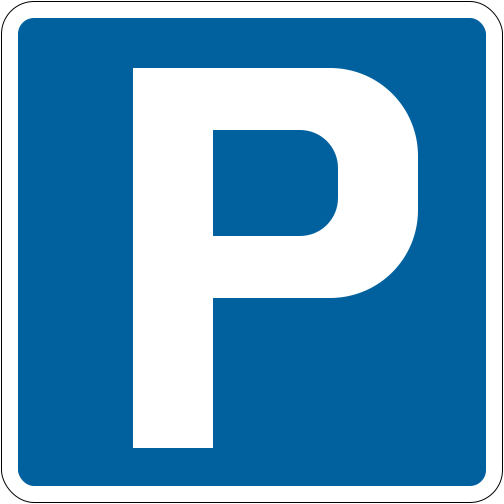
The white letter P on a blue background marks a place where parking is permitted. It is used for car parks, lay-bys and on-street bays.
The sign on its own is permissive, and any conditions such as maximum stay, charges or permit requirements are printed underneath.
What this sign means
Parking is allowed at this location. Blue with white lettering is the standard colour scheme for information signs of this kind.
The plate may restrict use to certain vehicle types, times, or ticket holders.
What to do when you see it
Read the whole sign, not just the letter P.
- Check any maximum stay and whether return within a period is banned.
- Buy and display a ticket where required.
- Park fully inside the marked bay.
- Do not use disabled or parent bays unless you qualify.
How this sign is tested
Questions test recognition of the blue P as information rather than an order, and ask what the plate beneath it does.
It is also used to contrast information signs with the circular signs that give orders.
Common mistakes
Reading the P and ignoring the conditions plate, which is where the enforceable detail sits.
Assuming a parking sign means free parking.
Test yourself on this one
Road and traffic signs is the biggest category in the question bank with 102 questions, and signs turn up inside other categories too. Work through them free, no sign-up needed.
Practise road sign questionsFrequently asked questions
Is a blue P sign an order or information?
It is an information sign. Blue rectangles inform, blue circles give orders.
Does the P sign mean parking is free?
No. Charges and time limits appear on the plate below.
Can I park across two bays?
No. You must park within a single marked bay.