
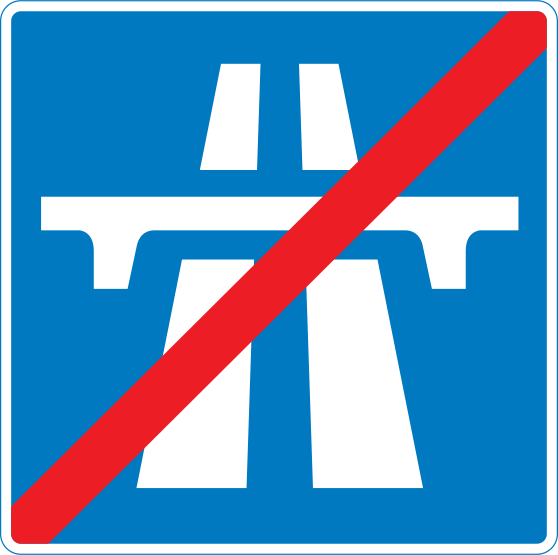
A blue rectangular sign showing the motorway bridge symbol crossed through with a diagonal red bar marks the end of a motorway.
Beyond this point, special motorway rules cease, and standard single or dual carriageway rules take effect.
What this sign means
This sign informs drivers that they are exiting the motorway network.
Motorway rules no longer apply, and you will likely join an A-road, local dual carriageway, or roundabout junction.
- Red diagonal stripe: Denotes end of motorway jurisdiction.
- Speed limit change: National speed limit or local posted limits apply past this point.
What to do when you see it
Check your speedometer and adjust speed appropriate for non-motorway road layouts ahead.
Prepare for two-way traffic, roundabouts, traffic lights, or pedestrians, which are not present on standard motorways.
How this sign is tested
Theory tests evaluate driver awareness regarding changing speed perception after leaving high-speed motorways.
Questions cover how speed limits and traffic rules change past the end of motorway sign.
Common mistakes
Failing to reduce speed due to 'velocitation' (becoming accustomed to fast motorway speeds).
Assuming dual carriageway rules are identical to motorway rules beyond this sign.
Test yourself on this one
Road and traffic signs is the biggest category in the question bank with 102 questions, and signs turn up inside other categories too. Work through them free, no sign-up needed.
Practise road sign questionsFrequently asked questions
What speed limit applies after the end of motorway sign?
The speed limit depends on the road type: 70 mph for dual carriageways, 60 mph for single carriageways (for cars), or posted local limits.
Can pedestrians or cyclists be on roads beyond this sign?
Yes, non-motorway roads allow pedestrians, pedal cyclists, and agricultural vehicles.
Does the end of motorway sign mean I am entering a residential area?
Not necessarily, but it warns that hazards such as junctions, roundabouts, and local traffic may appear shortly.