
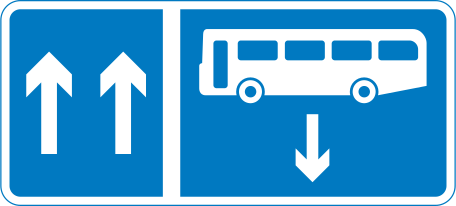
A contraflow bus lane runs against the direction of the general traffic flow, almost always on a one-way street. The sign shows a bus with an arrow pointing the opposite way to the traffic.
It matters enormously for pedestrians and for drivers emerging from side roads, because traffic arrives from an unexpected direction.
What this sign means
Buses will be coming towards you on the left hand side of the road. The lane is normally separated by a solid white line.
Other traffic must not enter the contraflow lane at any time.
What to do when you see it
Adjust your observations to expect traffic from both directions.
- Never drive or park in the contraflow lane.
- Look both ways before pulling out of a side road, even on a one-way street.
- Warn passengers before they open a nearside door.
- Expect pedestrians to look the wrong way when stepping off the kerb.
How this sign is tested
Questions ask what a contraflow bus lane means and why extra care is needed when emerging from a junction.
Pedestrian risk is a common theme in the wording of the answer options.
Common mistakes
Checking only one way when joining a one-way street that has a contraflow lane.
Parking in the lane because the street is otherwise one way.
Test yourself on this one
Road and traffic signs is the biggest category in the question bank with 102 questions, and signs turn up inside other categories too. Work through them free, no sign-up needed.
Practise road sign questionsFrequently asked questions
Can I use a contraflow bus lane to turn?
No. Other traffic must not enter it at any time.
Why are contraflow lanes dangerous for pedestrians?
People expect one-way traffic and often look only in one direction.
Are cycles allowed in contraflow bus lanes?
Often yes, where the sign shows a cycle symbol.