
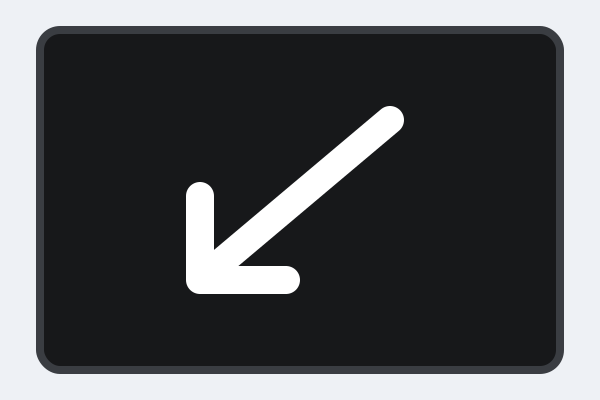
This overhead signal shows a white diagonal arrow pointing left, warning that the lane ahead is about to close.
It gives drivers advance notice to merge safely before reaching a red cross closure in a tidal flow system.
What this sign means
A white diagonal arrow tells you the lane you are in is closing shortly and you must move into the lane to your left.
It acts as an early warning, allowing time to merge safely before the lane closure takes full effect.
What to do when you see it
Begin planning your merge into the indicated lane as soon as it is safe to do so.
- Check mirrors and blind spots before changing lanes
- Signal in good time to alert other drivers
- Do not wait until the last moment to merge
- Match your speed to the flow of traffic in the new lane
How this sign is tested
The theory test may ask you to sequence tidal flow signals correctly, showing the white arrow as an early warning before a red cross.
Understanding this signal demonstrates awareness of how lane closures are managed safely.
Common mistakes
Drivers sometimes ignore the early warning and only react once the red cross closure appears, causing sudden lane changes.
Another mistake is failing to check blind spots properly when merging under time pressure.
Test yourself on this one
Road and traffic signs is the biggest category in the question bank with 102 questions, and signs turn up inside other categories too. Work through them free, no sign-up needed.
Practise road sign questionsFrequently asked questions
How much warning does the white diagonal arrow give?
It is usually shown a reasonable distance before the lane closes, giving drivers time to merge safely.
What comes after the white diagonal arrow signal?
The lane typically shows a red cross once the closure takes effect, meaning it must not be used.
Should I speed up to get past the closing lane?
No, you should merge safely and smoothly rather than rushing, which increases the risk of a collision.