
At many traffic calming narrowings, only one vehicle can pass at a time, so priority must be clearly assigned.
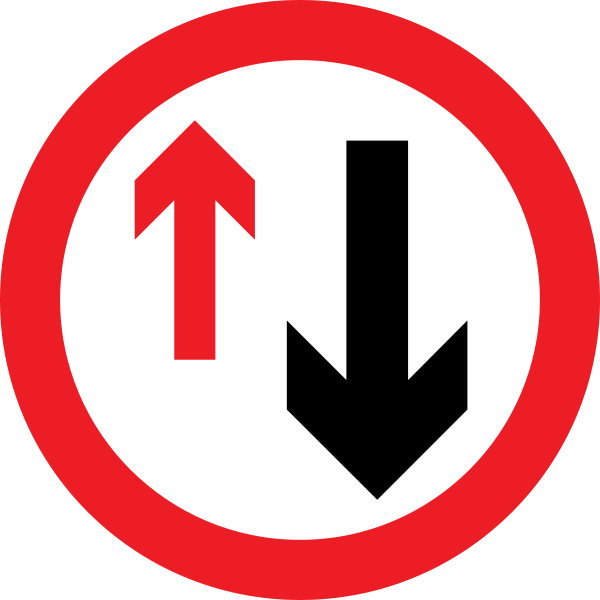
This sign tells drivers that oncoming traffic has priority and they must wait if a vehicle is already coming through.
What this sign means
The sign shows a thick red arrow pointing down and a thin black arrow pointing up, indicating that oncoming traffic has priority.
It is usually paired with a give way sign or markings just before the narrow section.
What to do when you see it
Check carefully for oncoming vehicles and wait if any are approaching or already in the narrow section.
- Slow down and look well ahead for oncoming traffic
- Wait at the give way point if a vehicle is coming through
- Only proceed when the way is clear
- Do not assume other drivers will give way to you
How this sign is tested
The theory test may ask you to interpret the arrows correctly and identify who has priority at a narrowing.
This sign is often confused with its opposite, so understanding the arrow thickness convention matters.
Common mistakes
Drivers sometimes misread the arrows and proceed when they should be giving way, risking a head on conflict.
Another mistake is assuming priority applies to you without checking which arrow is thickest.
Test yourself on this one
Road and traffic signs is the biggest category in the question bank with 102 questions, and signs turn up inside other categories too. Work through them free, no sign-up needed.
Practise road sign questionsFrequently asked questions
How do I know who has priority at a narrowing
The thick arrow shows which direction has priority, the thin arrow shows which direction must give way.
What should I do if I see this sign
Check for oncoming traffic and wait until the way is clear before entering the narrow section.
Is this sign the same as a give way triangle
No, this circular sign specifically deals with priority through narrow sections, unlike the standard give way triangle used at junctions.