
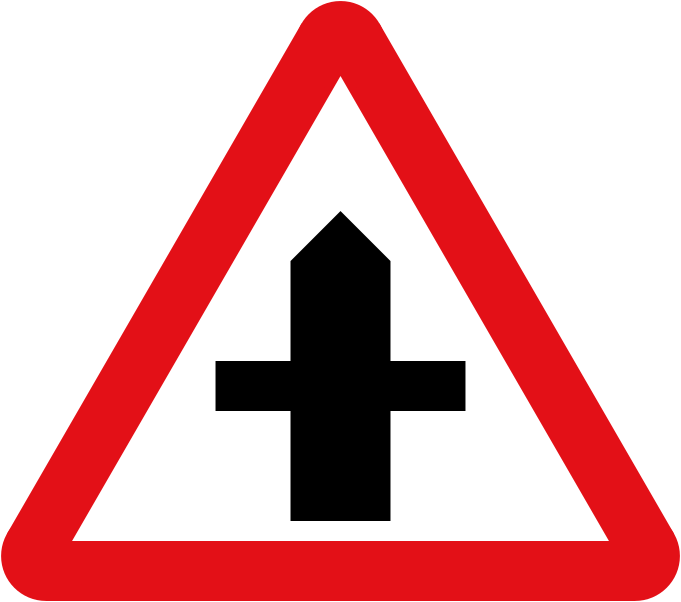
The crossroads ahead sign is a red-bordered triangle containing a black cross symbol on a white background, warning that you're approaching a junction where a road crosses yours in both directions at once. It belongs to the general family of warning triangles, which alert you to hazards rather than commanding a specific action.
Crossroads are tested heavily in the theory syllabus because priority isn't always obvious, particularly at unmarked crossroads where there are no signs or lines at all, and drivers are expected to work out who should give way based on general road rules rather than instructions painted on the tarmac.
What the sign means and the priority rules involved
The sign itself is only a warning, telling you a crossroads lies ahead so you can start planning your speed and observation before you arrive rather than reacting at the last second. It doesn't by itself tell you who has priority; that depends on markings and signs at the actual junction, which might include a stop or give way sign on one or more approaches.
At an unmarked crossroads, where there's no sign or line indicating priority at all, the Highway Code advises extreme caution and treating the situation as though nobody has priority, being ready to give way in any direction. This is a specific, commonly tested scenario because it removes the usual visual cues drivers rely on.
- The triangle warns of the junction layout ahead; it doesn't assign priority on its own.
- Priority at the actual junction depends on stop or give way signs and markings once you arrive.
- At unmarked crossroads, be prepared to give way in any direction and proceed with real caution.
Recognising the sign
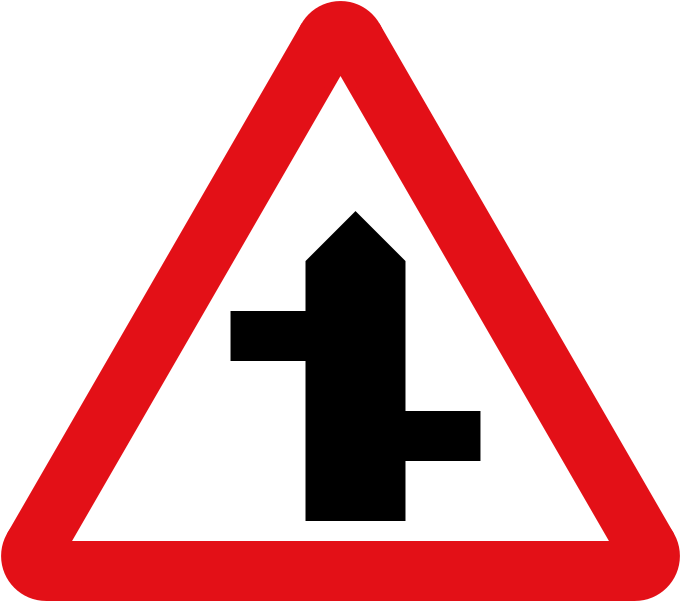
It's a standard warning triangle, red border, white background, black symbol, this time showing a simple cross to represent the crossing roads. It's placed on the approach to genuine crossroads junctions, distinct from staggered junctions, which use a different symbol showing offset roads rather than a straight cross.
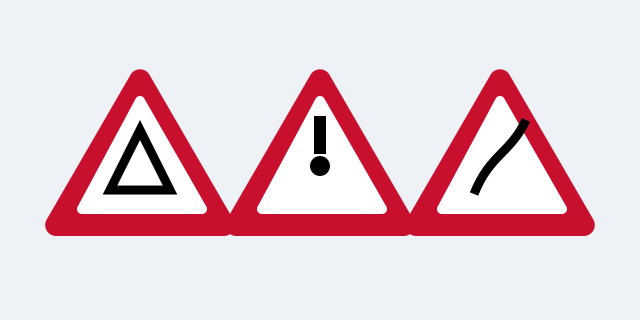
Because it's part of the warning triangle family, it shares its visual language with dozens of other hazard warning signs, all sharing the same shape and colour scheme so drivers instantly recognise 'this is advance warning of something ahead' before even reading the symbol inside.
What you do at the wheel
On seeing the sign, reduce speed and increase your observation in good time, checking mirrors and preparing to react to traffic emerging from either side as well as ahead. Position your vehicle appropriately for the direction you intend to take at the junction, well before you arrive at it.
If the crossroads turns out to be unmarked when you reach it, treat it with real caution, checking all directions carefully and being prepared to stop or give way even if you can't immediately see another vehicle, since traffic could be approaching at speed from a side road with restricted visibility.
How it comes up in the theory test
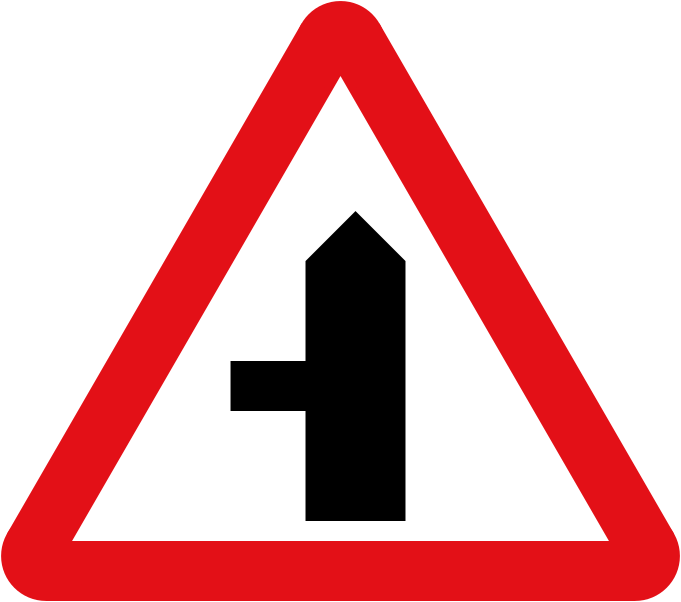
Sign recognition questions ask you to identify the crossroads triangle and distinguish it from similar warning symbols, such as staggered junctions or T-junctions. Scenario-based questions often describe an unmarked crossroads and ask what a driver should do, testing whether you understand that no one automatically has priority.
Hazard perception clips frequently place developing hazards at or near crossroads, since vehicles emerging from multiple directions at once create genuine unpredictability, and examiners want to see that you've slowed and are actively scanning all approaches, not just the road ahead.
Common mistakes and mix-ups
A common theory test mistake is assuming the crossroads sign itself tells you who has priority, when in fact it's purely advance warning; priority always depends on markings or signs actually at the junction. Learners also sometimes confuse the crossroads symbol with the staggered junction symbol, which shows the roads offset rather than meeting in a straight line.
On the road, the realistic error is failing to slow down early enough after seeing the sign, arriving at the actual junction still assessing the situation rather than already prepared, particularly dangerous where visibility along the crossing road is limited by hedges or buildings.
Test yourself on this one
Road and traffic signs is the biggest category in the question bank with 102 questions, and signs turn up inside other categories too. Work through them free, no sign-up needed.
Practise road sign questionsFrequently asked questions
Does the crossroads ahead sign tell me who has priority?
No, it's purely a warning that a crossroads is coming up. Priority is decided by signs and markings actually at the junction, such as a give way line, which you'll need to look for as you approach.
What should I do at a completely unmarked crossroads?
Treat it with real caution, as no one has automatic priority. The Highway Code advises being ready to give way in any direction and proceeding only when you're sure it's safe.
How do I tell the crossroads sign apart from a staggered junction sign?
The crossroads symbol shows a simple straight cross, meaning the roads meet directly opposite each other. A staggered junction symbol shows the crossing roads offset rather than aligned, representing two separate junctions close together.
Why does hazard perception often use crossroads scenarios?
Because vehicles can emerge from three different directions at a genuine crossroads, creating more potential conflict points than a simple T-junction. Examiners use this to test whether you're scanning broadly rather than focusing on just one direction.