
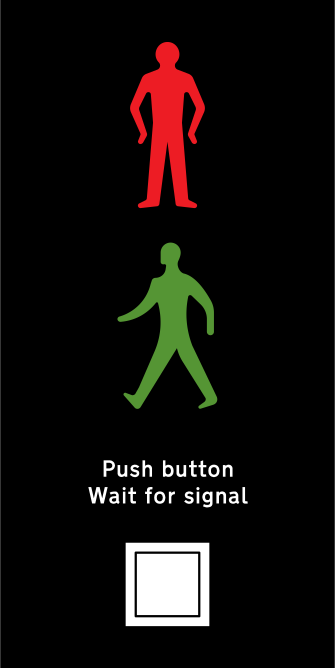
A Puffin (Pedestrian User Friendly Intelligent) crossing uses electronic sensors to monitor pedestrians as they cross the road.
The traffic lights follow a standard sequence (Red -> Red & Amber -> Green) without a flashing amber phase, making it clearer for drivers and safer for pedestrians.
What this sign means
Puffin crossings feature signals mounted on the near side control box above the push button rather than across the road.
Sensors automatically extend the red light duration for slower pedestrians or cancel the call if a pedestrian walks away.
What to do when you see it
Follow the standard signal light rules at Puffin crossings:
Key rules:
- Stop at the solid red light.
- Wait through the red and amber combination without moving.
- Proceed only when the green light illuminates and the road is clear.
How this sign is tested
Theory questions test differences between Pelican and Puffin crossings, particularly regarding the signal sequence and sensor technology.
Candidates are asked to identify that Puffin crossings lack a flashing amber light.
Common mistakes
Expecting a flashing amber light and moving off prematurely during the red signal phase.
Looking across the street for pedestrian signals rather than checking the near-side control panel.
Test yourself on this one
Road and traffic signs is the biggest category in the question bank with 102 questions, and signs turn up inside other categories too. Work through them free, no sign-up needed.
Practise road sign questionsFrequently asked questions
Does a Puffin crossing have a flashing amber light?
No. Puffin crossings follow the standard traffic light sequence: Red, Red & Amber, Green.
Where are the pedestrian lights located on a Puffin crossing?
Pedestrian signals are on the near side box above the push button, encouraging pedestrians to watch approaching traffic.
How do sensors improve safety at Puffin crossings?
Sensors hold the red light until pedestrians finish crossing and cancel signals if someone walks away.