
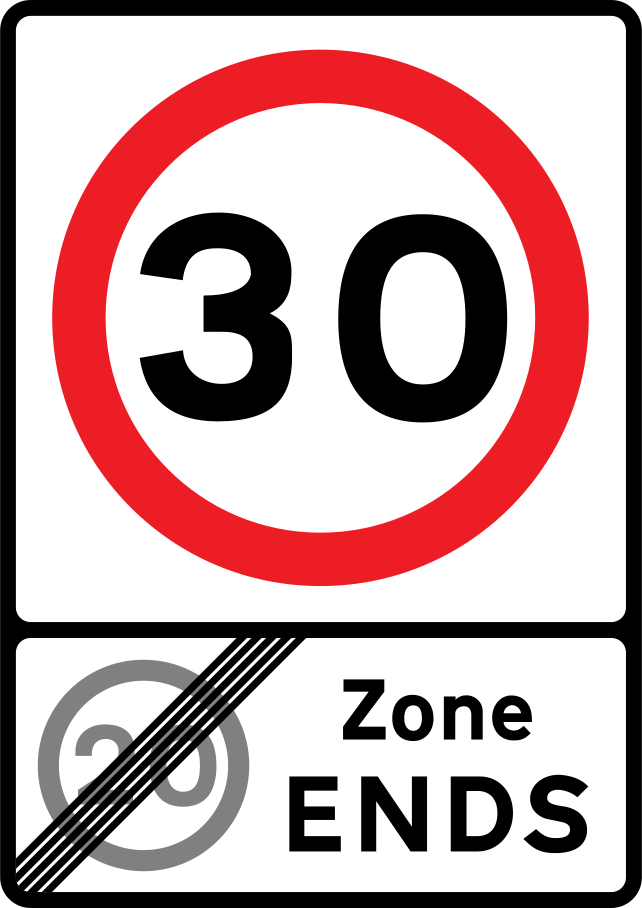
This sign marks the boundary where a 20mph traffic calmed zone ends and normal speed limits resume.
Recognising it correctly helps drivers know when it is safe to return to the national or local speed limit.
What this sign means
The sign shows a white circle with a black diagonal line through the number 20, indicating the end of the reduced speed zone.
Once past this sign, the speed limit that applies is the one for the road you are now on, such as 30mph in a built up area.
What to do when you see it
Check the road environment before increasing speed, since traffic calming features may still be visible just past the sign.
- Confirm the new applicable speed limit for the road ahead
- Increase speed gradually and only when it is safe to do so
- Continue to watch for pedestrians near the zone boundary
- Do not accelerate sharply immediately after the sign
How this sign is tested
You may be asked what speed applies once you pass this sign, testing your understanding of default speed limits.
It also appears in questions comparing zone signs with individual speed limit signs.
Common mistakes
Some drivers accelerate immediately without checking what the new limit actually is.
Others fail to recognise the sign at all and continue driving at 20mph unnecessarily, or assume the zone continues when it does not.
Test yourself on this one
Road and traffic signs is the biggest category in the question bank with 102 questions, and signs turn up inside other categories too. Work through them free, no sign-up needed.
Practise road sign questionsFrequently asked questions
What does the end of 20mph zone sign look like
A white circle with a black diagonal line through the number 20, showing the zone has finished.
What speed limit applies after this sign
The speed limit for the type of road you are now on, such as 30mph in a built up area, unless otherwise signed.
Should I speed up straight away
Only when it is safe, checking for any remaining pedestrians or traffic calming features near the boundary.