
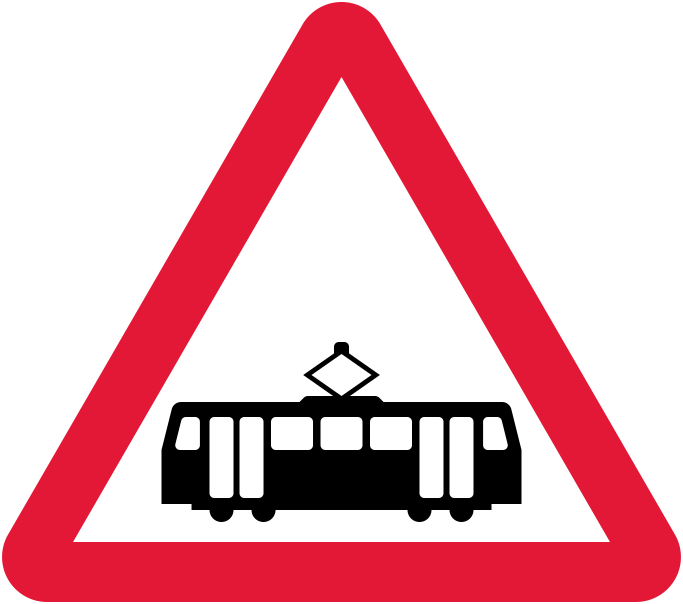
A red-bordered triangle showing a tram warns that a tramway crosses or joins the road ahead. Trams are quiet, run on fixed rails and cannot swerve.
Cities including Manchester, Sheffield, Nottingham, Birmingham, Croydon and Edinburgh all have street-running tram networks.
What this sign means
Trams operate ahead, either crossing the road or sharing the carriageway with other traffic.
A tram cannot steer around an obstruction and needs a long distance to stop.
What to do when you see it
Give trams priority and keep off the rails where possible.
- Never park where you would block the tramway.
- Watch for passengers stepping into the road at tram stops.
- Cross rails at as close to a right angle as you can, especially on two wheels.
- Take extra care in the wet, when the rails are slippery.
How this sign is tested
Questions ask what the tram triangle means, who has priority, and why cyclists and motorcyclists need special care crossing rails.
Common mistakes
Assuming a tram will stop or move aside, when it can do neither.
Riding along a rail groove on two wheels and losing the front end.
Test yourself on this one
Road and traffic signs is the biggest category in the question bank with 102 questions, and signs turn up inside other categories too. Work through them free, no sign-up needed.
Practise road sign questionsFrequently asked questions
Do trams have priority?
Yes. Give way to trams unless signs say otherwise.
Why are rails dangerous for cyclists?
A wheel can drop into the groove, especially at a shallow angle or in the wet.
Can I drive on a tram lane?
Only where road markings and signs allow it.