
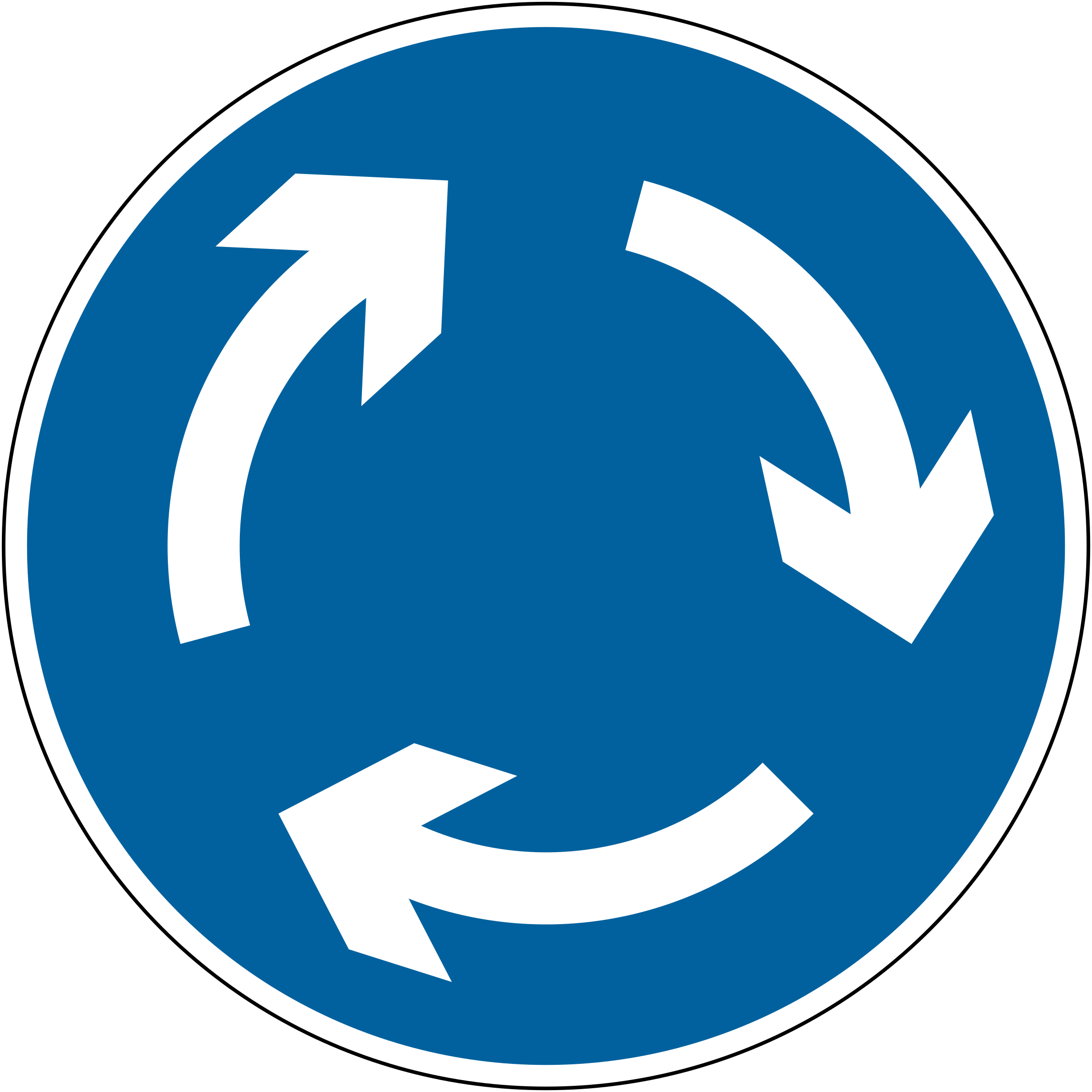
The mini-roundabout sign is a blue circle showing three curved white arrows chasing each other, mounted on a post at the junction rather than as an advance warning some distance before it, since mini-roundabouts don't usually give you the same run-up as a full-size one. It marks a compact junction, often just a painted white circle or dome on the road surface, that follows the same basic give way rules as a normal roundabout.
Mini-roundabouts are tested heavily because their small size creates specific situations, tight turns, close-following traffic, and sometimes multiple mini-roundabouts linked together, that don't arise in the same way on larger junctions, and drivers often misjudge them by treating them too casually.
What the sign means and the rule that applies
The sign confirms you're approaching a mini-roundabout and that the same priority rule as any roundabout applies: give way to traffic already on the roundabout, generally approaching from the right. The junction itself is usually marked with a painted white circle, and you should treat it exactly as you would a full-size roundabout in terms of priority.
Because of limited space, the Highway Code notes that you should keep to the left of the roundabout markings where possible, but where the layout genuinely doesn't allow it, for example for a large vehicle, you're permitted to pass over the marked area if unavoidable, doing so slowly and carefully.
- Give way to traffic approaching from the right, exactly as on a full-size roundabout.
- Keep to the left of the central marking where the layout allows.
- Larger vehicles may need to cross the marked area at low speed if there's genuinely no other way round.
Recognising the sign
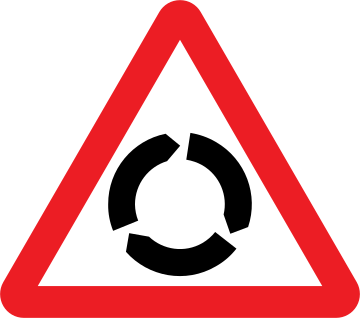
It shares the same three-arrow circular symbol as the roundabout ahead warning triangle, but is shown on a blue circular background rather than inside a red-bordered warning triangle, since it's placed at the junction itself rather than as an advance warning further back.
On the road, mini-roundabouts are often identified as much by the small white painted circle or slightly raised dome in the middle of the junction as by the sign, and several can appear close together in some housing estates and town layouts, which is exactly why sign and road-marking recognition both matter here.
What you do at the wheel
Approach at a reduced speed, since the compact size of the junction gives far less time to react than a full-sized roundabout, and check to your right for traffic already on or approaching the roundabout before you commit to entering. Signal your intentions as you would at any roundabout, adjusted for the shorter distance available to do so clearly.
Be especially careful with multiple mini-roundabouts linked in sequence, sometimes found in housing developments, where you need to reassess priority freshly at each one rather than assuming the same pattern of traffic continues through all of them.
How it comes up in the theory test
Recognition questions test whether you can identify the mini-roundabout sign and distinguish it from the roundabout ahead warning triangle used further back from a standard roundabout. Scenario questions often focus on the rule about keeping left of the marking where possible, and what to do if a large vehicle genuinely can't avoid crossing it.
Hazard perception may use mini-roundabout footage to test reaction to vehicles emerging quickly from the right with little warning distance, since the compact size of these junctions means hazards can develop faster than on larger roundabouts.
Common mistakes and mix-ups
A frequent theory test mistake is assuming mini-roundabouts follow different priority rules from full-size roundabouts, when in fact the give-way-to-the-right rule is identical, only the physical scale changes. Learners also sometimes forget the specific rule about keeping left of the marking, or that crossing it is only acceptable when a vehicle genuinely cannot avoid it.
In practical driving, a common error is treating a mini-roundabout too casually because of its small size, failing to look right properly or approaching at a speed that leaves no time to react if another vehicle is already crossing the junction.
Test yourself on this one
Road and traffic signs is the biggest category in the question bank with 102 questions, and signs turn up inside other categories too. Work through them free, no sign-up needed.
Practise road sign questionsFrequently asked questions
Do mini-roundabouts follow the same priority rules as full-size roundabouts?
Yes. You must give way to traffic approaching from the right, exactly as you would at a full-size roundabout, even though the junction itself is much smaller.
Can I drive over the middle of a mini-roundabout?
Generally no, you should keep to the left of the central marking. Larger vehicles that genuinely cannot avoid it may cross the marked area, but should do so slowly and with care.
Why do mini-roundabouts feel more difficult than normal roundabouts?
Their compact size gives much less time and distance to react, and multiple mini-roundabouts are sometimes placed close together in housing estates, meaning you need to reassess priority quickly at each one.
How is the mini-roundabout sign different from the roundabout ahead sign?
The mini-roundabout sign is a blue circle with three white arrows placed at the actual junction, while the roundabout ahead sign is a red-bordered warning triangle showing the same arrows, placed as advance warning before a full-size roundabout.