
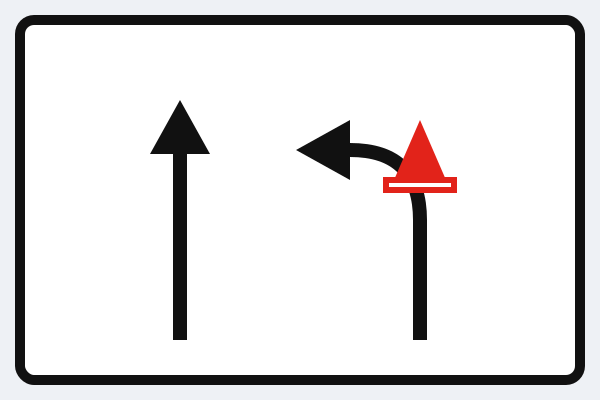
Lane closure signs use a simple diagram of the carriageway with a red bar across the lane that is shut. On motorways and dual carriageways they appear well in advance and are repeated as the merge point approaches.
They are the main tool for moving traffic safely out of a working lane.
What this sign means
The lane marked with the red bar is closed ahead. Traffic in it must move into an open lane before reaching the coned taper.
A distance plate below the sign tells you how far you have to complete the move.
What to do when you see it
Plan the move early, but use the full length of the open road.
- Check mirrors and blind spot before changing lane.
- Merge in turn at the closure point when traffic is queuing.
- Do not straddle the cones or drive into the coned area.
- Match your speed to the lane you are joining.
How this sign is tested
Questions ask which lane is closed from a diagram, and what merge in turn means in practice.
Some questions test that you should not overtake the queue and cut in aggressively at the taper.
Common mistakes
Merging a mile early, which wastes road capacity and lengthens queues.
Missing the sign entirely and having to force a late lane change beside the cones.
Test yourself on this one
Road and traffic signs is the biggest category in the question bank with 102 questions, and signs turn up inside other categories too. Work through them free, no sign-up needed.
Practise road sign questionsFrequently asked questions
Is merging in turn the same as zip merging?
Yes. Vehicles from each lane take it in turn at the merge point.
Can I use the closed lane if it is empty?
No. Once the lane is coned off it must not be entered.
How far in advance are lane closures signed?
On motorways they typically start at least half a mile ahead of the taper.