
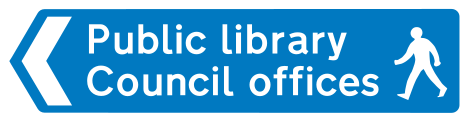
Pedestrian wayfinding signs are small fingerposts or map panels placed on pavements in town centres. They show walking times to stations, car parks and attractions.
For drivers they are a reliable clue that pedestrian flows will cross the road nearby.
What this sign means
Walkers are being directed along this street towards a nearby destination, usually with a walking time in minutes.
They cluster around stations, car parks and shopping areas.
What to do when you see it
Treat the area as one with high pedestrian activity.
- Keep speed low and cover the brake.
- Expect people to step out while reading the sign.
- Give way to pedestrians already crossing at a junction.
- Watch for groups moving between car parks and the centre.
How this sign is tested
The theory test covers pedestrian priority at junctions and the extra care needed in busy town centres rather than the sign itself.
Common mistakes
Failing to give way to pedestrians already crossing a side road.
Treating a busy shopping street as an ordinary 30 mph road.
Test yourself on this one
Road and traffic signs is the biggest category in the question bank with 102 questions, and signs turn up inside other categories too. Work through them free, no sign-up needed.
Practise road sign questionsFrequently asked questions
Do pedestrians have priority at side roads?
Yes, if they have started crossing, you must give way.
Why do these signs show walking times?
Minutes are more useful than distances to people on foot.
Are they part of the traffic sign system?
They are placed by local authorities as wayfinding rather than traffic control.