
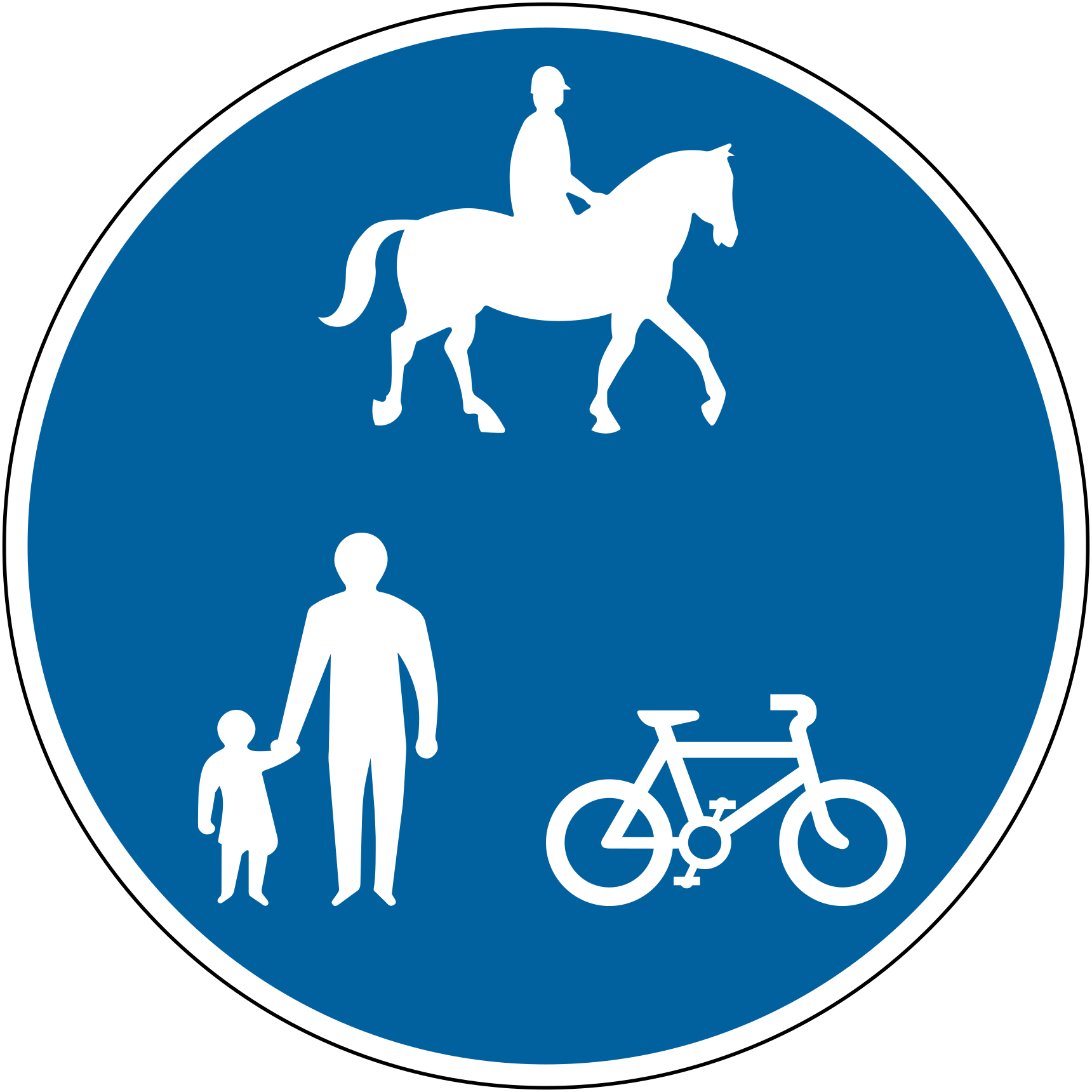
A bridleway carries horse riders, cyclists and walkers. Where one meets the road, expect a horse to emerge, often with a young or nervous rider.
Horses are the road user most easily frightened by engine noise and close passes, which is why the theory test devotes several questions to them.
What this sign means
A shared right of way joins or crosses the road here, used by horses as well as walkers and cycles.
Riders may be crossing in single file or as a group.
What to do when you see it
Slow right down and pass horses wide and slow.
- Pass at no more than 10 mph, leaving at least 2 metres.
- Do not rev the engine or sound the horn.
- Wait behind if the road is narrow.
- Watch for a rider signalling you to stop or slow.
How this sign is tested
Questions specify the safe passing speed and distance for horses and ask how to behave at a bridleway crossing.
Common mistakes
Passing a horse at normal road speed because the gap looks wide enough.
Sounding the horn to alert a rider, which can spook the animal.
Test yourself on this one
Road and traffic signs is the biggest category in the question bank with 102 questions, and signs turn up inside other categories too. Work through them free, no sign-up needed.
Practise road sign questionsFrequently asked questions
How fast should I pass a horse?
No more than 10 mph, leaving at least 2 metres.
Can cyclists use a bridleway?
Yes, but they must give way to walkers and riders.
Should I sound the horn?
No. Noise can frighten the horse.