Get an exclusive 15% off - Offer ends next week!

    Fast Track Driving Lessons
    Log inGet me driving

    On-street parking control

    Signs and road markings that show where and when you can and cannot park. These are the on-street parking control you need to recognise for the DVSA theory test and for safe driving afterwards.

    Every parking sign in this category
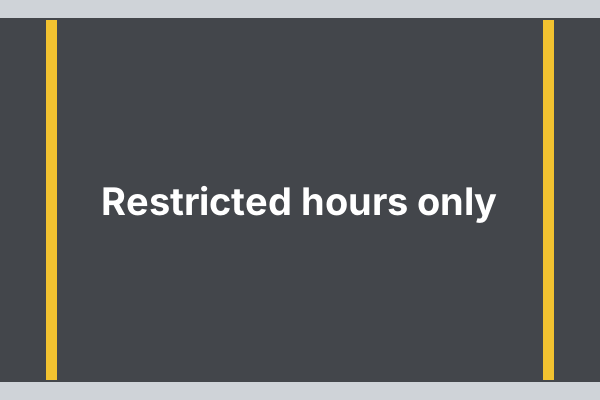
    Single yellow line — yellow painted marking UK road sign

    Single yellow line

    One yellow line along the kerb means waiting is banned during the times shown on the nearby plate.
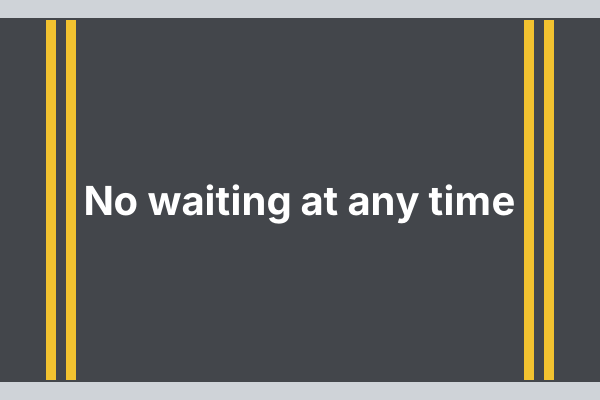
    Double yellow lines — yellow painted marking UK road sign

    Double yellow lines

    Two yellow lines along the kerb mean no waiting at any time, on any day of the year.
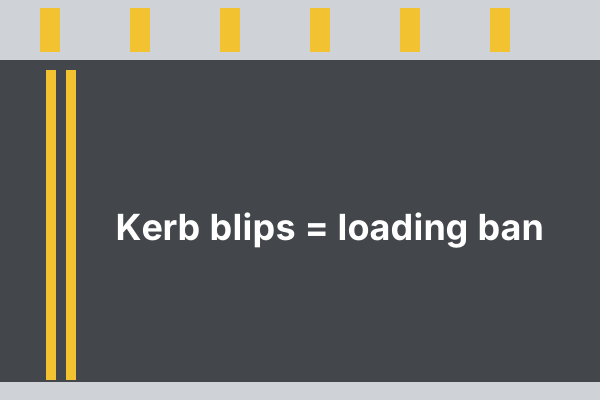
    Loading restriction kerb marks — yellow painted marking UK road sign

    Loading restriction kerb marks

    Short yellow bars painted on the kerb that ban loading and unloading, not just waiting.
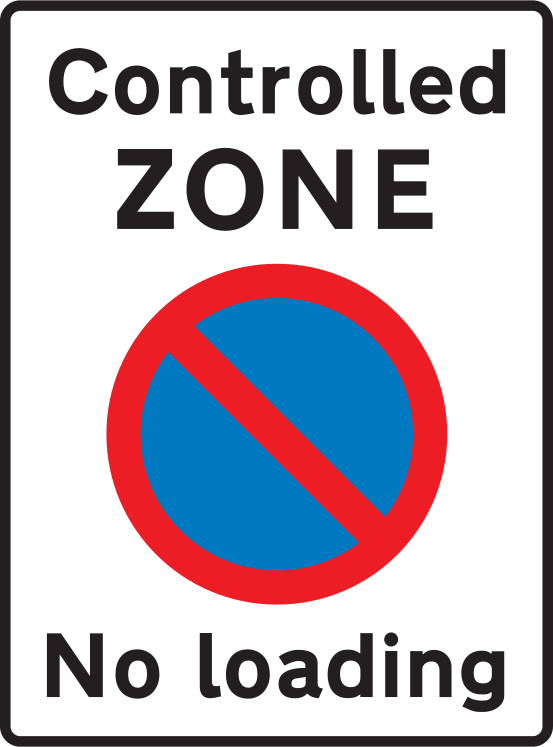
    Controlled parking zone entry sign — white, black and red rectangle UK road sign

    Controlled parking zone entry sign

    A large sign at the entrance to an area where parking is controlled on every street during set hours.
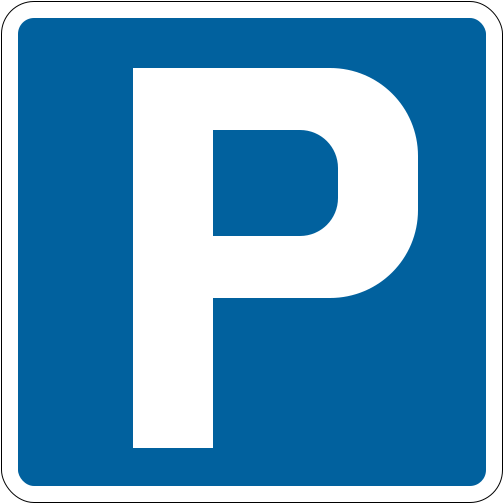
    Parking place sign — blue and white rectangle UK road sign

    Parking place sign

    The blue and white P sign showing an authorised parking area, with conditions on the plate below.
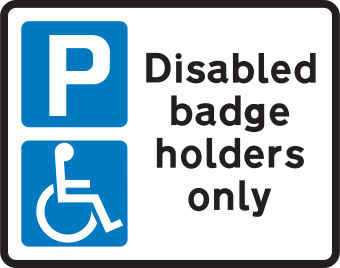
    Disabled badge holders parking bay — blue and white rectangle UK road sign

    Disabled badge holders parking bay

    A bay marked with the wheelchair symbol, reserved for Blue Badge holders only.

    No stopping clearway sign — blue and red circle UK road sign

    No stopping clearway sign

    A blue circle with a red cross, meaning you must not stop on the main carriageway at any time.
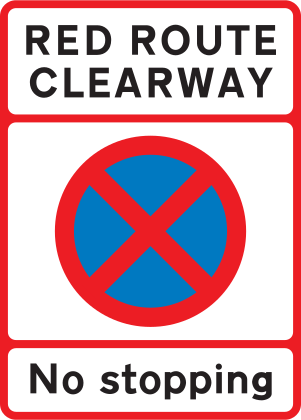
    Red route red lines — red painted marking UK road sign

    Red route red lines

    Single and double red lines used on major urban routes where stopping is banned to keep traffic flowing.

    Passed your theory? Get the practical booked

    Your theory certificate lasts two years. Most learners who use it quickly do it with an intensive course — a block of hours with a DVSA approved instructor and a practical test at the end, instead of one lesson a week for months.

    Intensive course pricesAll coursesCrash coursesAutomatic lessonsAreas we coverDriving test centresHow it worksTest pass guarantee

    Cookies on this site

    We use essential cookies to make the site work. We would also like to set optional analytics cookies to see which guides help learners most. Nothing optional runs until you agree. See our cookie policy.