
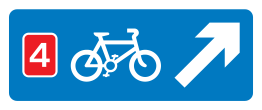
Cycle route direction signs are blue with white text, a cycle symbol and an arrow. They guide riders along local and national routes that often mix quiet roads with traffic-free paths.
Distances are usually given in miles, sometimes with a journey time for the whole leg.
What this sign means
The arrow shows the direction of the cycle route and the text gives the destination and distance.
A red route number in a small panel indicates a National Cycle Network route.
What to do when you see it
Riders follow the arrow. Drivers should read the sign as a warning that cyclists will turn here.
- Expect riders to change direction at the sign.
- Give room to a cyclist who is looking behind before turning.
- Do not park in front of the sign or across the route entrance.
- Watch for riders crossing the road to reach the route.
How this sign is tested
Questions test the difference between guidance signing for cyclists and mandatory blue circular cycle signs.
The rectangle gives directions. The circle gives an order.
Common mistakes
Assuming any blue cycle sign compels cyclists to leave the road.
Overtaking a cyclist just as they reach a signed turning.
Test yourself on this one
Road and traffic signs is the biggest category in the question bank with 102 questions, and signs turn up inside other categories too. Work through them free, no sign-up needed.
Practise road sign questionsFrequently asked questions
Are cycle route distances in miles?
Yes, normally in miles, sometimes with a rough journey time.
What is the red route number?
It identifies a National Cycle Network route.
Must cyclists follow the signed route?
No. It is guidance, not an instruction.