
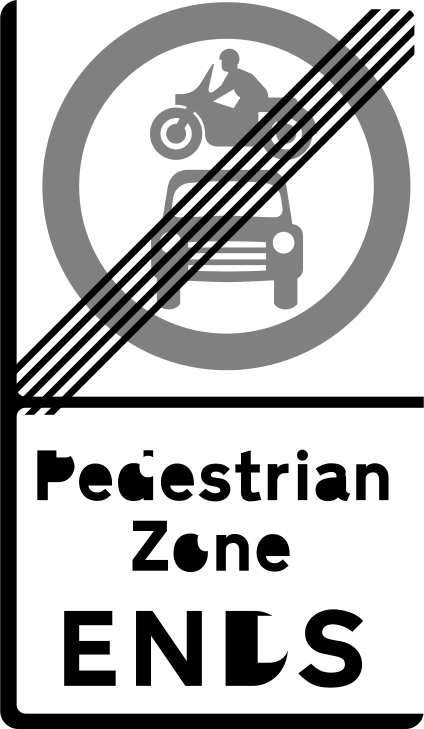
Zones in the British sign system always come in pairs. Wherever a pedestrian zone begins there is a matching sign that ends it.
The end sign shows the same wording or symbol with a diagonal bar or the word end.
What this sign means
The pedestrian zone restrictions no longer apply beyond this point, and the normal rules for the road resume.
Speed limits, parking controls and priority revert to whatever is signed for the road you are joining.
What to do when you see it
Return to normal driving but stay alert for pedestrians still crossing near the boundary.
- Check the speed limit that now applies.
- Look for parking restrictions on the new street.
- Give way as normal at the junction you are joining.
- Expect pedestrians to keep stepping out close to the zone edge.
How this sign is tested
Questions test the pairing principle, that every zone sign has a matching end sign.
The same pattern appears with controlled parking zones and 20 mph zones.
Common mistakes
Accelerating immediately at the boundary while pedestrians are still crossing.
Assuming the previous restrictions continue because the street still looks pedestrianised.
Test yourself on this one
Road and traffic signs is the biggest category in the question bank with 102 questions, and signs turn up inside other categories too. Work through them free, no sign-up needed.
Practise road sign questionsFrequently asked questions
Does every zone have an end sign?
Yes. Zone restrictions must be signed at both entry and exit.
What speed limit applies after the zone?
Whatever is signed for the road you are joining.
Do parking rules change at the end sign?
Yes, the zone controls stop and the local restrictions on the new street apply.