
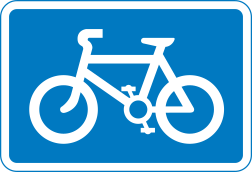
This blue rectangular sign with a cycle symbol tells riders that the route ahead is recommended for cycling. Unlike the blue circle, it does not compel anyone to use it.
The distinction between the rectangle and the circle is exactly what the theory test wants candidates to know.
What this sign means
The road or path ahead forms part of a recommended cycling route, chosen for lower traffic volumes or better surfacing.
Cyclists may still use the main carriageway if they prefer.
What to do when you see it
Drivers should expect higher cycle traffic than usual.
- Look twice for riders at every junction.
- Do not expect cyclists to leave the road for the route.
- Check the nearside before turning left.
- Allow extra room when overtaking.
How this sign is tested
Questions contrast rectangular information signs with circular mandatory signs using cycle symbols.
Common mistakes
Expecting cyclists to be off the carriageway because a route is signed.
Confusing the rectangle with the mandatory blue circle.
Test yourself on this one
Road and traffic signs is the biggest category in the question bank with 102 questions, and signs turn up inside other categories too. Work through them free, no sign-up needed.
Practise road sign questionsFrequently asked questions
Must cyclists use a recommended route?
No. Rectangular blue signs give information, not orders.
What makes a route recommended?
Lower traffic, better surfacing or a safer set of junctions.
How does it differ from a cycle track sign?
The circular cycle track sign gives a mandatory instruction.