
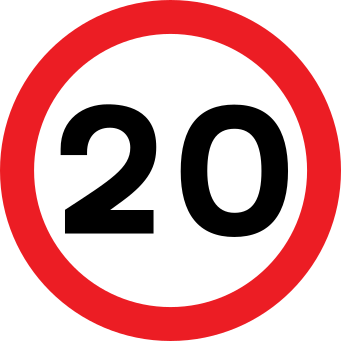
A circular sign with a red border containing the black number '20' sets a legally enforceable maximum speed limit of 20 miles per hour.
It is widely deployed near schools, residential areas, city centres, and high-pedestrian zones to reduce traffic collisions and severity of injuries.
What this sign means
Drivers must not exceed 20 mph on the road past this sign.
It establishes a legal maximum speed enforceable by police speed traps and traffic cameras.
- Red circular ring with number '20'.
- Enforceable maximum legal speed limit.
- Used near schools, residential areas, and pedestrian hubs.
What to do when you see it
Check your speedometer immediately and adjust your speed down to 20 mph or below.
Use 2nd or 3rd gear to maintain smooth control and keep scanning for pedestrians and children.
How this sign is tested
DVSA theory test questions assess candidate understanding of speed limit sign shapes and colors.
Questions cover stopping distances at 20 mph compared to 30 mph in hazard perception scenarios.
Common mistakes
Mistaking a mandatory 20 mph limit sign (red circle) for an advisory 20 mph school zone sign (rectangular warning plate).
Creeping over 20 mph due to poor gear choice or failure to monitor the speedometer.
Test yourself on this one
Road and traffic signs is the biggest category in the question bank with 102 questions, and signs turn up inside other categories too. Work through them free, no sign-up needed.
Practise road sign questionsFrequently asked questions
Is a 20 mph speed limit legally enforceable?
Yes, circular signs with red rings enforce legally binding speed limits.
What is the stopping distance at 20 mph?
The average total stopping distance at 20 mph is 12 metres (40 feet).
How do 20 mph zones end?
They end when you pass a sign displaying a new speed limit (e.g. 30 mph) or a National Speed Limit sign.