
The no entry sign is a plain red circle with a horizontal white bar through the middle and no other markings. It belongs to the family of prohibitory signs, all of which use a red circle, and it's one of the clearest and most absolute: vehicles are not permitted to enter this road at all, from this direction.
You'll typically find it at the far end of a one-way street, at the entrance to a road reserved for buses or other specific traffic, or on slip roads and service roads where entering from the wrong end would put you directly against oncoming traffic.
What the sign legally means
No entry means exactly that: no vehicles are allowed to enter the road in that direction, full stop. There are no conditions attached, unlike signs that restrict entry only at certain times or only to certain vehicle types. It applies to all motor vehicles and, in most cases, cyclists too unless a separate contraflow lane is provided for them.
Where a no entry sign marks the far end of a one-way street, it exists precisely because someone coming from that direction would be driving directly into oncoming traffic that has no reason to expect a vehicle facing the wrong way.
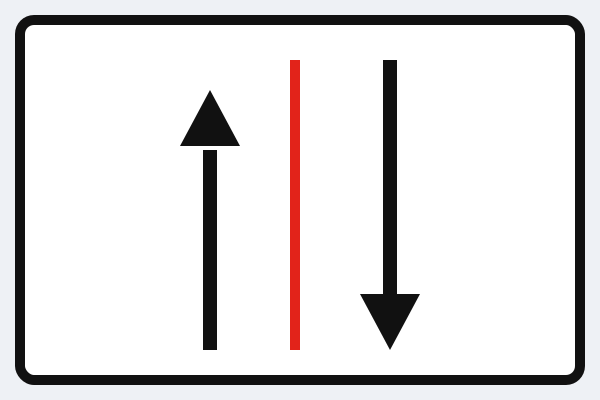
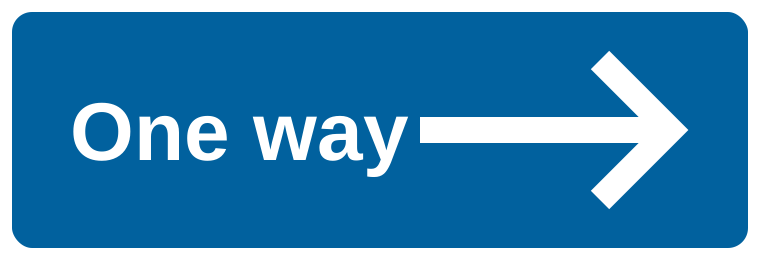
- No vehicles may enter in that direction, with no exceptions written into the sign itself.
- Commonly found at the exit end of one-way streets and restricted access roads.
- Occasionally paired with a separate sign permitting cycles via a contraflow lane.
Recognising the sign
It's one of the simplest signs to identify visually: solid red circle, single horizontal white bar, nothing else on it. That simplicity is deliberate, since it needs to be understood instantly, often at a glance from a driver approaching an unfamiliar junction.
It's easy to confuse with the 'no waiting' or similar prohibitory circles at a quick glance because they share the red circle theme, but no entry has no crossing lines or additional symbols, just the plain bar, and it's usually sized and placed to be seen from a distance on the approach to a junction.
What you do at the wheel
If you see a no entry sign facing you, you simply do not turn into that road, regardless of how convenient the route might otherwise be or how empty the street looks. Sat nav systems occasionally suggest routes that would require ignoring a no entry sign, particularly in older town centres, and you must override the instruction.
If you realise too late that you've entered a no entry road by mistake, the safest response is usually to stop, and if possible reverse back out the way you came rather than continuing forward against oncoming traffic, unless doing so is unsafe, in which case you should find the safest way to correct the error.
How it comes up in the theory test
Recognition questions show the plain red circle with the white bar and ask what it means, with wrong answers usually describing other prohibitory signs like no through road or no vehicles. The test also checks that you understand it's a direction-specific prohibition, only applying when facing the sign from that particular approach.
In hazard perception, one-way systems and no entry junctions are used to test whether you correctly judge that a road you might otherwise consider isn't available to you, keeping your planned route and positioning consistent with what the signs actually allow.
Common mistakes and mix-ups
The main confusion in the theory test is mixing up no entry with other prohibitory circles that carry crossed-out symbols, like no motor vehicles or no cycling, rather than the plain bar used specifically for no entry. Learners sometimes also assume no entry only applies to cars, forgetting it usually covers cyclists too unless a specific exception is signed.
On the road, the realistic mistake is following sat nav instructions into a road with a no entry sign without properly checking, particularly in complex town centre one-way systems where several similar looking side roads sit close together.
Test yourself on this one
Road and traffic signs is the biggest category in the question bank with 102 questions, and signs turn up inside other categories too. Work through them free, no sign-up needed.
Practise road sign questionsFrequently asked questions
Does the no entry sign apply to cyclists as well as cars?
Generally yes, unless a separate sign or marked contraflow cycle lane specifically permits cyclists to enter. Without that exception signed, cyclists are prohibited just like motor vehicles.
What should I do if I accidentally drive past a no entry sign?
Stop as soon as it's safe and, if it can be done safely, reverse back out the way you came rather than continuing into a road you're not permitted on. Never attempt to turn around or continue forward against oncoming traffic if it's unsafe to do so.
How is no entry different from other red circle prohibition signs?
No entry has no symbol at all, just a plain horizontal white bar on a red circle, meaning a total ban on entering. Other red circle signs usually contain a crossed-out picture showing exactly what's banned, such as a specific vehicle type.
Where will I most often come across a no entry sign?
At the far end of one-way streets, at the entrance to bus-only or restricted access roads, and on motorway or dual carriageway slip roads to stop vehicles entering against the flow.