
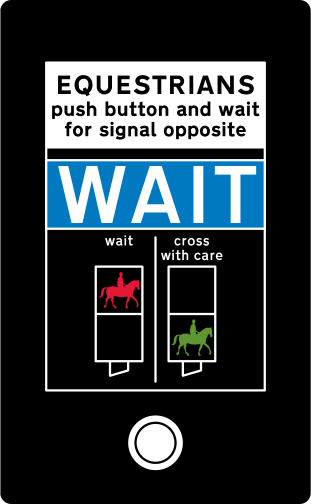
An Equestrian crossing (commonly known as a Pegasus crossing) is a specialised signal-controlled crossing tailored for horse riders.
They feature high-level push buttons accessible from horseback, wider waiting enclosures, and distinct signal symbols.
What this sign means
These crossings feature signals depicting a horse and rider alongside standard signal indicators.
They provide dedicated safe crossing points where bridleways intersect busy motor roads.
What to do when you see it
When approaching an Equestrian crossing:
Key practices:
- Stop at the red light and maintain a safe distance from the crossing boundary.
- Avoid revving your engine, sounding your horn, or making sudden movements that could startle horses.
- Wait patiently until the light sequence turns green and horse riders have reached the far side.
How this sign is tested
Theory questions test recognition of Pegasus/Equestrian crossings and safe driving conduct around horses.
Candidates are evaluated on noise management and maintaining extra clearance.
Common mistakes
Revving engines or accelerating rapidly as soon as the light changes, scaring crossing horses.
Stopping too close to the crossing line, causing distress to ridden animals.
Test yourself on this one
Road and traffic signs is the biggest category in the question bank with 102 questions, and signs turn up inside other categories too. Work through them free, no sign-up needed.
Practise road sign questionsFrequently asked questions
What makes an Equestrian crossing different from a Toucan crossing?
Equestrian crossings feature controls mounted higher for mounted riders, horse signal symbols, and extra space for horses.
Can horse riders use Toucan or Puffin crossings?
Where no Pegasus crossing exists, horse riders may use other crossings but must exercise extreme care.
Why should drivers stop further back at an Equestrian crossing?
Keeping extra distance prevents horses from becoming frightened by motor vehicles.