
At street-running tram stops there is often no raised platform, so passengers step directly from the carriageway onto the tram.
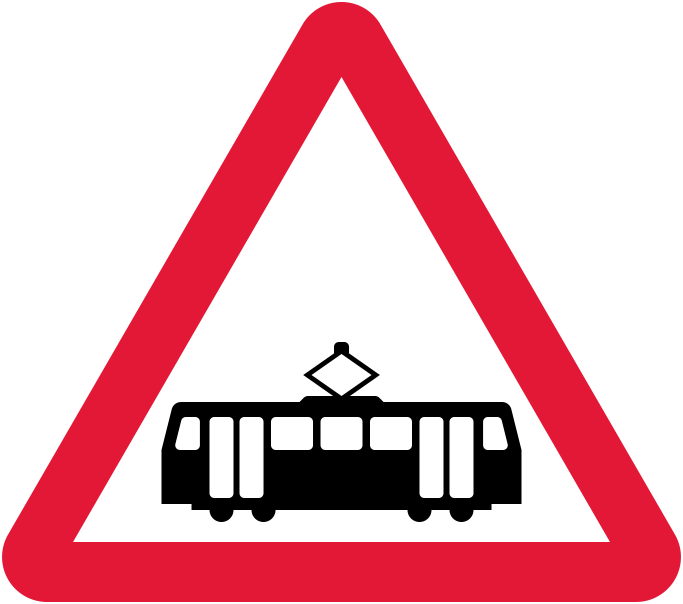
The sign tells drivers to expect people in the road, including passengers hurrying to catch a tram.
What this sign means
A tram stop lies ahead. Passengers may be crossing the road in front of or behind a stationary tram.
Road markings may prohibit overtaking a stopped tram at the platform.
What to do when you see it
Slow down and be ready to stop for people in the road.
- Do not pass a tram that is boarding passengers where markings forbid it.
- Watch for people running for the tram.
- Give extra room to wheelchair users and buggies boarding.
- Never park at or near a tram stop.
How this sign is tested
Questions cover passing stationary trams and the risk to boarding passengers where there is no raised platform.
Common mistakes
Passing a boarding tram at speed.
Assuming passengers will wait for a gap in traffic.
Test yourself on this one
Road and traffic signs is the biggest category in the question bank with 102 questions, and signs turn up inside other categories too. Work through them free, no sign-up needed.
Practise road sign questionsFrequently asked questions
Can I overtake a stopped tram?
Only where there is a platform and markings permit it, and only slowly.
Why are street tram stops risky?
Passengers step directly from the carriageway.
Where do trams stop?
At marked stops that may or may not have a raised platform.