
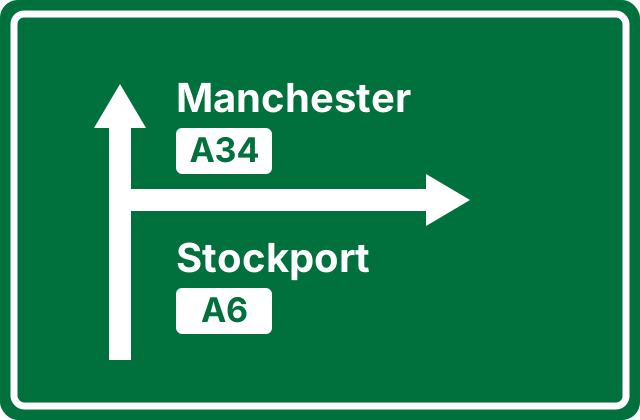
Advance direction signs appear before a junction and show a simplified diagram of it, with destinations attached to each arm. On multi-lane approaches they include lane arrows.
They are designed to be read at speed so that the actual junction needs no decision making.
What this sign means
The diagram matches the shape of the junction ahead. A thicker stem shows the main route through, and side arms show the turnings.
Where lane arrows are shown, they tell you which lane serves each destination.
What to do when you see it
Choose your lane while you are still reading the sign.
- Match your destination to the arm or lane arrow.
- Change lane once, early, rather than at the junction.
- Signal after you have settled in the correct lane.
- If you miss the turn, carry on and turn round safely rather than swerving.
How this sign is tested
Questions present a diagram and ask which lane you should use for a stated destination.
Roundabout versions of the sign are a frequent test topic.
Common mistakes
Leaving the lane choice until the junction, which causes late lane changes.
Reading a roundabout diagram as a crossroads and taking the wrong exit.
Test yourself on this one
Road and traffic signs is the biggest category in the question bank with 102 questions, and signs turn up inside other categories too. Work through them free, no sign-up needed.
Practise road sign questionsFrequently asked questions
How far before a junction do these signs appear?
Typically several hundred metres, further on high speed roads.
What do lane arrows on the sign mean?
They show which lane leads to each destination.
What if I am in the wrong lane?
Carry on to the next safe place to turn round rather than crossing lanes at the junction.