
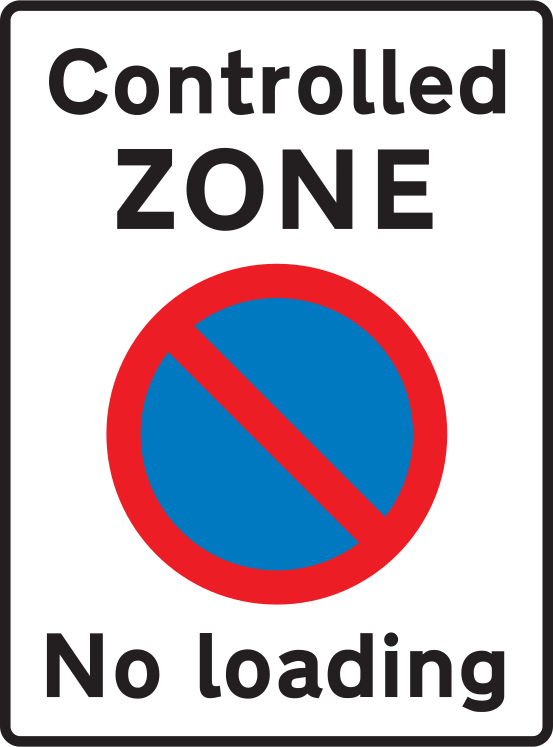
A controlled parking zone, or CPZ, applies one set of parking rules across a whole neighbourhood. The entry sign states the hours of control, and individual streets inside the zone carry no repeater plates.
This is exactly why the entry sign matters, because it is the only place the times are displayed.
What this sign means
Within the zone, waiting on yellow lines is prohibited during the hours shown, and you may only park in marked bays under the conditions signed on each bay.
Outside the hours the restrictions in the zone generally lift, though bays may still have their own rules.
What to do when you see it
Note the hours as you enter, because you will not see them again.
- Read the hours of operation on the entry sign.
- Park only in marked bays and read the bay sign.
- Expect no repeater plates on individual streets.
- Look for the end of zone sign to know when the rules stop.
How this sign is tested
Questions test that inside a CPZ there are no individual time plates on yellow lines, so the entry sign is the source of the rules.
The paired end of controlled zone sign appears in the same question sets.
Common mistakes
Looking for a time plate on a yellow line inside a zone, finding none, and assuming the line is not enforced.
Parking in a residents bay without a permit during controlled hours.
Test yourself on this one
Road and traffic signs is the biggest category in the question bank with 102 questions, and signs turn up inside other categories too. Work through them free, no sign-up needed.
Practise road sign questionsFrequently asked questions
Why are there no time plates inside a CPZ?
The hours are set at the zone entry sign and apply throughout the zone.
Can I park in a residents bay?
Only with a valid permit, unless the bay sign allows other users at certain times.
How do I know when I have left the zone?
An end of controlled zone sign is placed at every exit.