
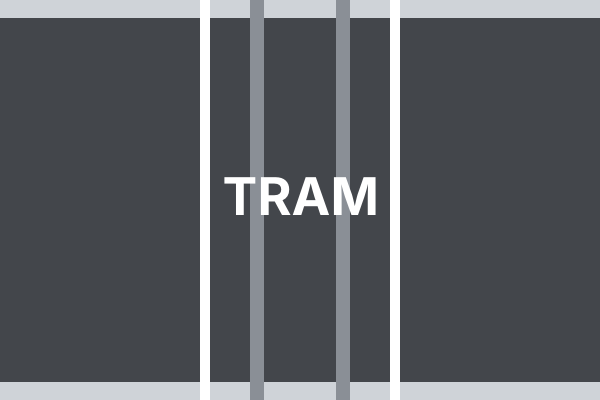
Where a tramway shares the road, yellow lines mark the edges of the tram path and diamond symbols may be painted on the surface.
The markings tell drivers where they must not stop and where a tram will be.
What this sign means
The area between the yellow lines is the tram path. Stopping in it obstructs the tram, which cannot pass.
Where the lines are broken you may cross the path when it is clear.
What to do when you see it
Keep the tram path clear at all times.
- Never stop or park between the yellow lines.
- Check for approaching trams before crossing the path.
- Do not queue across the tramway at a junction.
- Take care on the smooth rails in wet weather.
How this sign is tested
Questions test the meaning of the yellow lines beside tram rails and the rule that trams cannot steer around obstructions.
Common mistakes
Stopping just over the yellow line and blocking the tram.
Treating rails as ordinary road surface in the rain.
Test yourself on this one
Road and traffic signs is the biggest category in the question bank with 102 questions, and signs turn up inside other categories too. Work through them free, no sign-up needed.
Practise road sign questionsFrequently asked questions
What do yellow lines beside rails mean?
They mark the tram path where you must not stop.
Can I cross a tram lane?
Yes, where markings allow it and the way is clear.
Why can trams not go around me?
They run on fixed rails and cannot steer.