
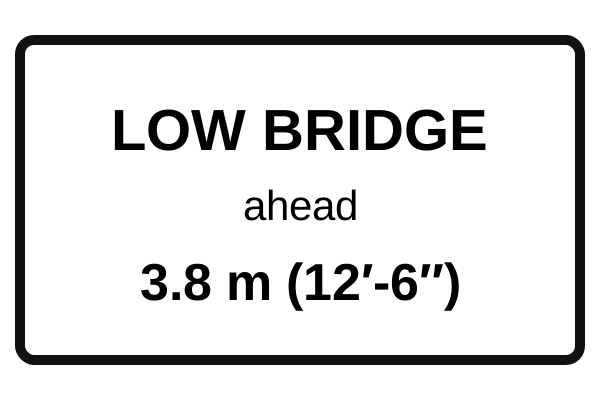
This advance warning appears far enough before a low bridge that a high vehicle can still turn off. It usually carries a plate with the distance and the height limit.
The point of an advance sign is to give a decision point, not a last-second surprise.
What this sign means
A height restriction lies ahead at the distance shown. Vehicles above the limit must take an alternative route.
Diversion signing for high vehicles is normally provided at the same point.
What to do when you see it
Decide now, while you still have a turning available.
- Check your vehicle height against the plate.
- Follow the high vehicle diversion if needed.
- Do not continue hoping to turn round later.
- Watch for large vehicles slowing to make the decision.
How this sign is tested
Questions cover the meaning of the advance warning and the responsibility of the driver to know their vehicle dimensions.
Common mistakes
Ignoring the advance sign and finding no turning space at the bridge.
Reversing on a busy road after discovering the bridge is too low.
Test yourself on this one
Road and traffic signs is the biggest category in the question bank with 102 questions, and signs turn up inside other categories too. Work through them free, no sign-up needed.
Practise road sign questionsFrequently asked questions
How far ahead is the bridge?
The distance is shown on a plate below the sign.
Do car drivers need to worry?
Only with roof loads or when towing a high trailer.
Where is the diversion signed?
Usually at the same junction where the warning appears.