
Traffic calming signs alert drivers to a stretch of road where physical measures have been built to reduce speed.
These schemes are common in residential streets, near schools and in villages where pedestrian safety is a priority.
What this sign means
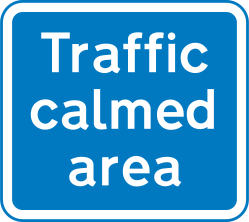
The sign is a red triangle showing a car being squeezed between two black blocks, indicating that road narrowings, humps or chicanes are ahead.
It warns you that the layout of the road changes and you need to adjust your driving before you reach the measures.
What to do when you see it
Slow down in good time and be ready to stop or give way, since traffic calming areas often narrow to a single lane.
- Reduce speed well before reaching the humps or narrowing
- Watch for pedestrians and cyclists who may step out between parked vehicles
- Give way to oncoming traffic if the road narrows to one lane
- Avoid harsh braking directly on top of humps
How this sign is tested
The theory test may ask you to identify this sign or explain the correct speed and positioning through a traffic calming area.
Hazard perception clips sometimes feature these zones, testing whether you anticipate pedestrians and cyclists.
Common mistakes
Drivers often brake too late, causing discomfort or loss of control over humps, or accelerate away too quickly afterwards.
Another mistake is failing to give way when the road narrows, leading to conflict with oncoming vehicles.
Test yourself on this one
Road and traffic signs is the biggest category in the question bank with 102 questions, and signs turn up inside other categories too. Work through them free, no sign-up needed.
Practise road sign questionsFrequently asked questions
What does the traffic calming sign look like
A red triangle showing a car being squeezed between two black blocks, warning of road narrowings or humps ahead.
Where will I see traffic calming signs
Typically in residential areas, near schools, and in villages with heavy pedestrian activity.
What speed should I drive through a traffic calming zone
Slow enough to pass comfortably over humps and narrowings, usually well below 20mph, while watching for pedestrians.