
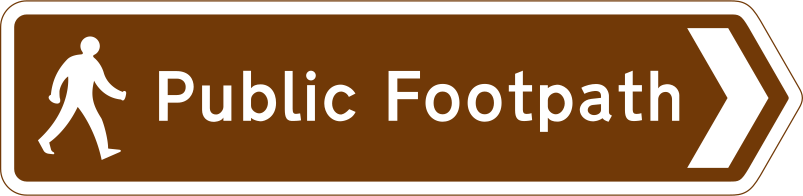
Public footpath fingerposts mark where a right of way crosses or meets the road. On country lanes they are the best warning you will get that walkers are about to step out.
Footpaths are for walkers only. Bridleways also allow horses and cycles.
What this sign means
A right of way for pedestrians starts, ends or crosses here.
There is rarely a formal crossing point, so people cross wherever the path meets the road.
What to do when you see it
Ease off and scan both verges.
- Slow down where a path meets a bend or a blind summit.
- Look for dogs and children ahead of the adults.
- Be ready to stop if a group is crossing.
- Do not park across the path entrance.
How this sign is tested
Rural pedestrian hazards are tested in both the multiple-choice and hazard perception parts of the theory test.
Common mistakes
Keeping full speed on a lane because pedestrians are not expected there.
Confusing footpaths with bridleways and not anticipating horses.
Test yourself on this one
Road and traffic signs is the biggest category in the question bank with 102 questions, and signs turn up inside other categories too. Work through them free, no sign-up needed.
Practise road sign questionsFrequently asked questions
Can cyclists use a public footpath?
No. Footpaths are for walkers. Bridleways permit cycles and horses.
Do walkers have priority crossing the road?
There is no formal priority, but drivers must drive so they can stop safely.
Where should walkers walk on a lane?
Facing oncoming traffic, on the right hand side.