
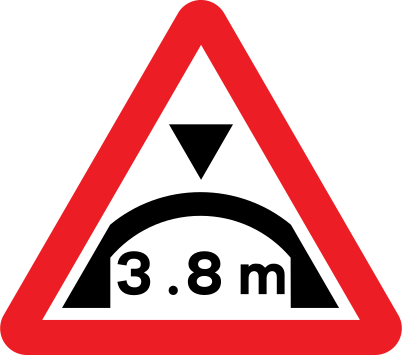
This red-bordered triangle shows a curved bridge outline. It warns that headroom under the bridge varies, with the greatest clearance in the middle of the arch.
Signs often direct high vehicles to use the centre of the road under the bridge.
What this sign means
The bridge ahead has a curved soffit. The signed maximum height applies at the point marked, usually the centre line.
Some arch bridges have painted lanes showing where taller vehicles should track.
What to do when you see it
Slow down and read the accompanying height plate carefully.
- Position as directed if you are driving a high vehicle.
- Wait for oncoming traffic to clear if you must use the centre.
- Expect a narrow carriageway under the arch.
- Watch for cyclists riding away from the kerb.
How this sign is tested
Questions on headroom and vehicle height use arch bridges as the setting, along with the rule that heights are marked in both units.
Common mistakes
Driving through at the edge of the arch where headroom is lowest.
Assuming a car can never strike an arch bridge, when roof loads sometimes do.
Test yourself on this one
Road and traffic signs is the biggest category in the question bank with 102 questions, and signs turn up inside other categories too. Work through them free, no sign-up needed.
Practise road sign questionsFrequently asked questions
Where is an arch bridge highest?
In the centre of the arch.
Do I have to use the marked lane?
High vehicles should follow the marked route under the arch.
What if traffic is coming the other way?
Wait until the road is clear before crossing the centre.