
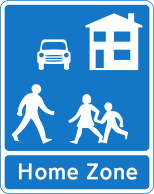
A Home Zone sign marks the entrance to a residential street or group of streets designed to cater shared space for pedestrians, playing children, cyclists, and vehicles.
Driving through a Home Zone requires extremely low speeds and heightened vigilance to ensure pedestrian safety.
What this sign means
The sign depicts a house, trees, a motor vehicle, and pedestrians or children playing, situated on a blue rectangular background.
It signals that you are entering a street where the residential environment prioritises vulnerable road users over fast traffic movement.
What to do when you see it
Adapt your driving immediately upon entering a designated Home Zone:
Key practices include:
- Drive very slowly, typically at speeds under 20 mph or down to walking speed if children are near.
- Be prepared for pedestrians or children using the full width of the street.
- Yield right of way to pedestrians and cyclists using shared space.
How this sign is tested
Theory questions examine the purpose of Home Zones and Quiet Lanes, emphasising low vehicle speeds and shared space principles.
Candidates may be asked who has priority and what hazards to anticipate when passing this sign.
Common mistakes
Maintaining normal residential speed limits (such as 30 mph) upon entering a Home Zone.
Expecting pedestrians to clear the roadway immediately for motor vehicles.
Test yourself on this one
Road and traffic signs is the biggest category in the question bank with 102 questions, and signs turn up inside other categories too. Work through them free, no sign-up needed.
Practise road sign questionsFrequently asked questions
What is the speed limit in a Home Zone?
While local limits vary, Home Zones are designed for speeds as low as 10 to 15 mph to permit safe shared use.
Do pedestrians have priority in a Home Zone?
Yes. Home Zones are specifically designed so pedestrians and children can use the street safely alongside low-speed vehicular traffic.
What marks the end of a Home Zone?
An end sign featuring the same symbol struck through with a red diagonal line marks the exit.