
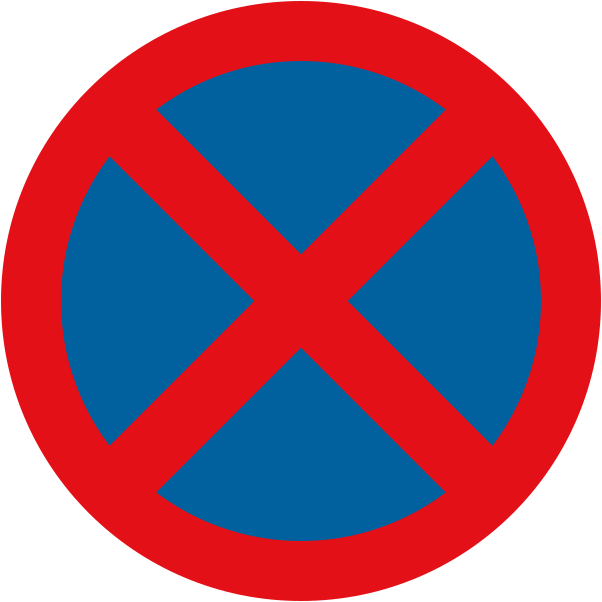
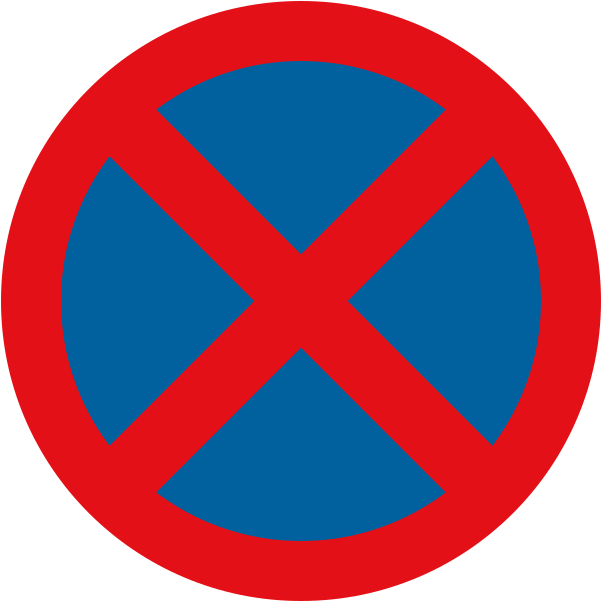
The no waiting sign is a blue circle with a red border and a red cross through the middle, and it works hand in hand with yellow lines painted along the kerb. Together, sign and lines tell you that stopping to park or wait, even briefly, is not permitted along that stretch of road.
It's one of the signs that most directly affects everyday driving decisions rather than junction behaviour, and it's tested precisely because 'waiting' has a specific meaning in traffic law that's broader than most learners assume.
What the sign and lines legally mean
No waiting means you must not stop your vehicle on that section of road except to set down or pick up passengers, or in some cases load or unload goods depending on the specific restriction. It's a broader restriction than simply 'no parking', because parking implies leaving the vehicle, whereas waiting includes stopping briefly with the engine running.
The restriction is usually shown by yellow lines along the edge of the carriageway, single or double, with the sign confirming the times or conditions the restriction applies, since a plate underneath often specifies exact hours.
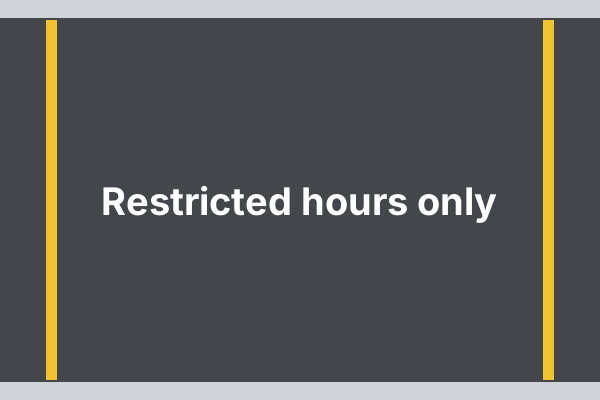 Single yellow lineWhat it means
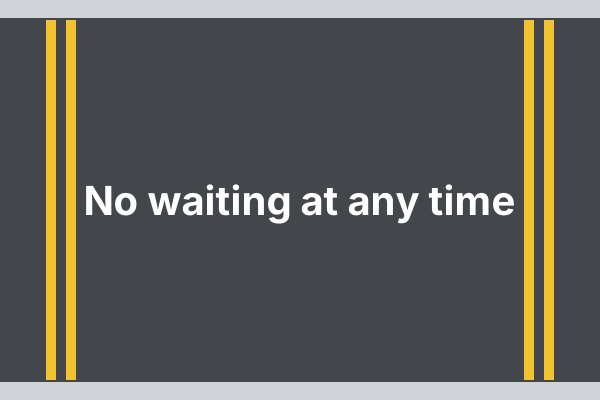 Double yellow linesWhat it means
 Circular signs give ordersWhat it means
- Single yellow line: waiting restricted at certain times, shown on a nearby plate or sign.
- Double yellow line: waiting restricted at all times, all year round.
- The circular sign itself confirms the restriction; the lines on the road are the everyday visual reminder.
Recognising the sign
The blue circle with a red cross is part of a small family of prohibition signs that use blue backgrounds rather than the more common white, because they relate to parking and waiting restrictions specifically rather than general traffic movement bans.
It's often accompanied by a rectangular plate underneath giving exact times, for example restricting waiting during school drop-off and pick-up hours, or during business hours in a town centre, rather than around the clock.
What you do at the wheel
When you see the sign or yellow lines, check any time plate carefully before deciding to stop, since some restrictions only apply during specific windows and are perfectly legal to park in outside those hours. If in doubt, don't stop; a misread time plate leading to a parking fine is a common and avoidable mistake.
Setting down or picking up passengers is usually still allowed briefly on single and double yellow lines, but you should do this quickly and safely rather than treating it as an excuse to wait for an extended period.
How it comes up in the theory test
The theory test asks you to identify the sign and to understand the difference between waiting restrictions and stopping restrictions, since a related but stricter sign, no stopping, uses a different symbol and bans even setting down passengers in most circumstances.
Questions also test your understanding of single versus double yellow lines, checking whether you know double yellows apply at all times while single yellows depend on a time plate, which is a fact that surprises many learners revising sign meanings for the first time.
Common mistakes and mix-ups
The most frequent error is confusing no waiting with no stopping, which uses a red cross on a white background inside a red circle rather than a blue background, and is a much stricter clearway-style restriction usually seen near bus stops or school entrances.
Learners also sometimes assume double yellow lines mean no waiting only during the day, when in fact double yellows apply at all times unless a specific sign states otherwise, while it's single yellow lines that vary by time and require checking a plate.
Test yourself on this one
Road and traffic signs is the biggest category in the question bank with 102 questions, and signs turn up inside other categories too. Work through them free, no sign-up needed.
Practise road sign questionsFrequently asked questions
What's the difference between a single and double yellow line?
A single yellow line means waiting is restricted at certain times, usually detailed on a nearby plate. A double yellow line means waiting is restricted at all times throughout the year, with no need to check a time plate.
Can I still stop to drop someone off on a road with no waiting restrictions?
Generally yes, briefly setting down or picking up passengers is usually still permitted on yellow lines, but you shouldn't linger. Loading restrictions, shown by yellow kerb marks, are a separate and stricter rule.
How is no waiting different from no stopping?
No waiting, shown with a blue circle and red cross, still allows brief stops to set down passengers. No stopping is stricter and generally doesn't allow this, and is usually found near schools or bus stops where a clearway is essential for safety.
Do no waiting restrictions apply on Sundays and bank holidays?
It depends entirely on the time plate under the sign, which will state the days and hours the restriction covers. Double yellow lines apply at all times including Sundays and bank holidays unless a sign states an exception.