
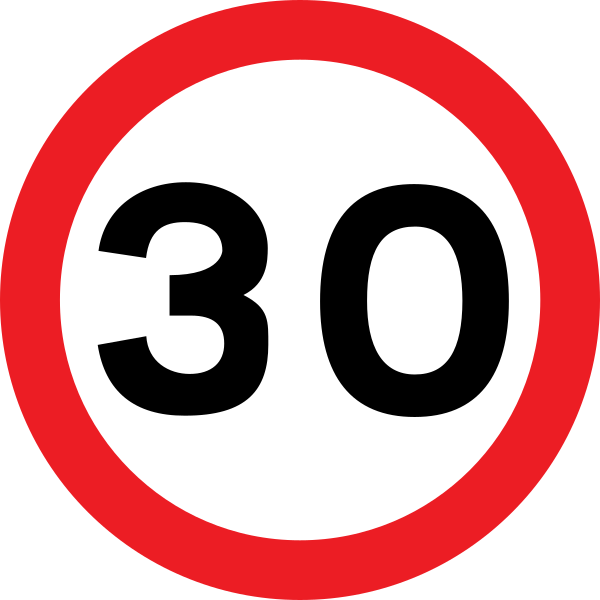
Featuring the number '30' enclosed within a red ring, this sign sets a maximum legal speed limit of 30 miles per hour.
In the UK, 30 mph is also the default legal speed limit for built-up areas with street lighting unless signs specify otherwise.
What this sign means
You must not exceed 30 mph along the regulated stretch of road.
It serves either as an entry sign to a 30 mph zone or a repeater sign confirming the limit.
- Red ring containing the black numeral 30.
- Standard default limit for urban built-up areas with streetlights.
- Mandatory maximum speed limit.
What to do when you see it
Reduce speed smoothly to 30 mph before passing the sign position.
Scan ahead for urban hazards, parked cars, pedestrians, and side junctions.
How this sign is tested
Theory tests evaluate knowledge regarding street lighting rules and default urban speed limits.
Questions ask what speed limit applies in illuminated areas where no speed signs are visible (30 mph).
Common mistakes
Accelerating before passing the exit sign when leaving a 30 mph zone.
Failing to recognise that streetlights automatically signal a 30 mph zone unless repeater signs indicate otherwise.
Test yourself on this one
Road and traffic signs is the biggest category in the question bank with 102 questions, and signs turn up inside other categories too. Work through them free, no sign-up needed.
Practise road sign questionsFrequently asked questions
What is the default speed limit on illuminated urban roads?
The default limit is 30 mph unless signs state a different limit (such as 20 mph or 40 mph).
What is the stopping distance at 30 mph?
The total average stopping distance at 30 mph is 23 metres (75 feet).
Are speed repeater signs required in standard 30 mph streetlight zones?
No, repeater signs are generally not permitted in standard 30 mph areas with street lighting.