
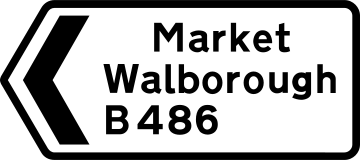
White direction signs with black borders point along non-primary roads. These are the smaller A roads, B roads and unclassified routes that link villages and local destinations.
They complete the three colour system of blue for motorways, green for primary routes and white for everything else.
What this sign means
The road being signed is a non-primary route. Expect lower speeds, more junctions and narrower carriageways than on a primary route.
Where a white panel appears on a green sign, that destination is reached by a non-primary road.
What to do when you see it
Adjust your expectations of the road you are about to join.
- Anticipate slower traffic and tighter bends.
- Position early for the turn shown.
- Watch for cyclists, walkers and horse riders on rural links.
- Check the route number if you are navigating without a map.
How this sign is tested
Questions ask what road type a white sign indicates, with green and blue as distractors.
The panel rule is tested separately.
Common mistakes
Confusing white direction signs with local direction signs, which have blue borders.
Assuming a white signed road must be unclassified when many are A roads.
Test yourself on this one
Road and traffic signs is the biggest category in the question bank with 102 questions, and signs turn up inside other categories too. Work through them free, no sign-up needed.
Practise road sign questionsFrequently asked questions
What colour are non-primary route signs?
White with black lettering and a black border.
Are white signed roads always minor?
No. They include A roads that are not designated primary routes.
What does a green panel on a white sign mean?
That destination is reached by joining a primary route.