
A Toucan crossing ('Two-Can' cross together) is a signal-controlled crossing designed for simultaneous use by both pedestrians and cyclists.
Unlike Pelican or Zebra crossings, cyclists do not need to dismount and are permitted to ride across the carriageway within dedicated lanes.
What this sign means
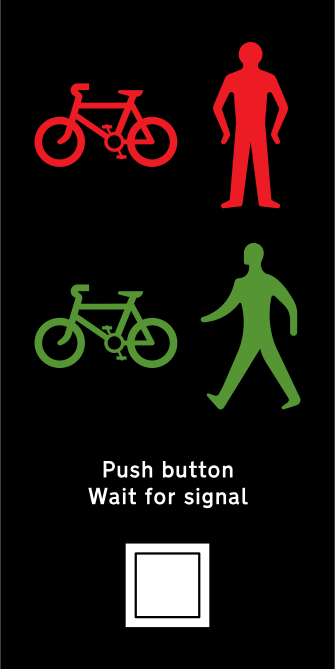
Toucan crossings are wider than standard pedestrian crossings and feature signal heads displaying both a green pedestrian and a green bicycle symbol.
Like Puffin crossings, they use smart sensors and follow a standard light sequence with no flashing amber phase.
What to do when you see it
Approach Toucan crossings with extra vigilance:
Key rules:
- Stop at red and red-and-amber signals.
- Anticipate faster-moving cyclists approaching from adjacent cycle tracks.
- Proceed only when the light turns green and all cyclists and pedestrians have cleared the crossing.
How this sign is tested
Theory questions test your knowledge of who can use a Toucan crossing, emphasising that cyclists can ride across without dismounting.
Questions also focus on hazard awareness regarding fast-approaching bicycles.
Common mistakes
Expecting cyclists to dismount before crossing at a Toucan crossing.
Failing to check cycle paths on either side of the crossing before moving off on green.
Test yourself on this one
Road and traffic signs is the biggest category in the question bank with 102 questions, and signs turn up inside other categories too. Work through them free, no sign-up needed.
Practise road sign questionsFrequently asked questions
Can cyclists ride across a Toucan crossing?
Yes. Toucan crossings are specifically designed for both pedestrians and cyclists to use together.
Does a Toucan crossing have a flashing amber light?
No. Toucan crossings use standard traffic light signals without a flashing amber phase.
How do you identify a Toucan crossing?
By the wider crossing path and pedestrian light displays showing both a red/green person and bicycle.