
The short version
- Look much further ahead than feels natural in city traffic.
- Bus lanes are controlled by signs and times, not guesswork.
- One-way streets still need mirror checks, lane discipline and correct positioning.
- Do not let horns, buses or queues rush you into an unsafe decision.
- Most city driving faults come from late planning rather than poor car control.
What city-centre driving really tests
If you are searching for help with city-centre driving, bus lanes, one-ways and pressure, the key is this: slow the situation down before the road does it for you. In lessons, I rarely see city mistakes caused by a learner not knowing how to steer or change gear. The costly faults usually come from reading a sign too late, drifting into the wrong lane, blocking a box junction, or letting the driver behind bully them into moving when it is not safe.
City centres ask you to process a lot at once: pedestrians stepping out between parked vehicles, cyclists filtering, delivery vans half in the road, buses pulling out, taxis stopping suddenly, traffic lights close together and lane markings worn by heavy traffic. Your job is not to be fast. Your job is to be predictable, legal and prepared early enough that your actions make sense to everyone around you.
On a driving test, an examiner is not looking for local-knowledge shortcuts. They want to see that you identify signs, choose the correct lane in good time, keep effective observations going, and do not panic when the road layout changes. A wrong lane is not always a test fail if you deal with it safely. A sudden swerve, missed mirror check or unsafe lane change because you are desperate to follow the sat nav can be.
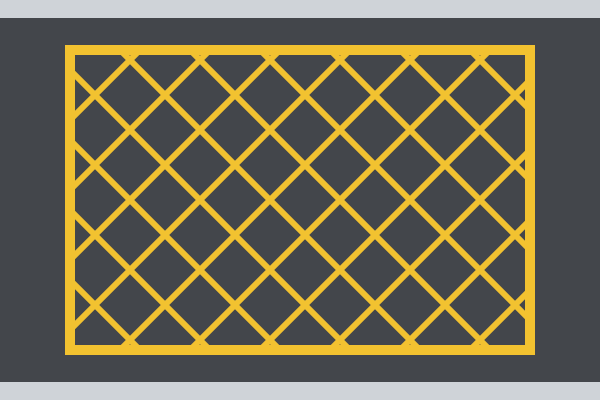
Bus lanes: signs, times and the mistake learners make
The Highway Code Rule 141 says bus lanes are shown by road markings and signs, and you must not drive or stop in one during its period of operation unless signs show your vehicle is permitted. This is general guidance, not legal advice. Bus lane rules are enforced by local authorities and the exact penalty is shown on the Penalty Charge Notice, with figures and discount periods subject to change.
The most common learner error I see is treating every red or marked bus lane as permanently banned. The second most common is the opposite: entering because the car in front did. You must read the upright sign. It tells you the operating times and which vehicles may use the lane, such as buses, cycles, taxis or motorcycles where permitted. If there are no times shown, assume it operates at all times unless the sign clearly says otherwise.
From the instructor seat, I want to hear your plan before you reach it: 'Bus lane on the left, sign ahead, operating now, so I will keep out.' Or, 'Bus lane not in operation, but I still need mirrors before moving left.' If you are allowed to use it, use it properly rather than straddling the line. If you are not allowed, do not clip the lane with your nearside wheels just because the road is tight.
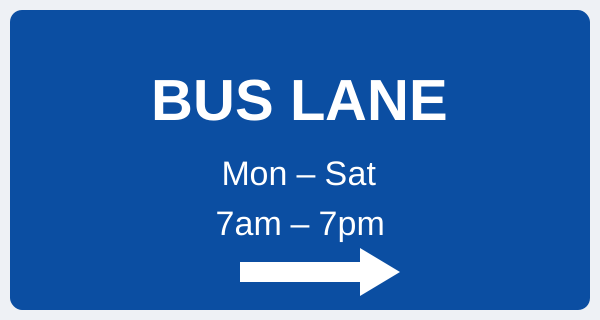
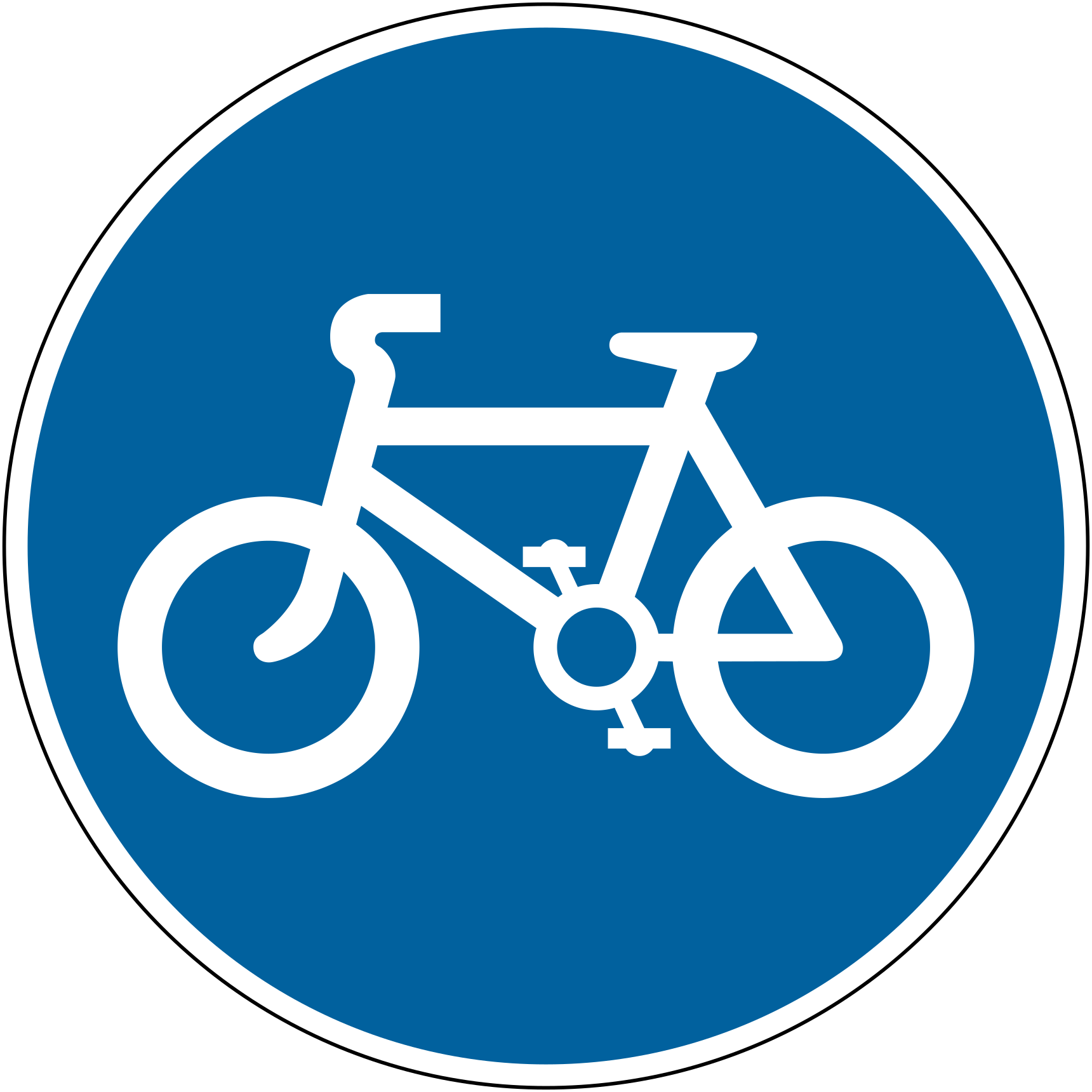
- Read the blue sign first, not just the road colouring.
- Check the days and times before deciding whether you may enter.
- Look for permitted vehicle symbols and words such as taxi or cycle.
- Mirror and signal if you need to move out of a bus lane before it starts operating or before a junction.
- Do not follow another driver into a bus lane without confirming it is allowed.
One-way streets and city lane discipline
One-way systems catch learners because they feel simple at first: everyone is travelling in the same direction. In reality, one-way roads often have several lanes, buses changing position, parked vehicles on both sides, and turnings that arrive quickly. Highway Code Rule 143 says traffic must travel in the direction indicated by signs on a one-way street. It also reminds drivers to follow lane markings and position correctly.
A classic driving-test fault is turning right from a one-way street while sitting in the left lane, or turning left from a position too far out because the learner has not realised the road is one-way. On a normal two-way road, your right-turn position is usually just left of the centre line. On a one-way street, if road markings allow, you may need to position towards the right-hand side for a right turn. That feels odd at first, so practise it with commentary.
Do not assume a one-way street removes all danger. Pedestrians may look the wrong way. Cyclists may be in a contraflow cycle lane. Emergency vehicles, roadworks and buses can still create unusual movement. Your mirrors remain essential, especially before changing lane or moving around stopped traffic.
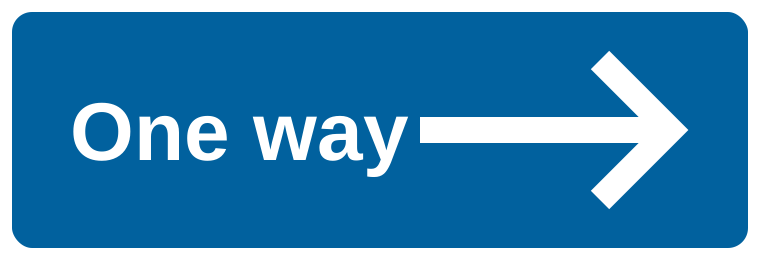
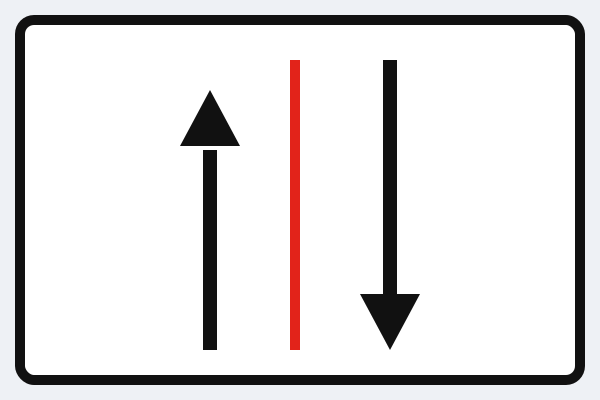
- 1Spot the one-way sign and repeat the direction to yourself.
- 2Check road arrows and lane destination markings early.
- 3Choose the lane for your next turn, not just the emptiest lane.
- 4Use mirrors before any sideways movement, even at low speed.
- 5If you are in the wrong lane, continue safely and let the route be corrected.
Pressure from buses, taxis and impatient drivers
City driving pressure is real. Buses come close because they are large and have tight schedules. Taxis and delivery drivers may know the roads better than you. Someone may beep the moment a light changes. As an instructor, I watch learners react physically: shoulders lift, steering tightens, clutch control worsens and decisions become rushed. That is when minor faults turn into serious ones.
The examiner will not mark you down for taking a safe gap that is reasonable for your ability and the conditions. They can mark you down for hesitating when it is clearly safe to go, but that is different from refusing to be pushed into a blind move. If the vehicle behind is impatient, your priority is still the road ahead, the crossing pedestrian, the cyclist near your left door and the red light in front of you.
Use calm, deliberate actions. Check mirrors, signal where useful, position, then move when safe. Avoid apologetic driving, such as creeping into a yellow box to please the queue behind. Also avoid defiant driving, such as braking sharply to make a point. You are not there to educate other road users. You are there to drive safely.
- If someone beeps, pause your feet before reacting.
- Do not enter a junction unless your exit is clear where the rules require it.
- Keep a safety gap from buses so you can see signs and traffic lights.
- Let aggressive drivers pass when it is safe rather than competing with them.
- Use a brief commentary to keep your brain ahead of the car.
Yellow boxes, crossings and blocked junctions
City centres are full of junctions where the traffic lights change faster than the queue clears. Highway Code Rule 174 says you must not enter a box junction unless your exit road or lane is clear. The main exception is when you want to turn right and are only stopped by oncoming traffic or by other vehicles waiting to turn right. That is a common test route feature because it shows whether you can judge space, not just follow green lights.
Learners often say, 'But the light was green.' Green does not mean go regardless. It means go if the way is clear and it is safe. If you drive into a yellow box and stop because traffic ahead has blocked your exit, that can become a serious test fault and may also be enforceable by camera in many city areas. The same planning applies at pedestrian crossings. Never move onto a crossing if traffic ahead means you may stop on it.
I teach pupils to look beyond the car in front. If you cannot see where your front wheels will be in five seconds, ease off and hold back. This also helps with emergency vehicles because you have left yourself somewhere to move. Crawling bumper-to-bumper into every space feels efficient, but in city driving it often traps you.

- Green light plus blocked exit means wait.
- Only enter a yellow box when your exit lane is clear, unless the right-turn exception applies.
- Do not stop on pedestrian, cycle or toucan crossings because the queue ahead moved slowly.
- Leave space so buses and large vehicles do not mask your view of signals.
- If unsure, wait before the junction rather than inside it.
Reading signs without getting overwhelmed
A busy city signpost can give you more information than you can absorb in one glance: lane arrows, bus gate warnings, no-entry signs, one-way signs, weight restrictions, controlled parking times and direction signs. The solution is not to stare at signs for longer. It is to scan in layers. Look far ahead for shape and colour, then come back to the road immediately, then take a second shorter look to confirm details.
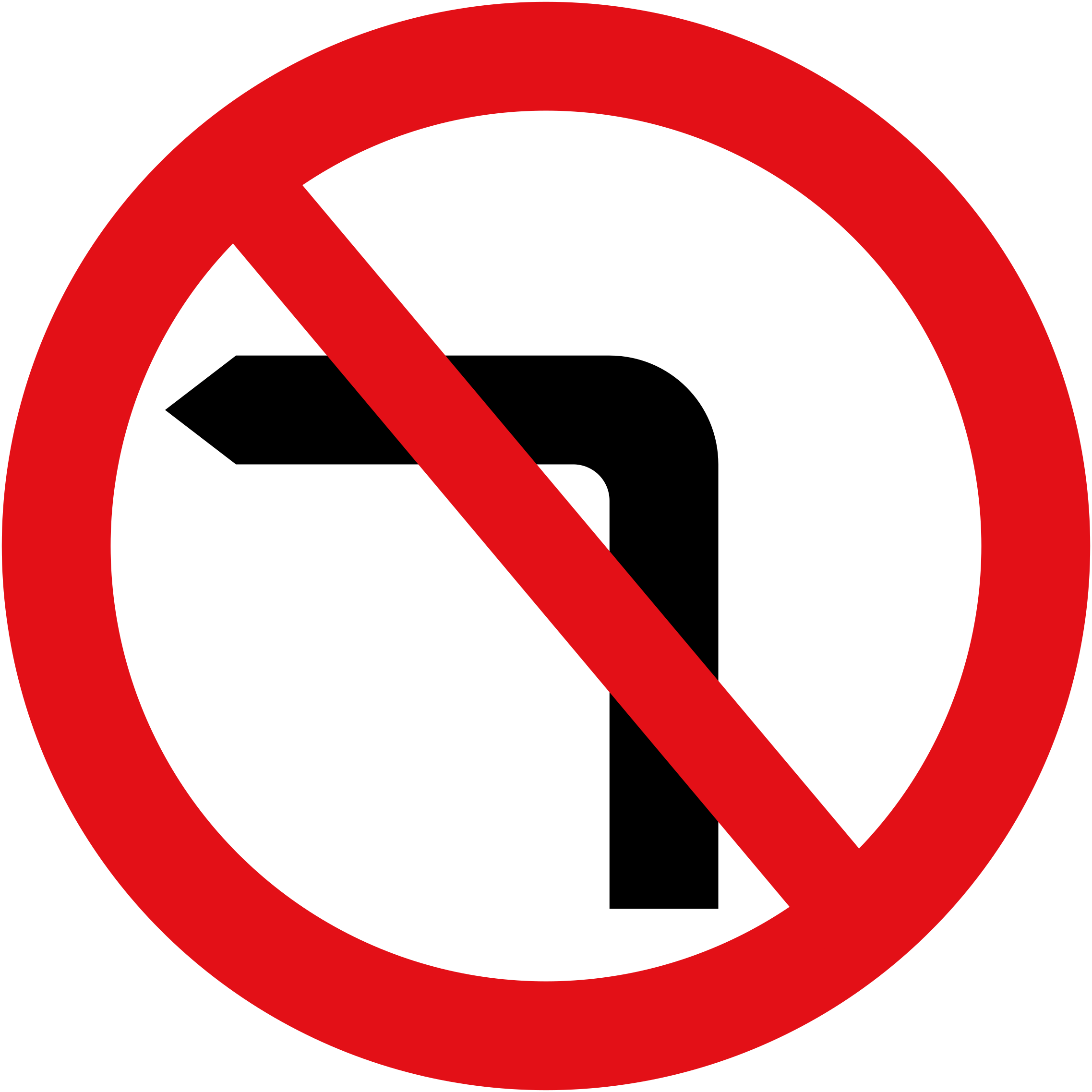
On lessons, I see learners miss the sign they need because they are staring at the sat nav or at the back of the vehicle in front. Sat nav instructions are useful, but they do not override signs. If the sat nav says turn left and the road sign says no left turn, the sign wins. If you miss the turn, continue safely. A driving examiner would rather reroute you than see an unsafe late turn across a cycle lane or bus lane.
Use road markings as early clues. Big white arrows tell you where lanes go. A word such as BUS, TAXI or ONLY is not decoration. Red surfacing can alert you, but it is not the legal instruction by itself. The upright sign and road markings together tell you what is required.
- 1Look far ahead for signs, signals and lane arrows.
- 2Return your eyes to the road and mirrors.
- 3Take a second glance to confirm times, restrictions or destination lanes.
- 4Say the plan out loud in practice: left lane for straight ahead, bus lane active, pedestrian crossing ahead.
- 5If you cannot change lane safely, stay in your lane and let the route change.
Common city-centre faults examiners mark
In city traffic, examiners are usually marking the effect of your decision rather than the drama of the road around you. A busy junction is not automatically difficult if you plan early. A quiet street can still produce a serious fault if you miss a no-entry sign or turn from the wrong side of a one-way road. The marking categories include observations, signals, positioning, response to signs and signals, junctions and progress.
A small correction made safely is normally far better than a perfect route followed unsafely. If you realise you are in the wrong lane, mirrors first, then decide. Can you change without affecting anyone? If not, stay put. The fault that costs people is often the last-second rescue attempt: sharp steering, no blind-spot awareness, braking too late or cutting across a cyclist.
- Fault: driving in an active bus lane. Better response: read the time plate and move out early with mirrors and signal where needed.
- Fault: blocking a yellow box. Better response: wait at the stop line until your exit lane is clear.
- Fault: wrong lane panic. Better response: continue safely and accept a reroute.
- Fault: poor one-way positioning. Better response: use lane arrows and position right for a right turn where markings allow.
- Fault: reacting to pressure from behind. Better response: make the safe decision, then move positively when the way is clear.
- Fault: missing pedestrians while watching signs. Better response: scan signs briefly, then return to near hazards.
A practical city-centre driving routine
When I take a learner into a city centre for the first few times, I do not ask them to memorise every street. I ask them to run a repeatable routine. It gives structure when the road becomes visually noisy. It also helps new drivers after passing, especially when driving in an unfamiliar town at night or in bad weather.
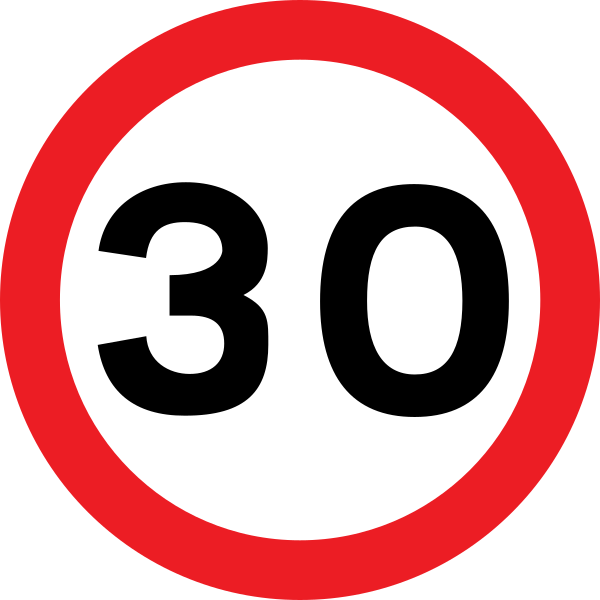
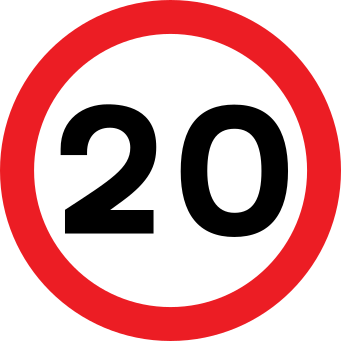
Keep your speed low enough that you can read and respond. In many built-up areas the national default speed limit is 30 mph where there is a system of street lighting, unless signs show otherwise. Lower 20 mph limits and zones are common in city centres, and you must follow the posted limit. The Highway Code and government guidance make clear that speed limits are maximums, not targets.
Remember that planning does not mean crawling everywhere. Holding traffic up unnecessarily can become a progress issue on test and frustrate others. The skill is to be ready early, then move decisively when safe. Smooth city driving is usually a rhythm of early vision, gentle speed control, clear positioning and firm but safe decisions.
- 1Set your speed so you can stop for pedestrians, cyclists and sudden signals.
- 2Look two junctions ahead where possible, not just at the vehicle in front.
- 3Identify controlled lanes: bus lanes, cycle lanes, taxi lanes and turn-only lanes.
- 4Choose your lane early using markings and signs.
- 5Check mirrors before slowing, signalling, changing lane or moving around obstructions.
- 6Hold back from boxes and crossings until your exit is clear.
- 7If pressured, breathe, keep the car still if needed, and restart your routine.
Common questions
Can a learner driver use a bus lane in the UK?
Yes, if that bus lane is not operating at the time, or if the signs permit your type of vehicle. You must read the bus lane sign for days, times and permitted vehicles. Do not assume another driver is allowed just because they enter it.
Will I fail my driving test for going the wrong way in a city centre?
Taking a wrong turn is not an automatic fail if you do it safely and legally. You are more likely to fail for trying to correct it dangerously, such as cutting across lanes late or ignoring a no-entry sign. Examiners can redirect you.
How do I turn right from a one-way street on my driving test?
Check signs and lane markings first. If it is a one-way street and markings allow, you may need to position towards the right-hand side or use the right-turn lane. Keep mirror checks going, especially for cyclists and vehicles changing lane.
What should I do if a bus is close behind me in city traffic?
Do not rush into an unsafe gap or block a junction to get away from it. Keep good observations, move positively when it is safe, and leave yourself room ahead so you are not trapped. If you need to stop, stop smoothly and legally.
Is it OK to stop in a yellow box if the traffic lights were green?
Usually no. Highway Code Rule 174 says you must not enter a box junction unless your exit road or lane is clear, apart from the right-turn exception where you are stopped by oncoming traffic or other vehicles waiting to turn right. Green means proceed only if the way is clear and safe.
How can a new driver feel less nervous in city-centre driving?
Drive at quieter times first and practise one skill at a time, such as bus lane signs or one-way positioning. Use a simple routine: look far ahead, choose the lane early, check mirrors, then act. If you miss a turn, stay calm and let the route change rather than forcing a late manoeuvre.
Browse driving lessons
Reading about it only gets you so far. Our instructors drill this with you in the car, on the roads around your test centre.