
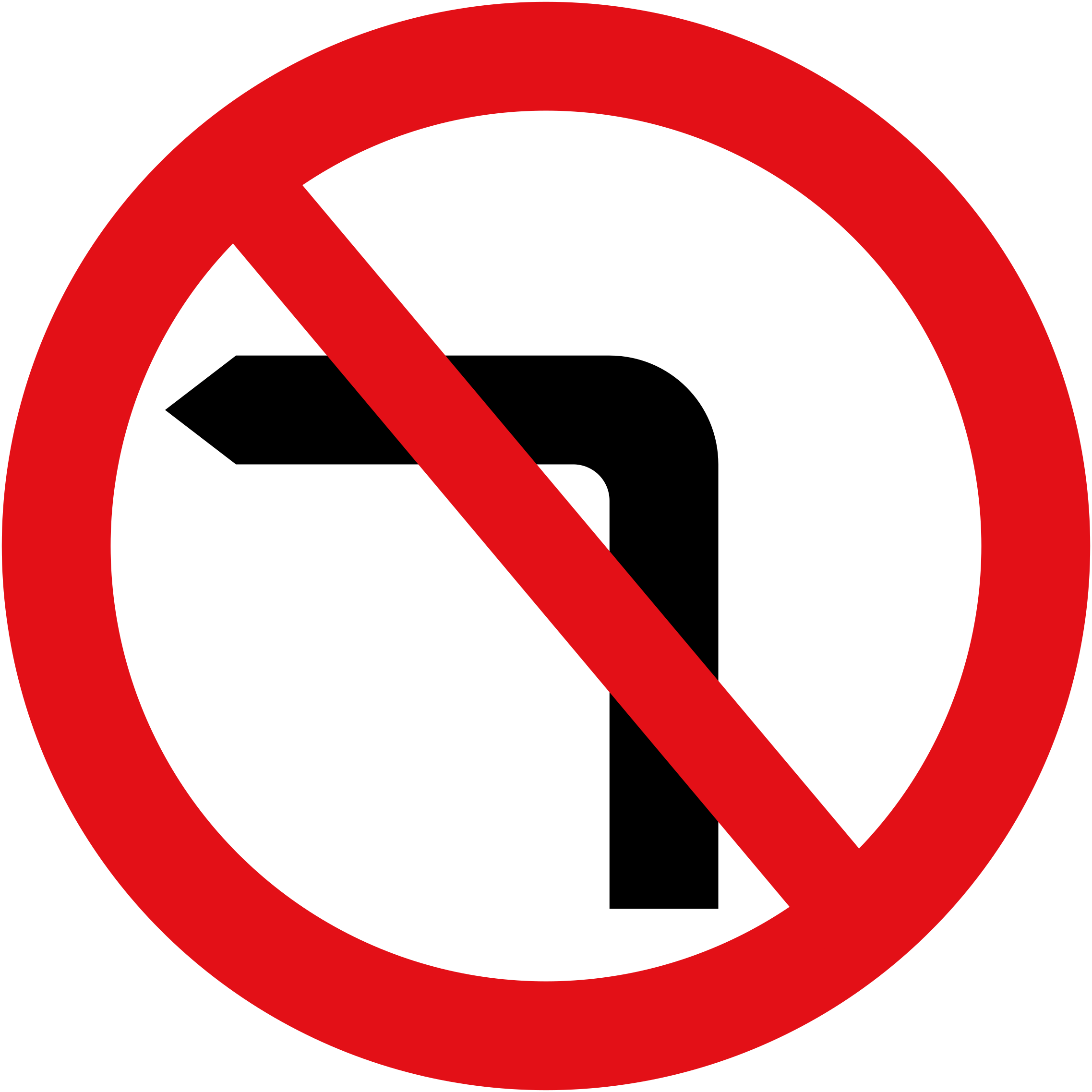
A circular regulatory sign displaying a leftward-pointing black arrow beneath a red prohibition line warns drivers that turning left is prohibited.
This sign protects single-direction roads, bus lanes, pedestrianised zones, and narrow streets where entering from the left would cause hazard or obstruction.
What this sign means
It legally prohibits all vehicular traffic from making a left turn into the adjoining street or driveway.
It is frequently used where the side road is a one-way street with traffic flowing towards the main junction.
- Left arrow crossed out by a red diagonal band inside a red circle.
- Prevents wrong-way entries into one-way streets.
- Applies to all motor vehicles and cyclists unless exempted by sub-plate.
What to do when you see it
Position your vehicle in the straight-ahead or right-turn lane well before reaching the intersection.
Do not signal left or indicate an intention to make a left turn.
How this sign is tested
DVSA theory test items test your recognition of red-bordered circular signs as order-giving prohibitions.
Scenario questions will test whether you can identify legal alternative routes on a map or diagram.
Common mistakes
A common mistake is indicating left out of habit at a junction where left turns are prohibited.
Confusing 'No Left Turn' with mandatory 'Ahead Only' or 'Turn Right' signs is another common theory test error.
Test yourself on this one
Road and traffic signs is the biggest category in the question bank with 102 questions, and signs turn up inside other categories too. Work through them free, no sign-up needed.
Practise road sign questionsFrequently asked questions
Does a No Left Turn sign apply to cyclists?
Yes, unless a supplementary plate explicitly exempts cyclists ('Except cycles').
Why would a junction ban left turns?
To prevent entering one-way streets, pedestrian zones, or high-risk blind spots.
How far ahead of a junction is the sign placed?
It is usually placed right at the junction, often preceded by an advance warning sign.