
The short version
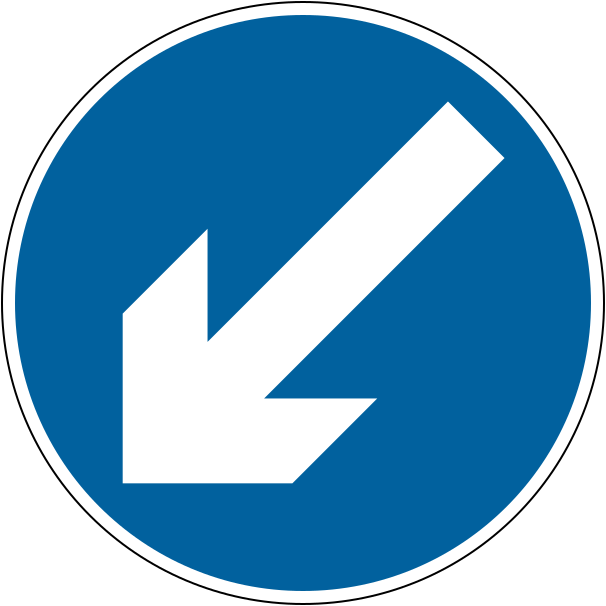
- Keep left unless you are overtaking, as set out in Highway Code rule 264.
- Build speed on the slip road and merge into a safe gap rather than stopping at the end.
- Use mirrors early and often because motorway situations develop quickly.
- Leave at least a two-second gap in dry conditions and more when wet or busy.
- Know what to do on smart motorways, hard shoulders and emergency areas before you need them.
Motorway driving in plain English
If you are looking for a practical guide to motorway driving, the main skills are simple to name but take practice to do well: join at a suitable speed, keep left unless overtaking, maintain a safe following distance, read signs early, and leave without last-second lane changes. The motorway is not a place for hesitation, but it is also not a place for rushing. Smooth, planned driving is what keeps you safe.
As an instructor, I see most motorway nerves come from the slip road and lane changes. Learners and newly qualified drivers often stare at the vehicle in front and forget to judge the traffic already on the motorway. The fix is not bravery, it is a repeatable routine: mirrors, signal if needed, build speed, look for a gap, match the flow, and blend in without making anyone brake sharply.
This is general guidance, not legal advice. For the law and official rules, use the latest Highway Code, DVSA and GOV.UK guidance, because rules, signs and fees can change.
Can learner drivers go on the motorway?
In Great Britain, learner car drivers may drive on motorways only when accompanied by an approved driving instructor and driving a car fitted with dual controls. This change was introduced in 2018 to allow safer supervised experience before the practical test. It is optional, so you do not have to do motorway lessons, but I strongly recommend at least one session if you live near a motorway and feel ready.
You cannot practise on the motorway with a parent, friend or supervising driver if you are still on a provisional car licence. Once you pass your practical test, you can drive on the motorway without an instructor, but that first solo trip can feel like a big step. A short post-test motorway lesson is often one of the best investments a nervous new driver can make.
Highway Code rule 253 lists road users who must not use motorways, including pedestrians, cyclists, horse riders, holders of provisional motorcycle licences, and certain slow-moving vehicles. For learner car drivers, the key point is that motorway use before passing is restricted to the ADI and dual-control arrangement described above.
Joining the motorway safely
The slip road is for building speed and preparing to merge. A common learner fault is treating the slip road like a give-way line at a mini-roundabout, then reaching the end too slowly. Unless traffic is queuing, you usually need to accelerate positively so your speed is close to lane one traffic by the time you merge. Joining at 35 mph when lorries are travelling much faster creates pressure for everyone.
Start with your interior mirror, right mirror and a right blind-spot check as the view opens. Look for a space, not just a vehicle. Many learners stare at one lorry and think, 'I need to beat it.' That is the wrong target. You are deciding whether to go ahead of it, behind it, or continue along the slip road if there is room. A signal helps when it gives useful information, but it does not give you priority.
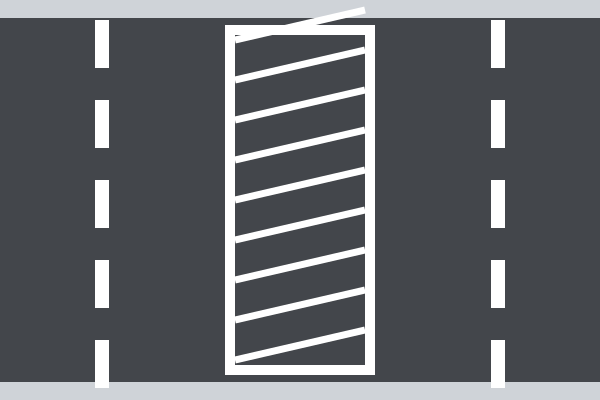
If traffic is heavy, you may need to adjust speed gently and merge behind a vehicle. Avoid forcing your way in, but also avoid drifting along the hard shoulder or chevrons. If there are solid white lines or a hatched area at the end of the slip road, do not cross them unless directed by signs, police or traffic officers.
- Mirror routine: interior mirror, right mirror, then right blind spot before moving out.
- Speed aim: match the flow of lane one where possible, within the posted limit.
- Signal use: signal early enough to help, but only move when the gap is safe.
- Gap choice: pick a space you can enter without making another driver brake sharply.
- Do not stop at the end of the slip road unless traffic conditions make it unavoidable.
Lane discipline: keep left unless overtaking
Highway Code rule 264 says you should always drive in the left-hand lane when the road ahead is clear, and return to the left once you have safely passed slower vehicles. This is one of the biggest motorway habits to get right early. Sitting in the middle lane because it feels easier is poor lane discipline and can cause frustration, bunching and risky overtakes around you.
When I take pupils onto faster dual carriageways, the fault I see most is the late return to the left. They overtake a lorry, then stay out because there is another lorry half a mile ahead. If the gap is long enough for traffic behind to pass safely and you are not immediately overtaking, move back left. If you keep making vehicles queue behind you, you are not managing the lane properly.
On a practical driving test, the examiner is not taking you on the motorway, but they are assessing the same skills on dual carriageways and multi-lane roads: mirrors, positioning, planning, speed and judgement. New drivers who learn good lane discipline before using motorways usually find motorway driving far less stressful.
- Fault: staying in lane two or three when lane one is clear. Fix: return left after overtaking.
- Fault: moving left too close to the vehicle you passed. Fix: wait until you can see it clearly in your interior mirror.
- Fault: changing lanes without a blind-spot check. Fix: check mirrors first, then the relevant blind spot before steering.
- Fault: matching the speed of a vehicle beside you. Fix: either complete the overtake or drop back.
- Fault: using the outside lane as a fast lane. Fix: treat it as an overtaking lane, not your default lane.
Speed, space and following distance
The national speed limit for cars on motorways is 70 mph, unless signs show a lower limit. This limit is published in the Highway Code and GOV.UK guidance, but always obey the signs in front of you, especially through roadworks and variable speed limit areas. A red X over a lane means that lane is closed and you must not drive in it.
Good motorway speed is not simply 'do 70'. It is a speed that is legal, safe for the conditions and leaves you time to respond. In heavy spray, strong wind, darkness, congestion or unfamiliar road layouts, holding the maximum speed may be a poor choice. I would rather see a new driver doing 62 mph with excellent spacing and awareness than 70 mph while sitting too close to a van.
Highway Code rule 126 gives the two-second rule in dry conditions: allow at least a two-second gap from the vehicle in front, and at least double that on wet roads. In the car, I teach pupils to pick a bridge, sign or shadow. When the vehicle ahead passes it, say, 'Only a fool breaks the two-second rule.' If you pass the same point before finishing the phrase, you are too close.
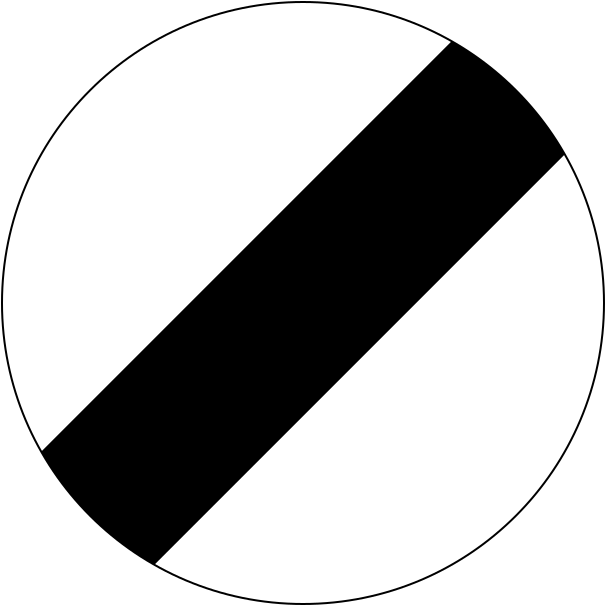 National speed limit appliesWhat it means
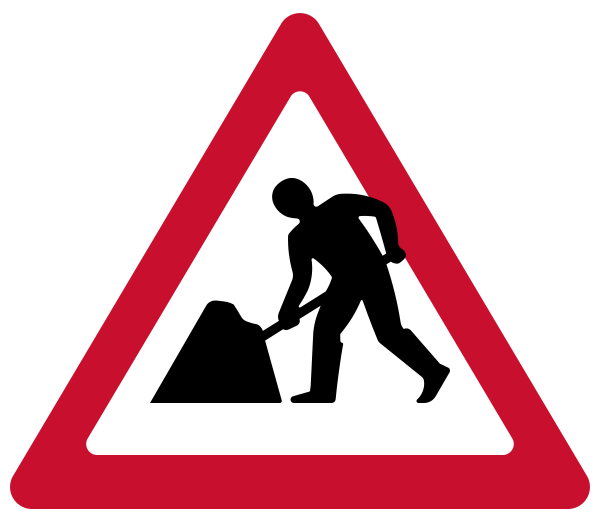 Road works aheadWhat it means
 Red X motorway signalWhat it means
- 1Pick a fixed point ahead, such as a sign or bridge.
- 2When the vehicle in front passes it, start the two-second phrase.
- 3If you reach the point before the phrase ends, ease off gently.
- 4In wet weather, double the gap to at least four seconds.
- 5If another driver fills your gap, rebuild it rather than reacting angrily.
Overtaking on a motorway
Overtaking should be planned, not sudden. The routine is mirrors, assess, signal if useful, check the blind spot, move smoothly, pass with progress, then return left when safe. The most dangerous learner-style overtake is the one that starts too late, with the driver close behind a lorry, unable to see ahead properly, and then steering out under pressure.
Before moving out, check the speed of traffic already in the next lane. A car in lane two that looks small in the mirror can arrive quickly if it is travelling faster than you. If your move would make that driver brake or swerve, wait. Also be careful when approaching slip roads, because vehicles may join and affect lane one just as you plan to move back.
Do not overtake and then cut back sharply. Wait until you can see the front of the vehicle you passed in your interior mirror, then check left mirror and blind spot before returning. If you are overtaking a long vehicle, leave extra time. Large vehicles create spray, wind buffeting and blind spots, so pass decisively but legally.
- Plan early: do not sit close behind a lorry before deciding.
- Check speed, not just position: fast traffic can close the gap quickly.
- Signal only when you have chosen a safe gap and the signal will help others.
- Avoid lingering alongside large vehicles where possible.
- Return left when safe, without squeezing the vehicle you have passed.
Smart motorways, signs and lane closures
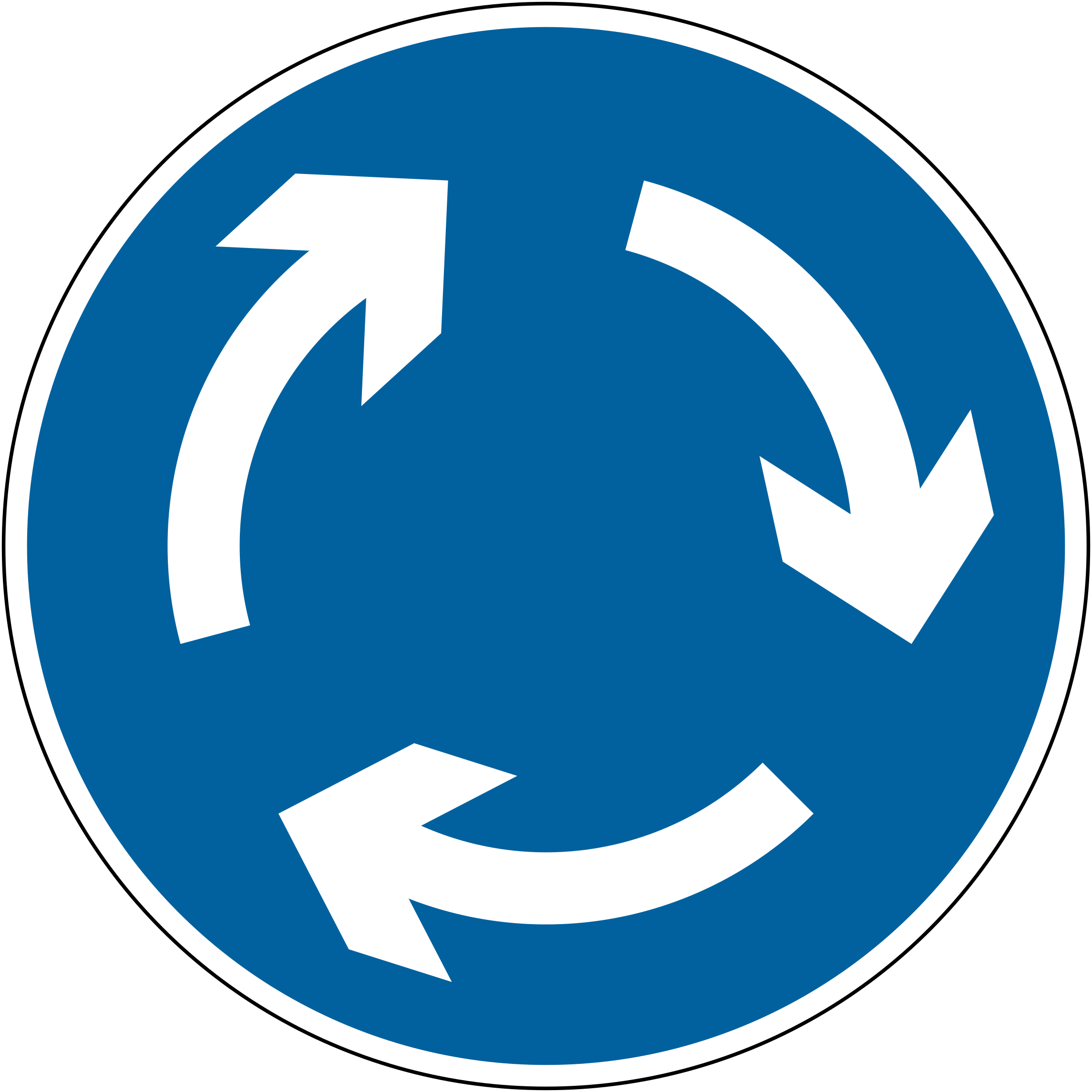
Smart motorways use technology such as variable speed limits, lane control signals and CCTV. Some have a hard shoulder that may be used as a running lane at certain times, and some have no permanent hard shoulder. Whatever the layout, your job is to obey the gantry signs and road markings in front of you, not what you remember from the last journey.
A red X is one of the most important motorway signals. If a red X is displayed above a lane, that lane is closed. Move out of it safely as soon as you can, and do not enter it. You may see a lower speed limit displayed in a red circle, such as 50 or 60. Those limits are mandatory. Advisory warnings, such as congestion or incident messages, still deserve respect because they are warning you about conditions ahead.
When teaching new drivers, I notice they often read the first sign but miss the second. Motorway information changes quickly. Keep scanning far ahead, then check mirrors so you understand what is happening behind before you respond. Last-second swerves across lanes because an exit or lane closure has surprised you are exactly what we are trying to avoid.
- Red X: the lane is closed, so leave it safely and do not use it.
- Speed limit in a red circle: mandatory limit, not a suggestion.
- White arrows or lane guidance: prepare to move as directed when safe.
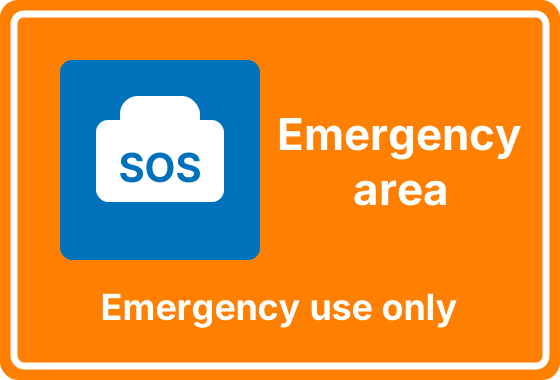
- Emergency areas: for emergencies only, not for rest stops or phone calls.
- Roadworks: expect narrower lanes, lower limits and sudden changes in traffic flow.
Leaving the motorway and planning your route
Leaving the motorway is usually easier than joining, but it catches out new drivers because everything happens earlier than they expect. Start planning when you see the one-mile sign for your junction. Check mirrors, move to the correct lane in good time and avoid diving across from lane three because the sat nav suddenly announces the exit.
On the slip road off the motorway, your sense of speed can be distorted. After several minutes at 70 mph, 40 mph can feel slow even when it is not. Look for the speed limit sign on the slip road or roundabout approach and brake progressively. I often have to remind new drivers that the bend at the bottom of the slip road is much tighter than it looked from the motorway.
If you miss your exit, carry on to the next one. Do not stop, reverse, cross chevrons or make a sudden lane change. A missed junction costs a few minutes. A panic manoeuvre can cost far more.
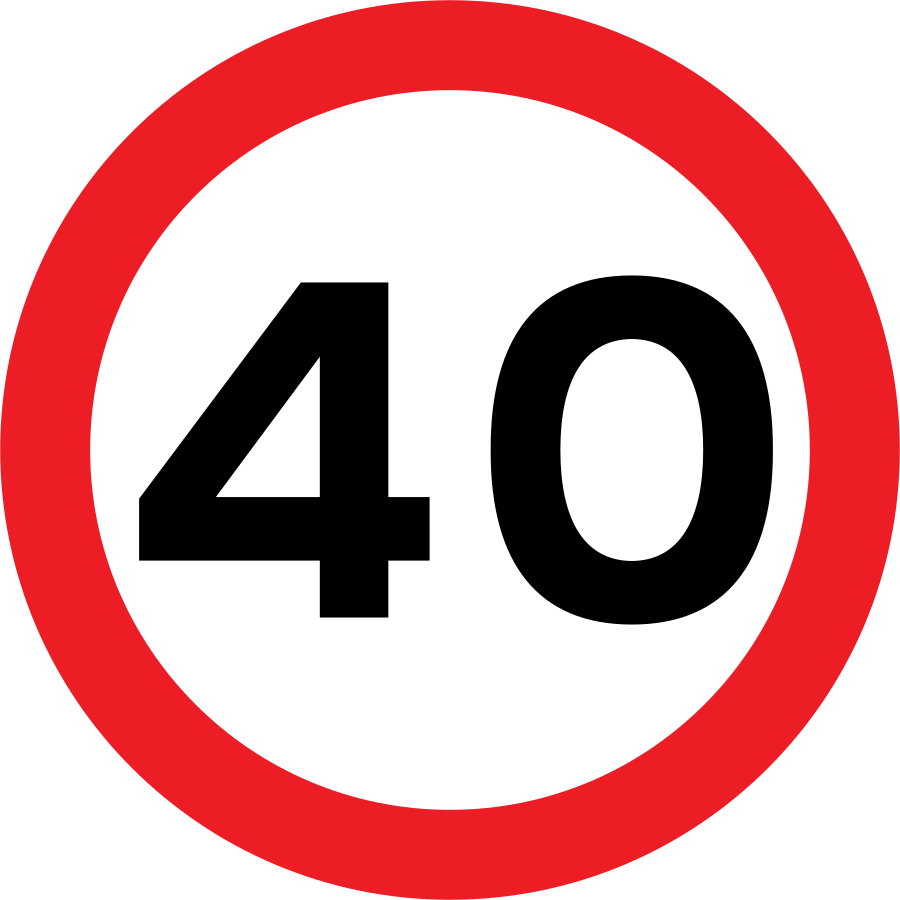
- 1At one mile, confirm the junction number and check your mirrors.
- 2Move left in stages if you are not already in lane one.
- 3Signal left in good time if it will help following traffic.
- 4Enter the slip road fully before reducing speed more firmly.
- 5Read the new speed limit and road layout at the end of the slip road.
- 6If you miss the exit, continue to the next junction and reroute safely.
Breakdowns, fatigue and your first solo motorway trip
If your vehicle develops a problem on a motorway, your priority is to get away from live traffic. Highway Code rules 274 and 275 cover breakdown and emergency procedures. If possible, leave at the next exit, service area or emergency area. If you must stop on a hard shoulder or emergency area, stop as far left as possible, put hazard warning lights on, get out on the left-hand side if safe, move behind the barrier, and call for help.
If you break down in a live lane and cannot leave the vehicle safely, keep your seatbelt on, switch on hazard lights and call 999. Do not try to repair the vehicle in a live lane. On any motorway, but particularly on sections without a hard shoulder, knowing this before you travel reduces panic if something goes wrong.
For your first solo motorway journey, choose a familiar route, avoid peak traffic if you can, and give yourself more time than the sat nav suggests. Check fuel or charge, tyres, lights, washer fluid and windscreen before you go. Fatigue matters too: motorway driving can look easy because there are no pedestrians or roundabouts, but the constant speed and concentration can tire new drivers quickly.
- Before you go: check fuel or charge, tyres, lights, mirrors, washer fluid and phone battery.
- Route plan: know your junction numbers and where you could stop for a break.
- Mindset: you do not need to prove anything by using lane three or driving at the limit.
- If tired: leave at the next safe place and rest. Do not push on while drowsy.
- If unsure: book a supervised motorway session before attempting a long trip alone.
Common questions
Is motorway driving part of the UK practical driving test?
Car practical tests in Great Britain do not include motorway driving, but they can include dual carriageways and multi-lane roads. Examiners assess the same core skills there: mirrors, lane discipline, speed control, planning and safe judgement.
Can I drive on the motorway straight after passing my test?
Yes, once you have passed your car practical test, you can drive on motorways without an instructor. If you feel nervous, take your first journey at a quieter time or book a post-test motorway lesson to practise joining, overtaking and leaving with support.
What speed should a new driver do on the motorway?
For cars, the national speed limit on motorways is 70 mph unless signs show a lower limit. That is a maximum, not a target. Choose a legal speed that suits the traffic, weather, visibility and your experience.
Is it illegal to stay in the middle lane on a motorway?
Highway Code rule 264 says you should keep in the left-hand lane when the road ahead is clear and return left after overtaking. Poor lane discipline can lead to police action where it amounts to careless or inconsiderate driving, but the exact outcome depends on the circumstances.
What should I do if I miss my motorway exit?
Carry on to the next junction and let your route recalculate. Never reverse, stop on the carriageway, cross solid white chevrons, or swerve across lanes at the last moment. A calm detour is always safer than a panic exit.
How do I stop feeling scared of joining the motorway?
Practise the joining routine on faster dual carriageways first, then try a short motorway route with an ADI if you are a learner or with an experienced driver after passing. The confidence comes from having a method: build speed, check mirrors and blind spot, choose a gap, and merge smoothly.
Browse driving lessons
Reading about it only gets you so far. Our instructors drill this with you in the car, on the roads around your test centre.