
The short version
- Build confidence gradually by choosing the right time, route and goal for each drive.
- Keep using the same observation and planning habits that got you through the test.
- Avoid stacking challenges such as rush hour, passengers, night driving and unfamiliar roads too soon.
- Know the key new driver rules, especially the six-point revocation rule in your first two years.
- If anxiety is stopping you driving, take a short refresher lesson rather than avoiding the car.
How do you become a confident driver after you pass?
The quickest safe answer is this: drive regularly, keep the journeys manageable, and deliberately practise the bits you are least sure about. Most new drivers do not lose confidence because they cannot control the car. They lose it because the first few solo drives throw several new things at them at once: no instructor beside them, no dual controls, different car, different insurance rules, passengers talking, and roads they have not practised on.
As an instructor, I often see learners drive well on test-standard routes, then worry about the first drive to work, a busy supermarket car park or a motorway slip road. That is normal. Your test pass means the DVSA examiner judged you competent to drive independently on that day. It does not mean you have already experienced every road type, weather condition or awkward driver you will meet.
The aim in the first few weeks is not to prove yourself. It is to build a bank of calm, successful drives. Start with familiar local routes at quieter times. Then add one new challenge at a time: a different junction, a faster road, parking in a busier car park, then perhaps a longer drive. Confidence is the result of evidence, and each well-managed journey gives your brain evidence that you can cope.
Keep the test habits that actually protect you
A lot of new drivers relax the wrong things after passing. They stop moving their head for mirror checks, coast into junctions, steer one-handed while changing gear, or rush observations because no examiner is watching. Examiners are not marking theatre; they are marking risk. If you missed a mirror before changing speed or direction on test, that could become a driving fault, serious fault or dangerous fault depending on what was around you.
The best post-test drivers keep the core routines but make them feel natural. Mirrors before signalling, changing speed or changing position. Looking properly into junctions, not just flicking your eyes. Checking blind spots when moving off, changing lanes or emerging where cyclists and motorcyclists may appear. Keeping a two-second gap in dry conditions, as set out in Highway Code Rule 126, and increasing it when wet or visibility is poor.
The specific fault I see costing people after the test is late planning. They notice the roundabout too late, brake sharply, then try to pick a lane while steering. Confidence drops because the drive feels rushed. Give yourself more time: read signs early, ease off the gas before you need to brake, and decide your lane before you are on top of the hazard.
- Mirror, signal, position, speed and look still matters, especially when nobody is prompting you.
- Do not let other drivers pressure you into gaps you would not have taken on your test.
- If you miss a turn, carry on safely and let the sat nav reroute rather than making a last-second move.
- Treat cyclists, motorcyclists, pedestrians and horse riders as vulnerable road users needing extra space.
- Keep your commentary simple in your head: signs, mirrors, space, speed, escape route.
Plan your first ten solo drives
Your first drive after passing should be deliberately boring. Choose a route you know, in daylight if possible, with easy parking at the end. Fill up with fuel or charge the car before you need it. Set up your mirrors, seat, phone connection and sat nav before moving. The small jobs that felt easy with an instructor can feel distracting when you are on your own.
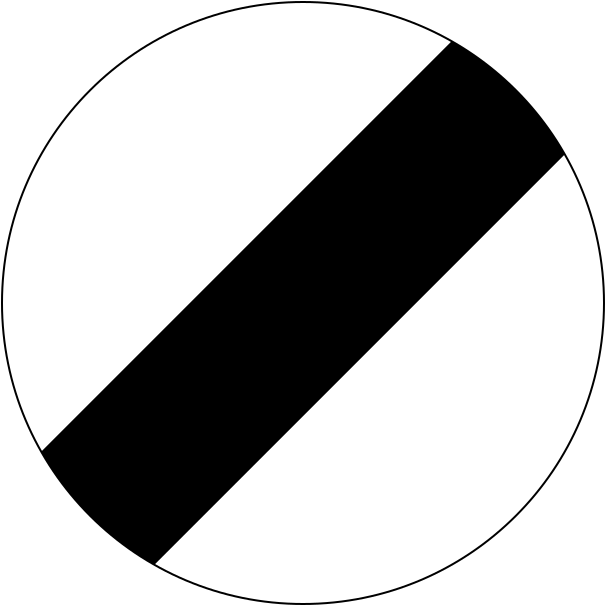
I recommend giving each early drive one purpose. For example, practise a familiar roundabout, drive to a family member's house, park at a quiet retail park, or use a short section of national speed limit road. If you make every first drive a big event, your brain links driving with pressure. If you make it repeatable and controlled, confidence grows much faster.
Do not be embarrassed to use P plates if they help you. They are optional in Great Britain, but many new drivers find they reduce pressure from drivers behind. They do not give you special rights and they do not excuse poor driving, but they can communicate that you are newly qualified and still building experience.
- 1Drive a familiar five to ten minute route in daylight with no passengers.
- 2Repeat the route and add one slightly busier junction or roundabout.
- 3Practise parking somewhere quiet, including reversing out only where it is safe and legal.
- 4Drive at a moderately busy time, but avoid the peak rush hour at first.
- 5Add an unfamiliar destination using sat nav, set before you move off.
- 6Do a longer drive with a calm passenger who will stay quiet unless you ask for help.
- 7Review what went well and choose one skill to practise next time.
Motorways, faster roads and lane discipline
Motorways worry many new drivers because they are faster, but they are often more predictable than busy urban roads. The key is joining at the right speed, matching the flow where safe, and using mirrors early. You are allowed to drive on motorways once you have passed. Learners in England, Scotland and Wales may also take motorway lessons with an approved driving instructor in a dual-controlled car, a change introduced in 2018, but independent motorway driving starts after the test.
Highway Code Rule 259 tells drivers joining a motorway to give priority to traffic already on the motorway and adjust speed to fit safely into the traffic flow. In the car, the mistake I see is learners staring at the end of the slip road instead of checking the lane they want to join. Look early, build speed progressively, identify a safe gap, and never assume the vehicle in lane one will move over for you.
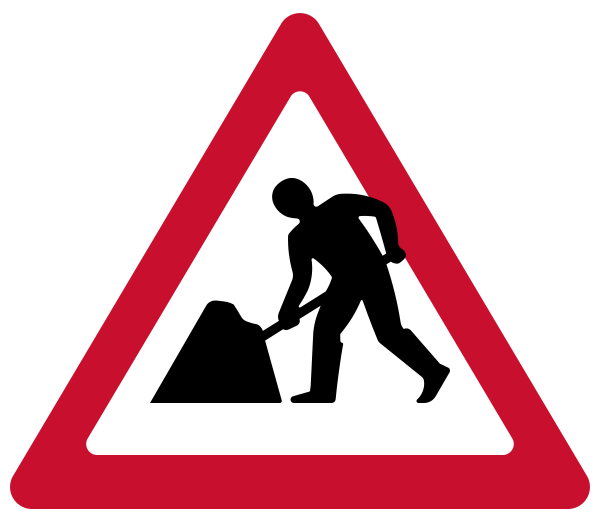
Once on the motorway, Highway Code Rule 264 says you should keep in the left lane unless overtaking. Middle-lane sitting is not confident driving; it is poor planning and it frustrates others. Check mirrors, signal if needed, move out to overtake, then return left when you can do so safely. The national speed limit for cars on motorways and dual carriageways is 70 mph unless signs show otherwise, according to the Highway Code, but the safe speed may be lower in traffic, rain, fog or roadworks.
- Use the slip road to build an appropriate joining speed, not to hesitate at the end.
- Check mirrors and blind spot before changing lanes, especially for fast-approaching vehicles.
- Return to the left after overtaking when there is a safe gap.
- Leave at least a two-second gap in dry conditions and more in wet or poor visibility.
- If you miss your exit, continue to the next one and re-route safely.
Passengers, phones and pressure from other drivers
A new licence can suddenly make you the driver for friends, siblings or nights out. Be careful. Passengers change the atmosphere in the car, and young or excited passengers can be a real distraction. You are allowed to set rules: seatbelts on, music at a sensible volume, no shouting directions at the last second, and no encouraging risky overtakes or speed.
Mobile phone rules are strict. Highway Code Rule 149 says you must exercise proper control of your vehicle at all times and must not use a hand-held mobile phone or similar device when driving or when supervising a learner, except in very limited circumstances such as calling 999 or 112 when it is unsafe or impractical to stop. GOV.UK states that the fixed penalty for using a hand-held phone while driving is currently £200 and 6 penalty points, but penalties can change, so check the latest official guidance.
That matters even more for new drivers because of the six-point rule. Under the Road Traffic (New Drivers) Act 1995, explained on GOV.UK, if you get 6 or more penalty points within two years of passing your first driving test, your licence will be revoked. You would normally have to apply for a provisional licence and pass both theory and practical tests again. This is general guidance, not legal advice.
- Put your phone out of reach or use a legal hands-free setup only when it is safe and necessary.
- Set your destination, playlist and temperature controls before you move off.
- Tell passengers your rules before the journey starts, not after they distract you.
- Do not compete with tailgaters; maintain your plan and let them pass when safe.
- Never drive after alcohol or drugs. Highway Code Rule 95 warns that both seriously affect driving.
Bad weather, night driving and unfamiliar roads
The test may not have exposed you to heavy rain, darkness, rural bends or fog. That is why confidence needs layers. Night driving is not just the same drive with headlights on. Judging speed and distance is harder, pedestrians are easier to miss, and glare from oncoming headlights can make you tense. Slow down early, keep the windscreen clean and avoid staring into headlights.
Highway Code Rule 229 gives advice before setting off in adverse weather, including checking lights, tyres, windscreen wipers and washer fluid. Rule 126 says stopping distances should be at least doubled on wet roads and can be ten times greater on icy roads. Those figures are published in the Highway Code and should be treated as minimum thinking distances and braking distances, not targets to test.
On rural roads, the national speed limit sign does not mean the road is safe at that speed. I have sat beside many capable learners who passed their test in town, then arrived at a blind bend on a country lane far too quickly because the sign said 60. Read the road: hedges, mud, hidden entrances, horse riders, cyclists, tractors and poor sight lines all tell you to reduce speed.
- Use dipped headlights when visibility is seriously reduced and in conditions required by the Highway Code.
- Clear all windows, mirrors, lights and number plates before moving off in frost or snow.
- Reduce speed before bends, not halfway through them.
- Avoid deep standing water where possible and test brakes gently afterwards if you have driven through water.
- Postpone non-essential journeys if weather warnings or road conditions are beyond your experience.
Dealing with mistakes without panicking
Every driver makes mistakes. Confident drivers are not perfect; they recover safely. The dangerous bit is often not the original error, but the rushed correction. Missing a gear is not usually a disaster. Swerving across lanes because you nearly missed an exit is. Stalling is rarely serious if you secure the car, restart and move when safe. Rolling into a poor gap because someone behind beeped can be serious.
When learners make an error in lessons, I watch what happens next. Do they freeze, apologise for ten seconds and stop scanning the road? Or do they breathe, keep steering, check mirrors and choose the safest option? After you pass, you need that second response. Your priority is always control, observation and space.
If something shakes you, find a safe place to stop and reset. Do not stop on the hard shoulder unless it is an emergency, and follow motorway emergency rules if you genuinely have to. For ordinary nerves, choose a car park, side road or service area. A short pause can prevent a small wobble becoming a bad decision.
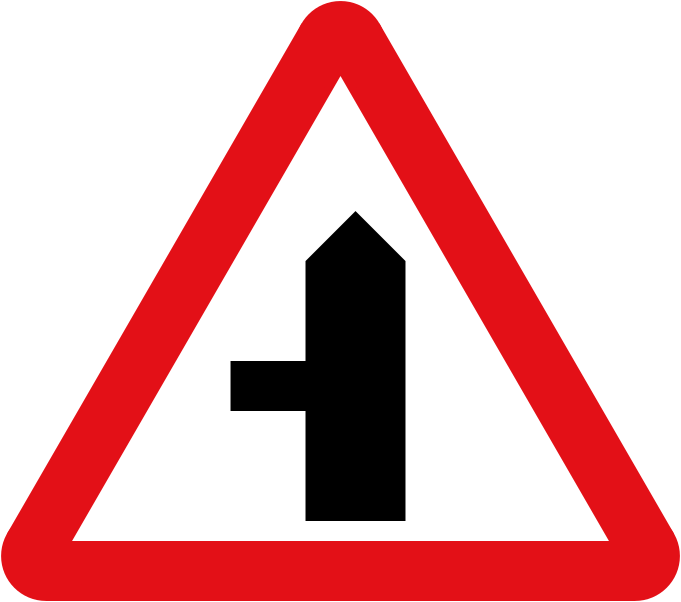
- Common mistake: missed turn. Safe response: continue ahead and reroute.
- Common mistake: wrong lane. Safe response: follow the lane markings unless a safe, legal change is possible.
- Common mistake: stall at lights. Safe response: handbrake if needed, neutral, restart, observe, move off.
- Common mistake: tailgated. Safe response: keep a safe speed and increase your forward gap.
- Common mistake: poor parking attempt. Safe response: stop, observe all round and correct slowly.
When to book extra help after passing
There is no shame in taking a refresher lesson after you pass. In fact, it is one of the most sensible things a new driver can do if a particular situation is holding them back. I often teach drivers who passed months or years earlier but avoided motorways, multi-storey car parks, hill starts in traffic or city driving. Usually, the problem is not ability. It is that avoidance has made the fear bigger.
A good post-test session should be targeted. Ask for motorway joining, night driving, parking in real car parks, rural roads, or a route you must use for work or college. The instructor should not treat you like a beginner if you are not one. They should help you sharpen planning, observation and decision-making for the roads you now need to use independently.
Pass Plus is one recognised option in Great Britain, covering areas such as town driving, all-weather driving, rural roads, night driving, dual carriageways and motorways. It is not a second test and insurance discounts are not guaranteed, so check directly with insurers rather than assuming a saving. The real value is structured experience with someone calm beside you.
- 1Write down the exact driving situation you are avoiding.
- 2Book a session at a time when that situation can be practised realistically.
- 3Tell the instructor what car you drive and what has knocked your confidence.
- 4Practise the route or skill several times, not just once.
- 5Repeat it alone soon afterwards while the lesson is fresh.
- 6Build it into normal driving so it does not become a special event again.
Common questions
How long does it take to feel confident after passing your driving test?
There is no official timescale because it depends on how often you drive, the roads you use and your previous experience. Many new drivers feel noticeably calmer after a few weeks of regular short journeys, but motorway, night or city confidence may take longer. The important thing is steady practice rather than long gaps between drives.
Is it normal to be scared to drive alone after passing?
Yes, it is very common. During lessons you had an instructor managing the risk with you, so the first solo journeys can feel exposed. Start with familiar roads, quiet times and simple goals, then build gradually. If fear is stopping you driving at all, a refresher lesson can help.
Should I use P plates after I pass my test?
P plates are optional in Great Britain. They can be useful if they make you feel less pressured, but they do not change the rules or give you priority. Use them if they help, and remove them when you feel they are no longer useful.
Can I drive on the motorway straight after passing?
Yes, once you have passed your practical test you can drive on motorways. Choose your first motorway drive carefully: good weather, daylight and a quieter time are sensible. If joining and lane changes worry you, take a motorway lesson with an ADI.
What happens if a new driver gets 6 points?
Under the new driver rules, if you get 6 or more penalty points within two years of passing your first driving test, your licence will be revoked. GOV.UK explains that you would normally need to apply for a provisional licence again and pass the theory and practical tests again. This is general guidance, not legal advice, and you should check current official information.
How can I stop making silly mistakes after passing?
Most so-called silly mistakes come from rushing, distraction or poor planning. Keep using mirrors early, slow down before hazards and avoid changing the route at the last second. After each drive, pick one thing to improve next time rather than replaying the whole journey negatively.
Browse driving lessons
Reading about it only gets you so far. Our instructors drill this with you in the car, on the roads around your test centre.