
The short version
- Zebra crossings have black and white stripes with flashing Belisha beacons.
- Pelican crossings have a flashing amber phase, but puffin crossings do not.
- Toucan crossings are for pedestrians and cyclists to cross together.
- Parallel crossings put a cycle crossing alongside a zebra crossing.
- On test, most crossing faults come from late planning, poor observation or moving before the crossing is clear.
The main types of pedestrian crossing in the UK
The main types of pedestrian crossing in the UK are zebra crossings, pelican crossings, puffin crossings, toucan crossings, equestrian crossings, parallel crossings and school crossing patrols. You will also meet pedestrian facilities at traffic lights, central refuges, dropped kerbs and informal crossing points, but these are not all controlled crossings in the same way.
For a learner driver, the important difference is not just the name. You need to know what the road markings, lights and signals are telling you, who may be using the crossing, and what the Highway Code expects you to do. On lessons, I often see learners recognise the crossing too late, then brake sharply or hesitate when the correct action was obvious much earlier.
This article is general guidance for learner and new drivers in Great Britain, not legal advice. Always follow current road signs, signals, police directions and the latest version of The Highway Code, which can be updated by the Department for Transport and DVSA.
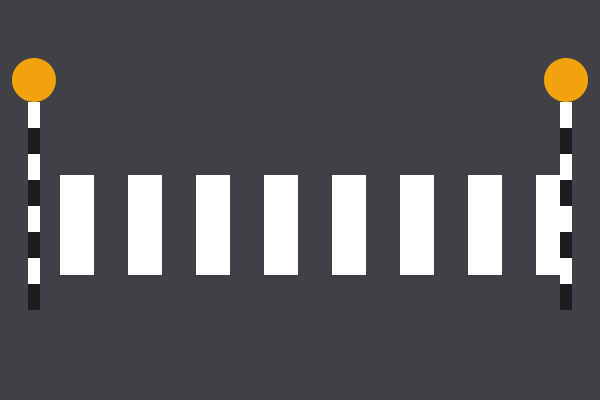
- Zebra: black and white stripes, Belisha beacons, no traffic lights.
- Pelican: traffic lights with a flashing amber phase.
- Puffin: traffic lights with sensors, no flashing amber.
- Toucan: shared pedestrian and cyclist crossing.
- Equestrian or Pegasus: crossing designed for horse riders, often with higher push buttons.
- Parallel: a cycle crossing running alongside a zebra crossing.
Zebra crossings: what learners must get right
A zebra crossing is marked by black and white stripes across the road, usually with flashing amber Belisha beacons and zig-zag markings on the approach. Highway Code Rule 195 says you must give way when a pedestrian has moved onto a zebra crossing, and you should give way to pedestrians waiting to cross. In real driving, that means you plan to stop early if someone is waiting, rather than trying to judge whether you can sneak through.
The biggest driving test fault I see at zebra crossings is approach speed. Learners sometimes keep a normal 30 mph approach until they are very close, then suddenly realise someone is standing near the kerb. Even if they stop, it can feel rushed and unsafe. Examiners look for anticipation: mirrors, easing off the gas, covering the brake if needed, and making a smooth, controlled decision.
Do not wave pedestrians across. It feels polite, but it can be unsafe because you cannot control traffic coming the other way, cyclists filtering, or a motorcyclist behind you. Make your intention clear by slowing and stopping where required. Let the pedestrian decide when it is safe to cross.
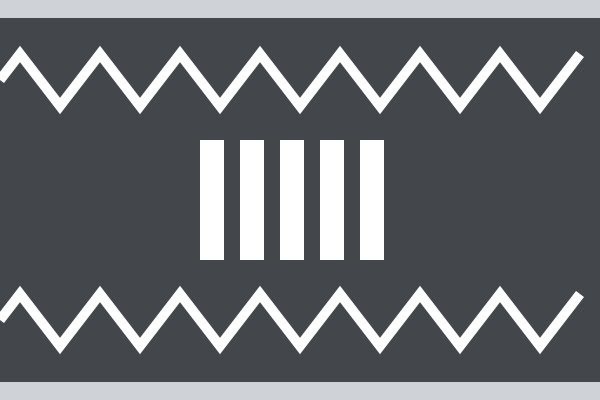 Pedestrian crossing zigzag linesWhat it means
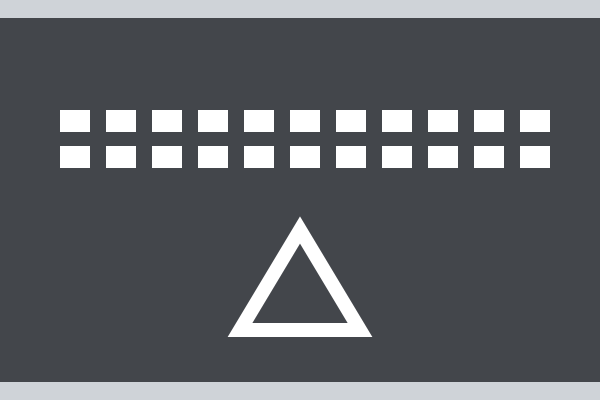 Give way lineWhat it means
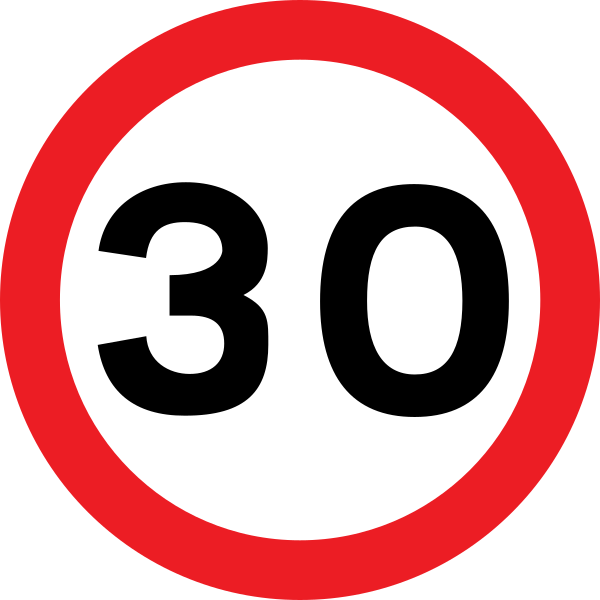 30 mph speed limitWhat it means
Pelican crossings: red, amber and flashing amber
A pelican crossing is a signal-controlled pedestrian crossing. The traffic lights work much like other traffic lights, but with one important feature: the flashing amber phase. Highway Code Rule 196 says you must stop at a red light. When amber is flashing, you must give way to any pedestrians on the crossing, but if the crossing is clear you may proceed.
This is where learners often pick up faults. Some stop on flashing amber when the crossing is completely clear and there is no reason to remain stopped, causing unnecessary hesitation. Others do the opposite and move off while a pedestrian is still on the crossing, especially if the pedestrian is nearly at the far kerb. If they are still on your half of the crossing, or you would make them feel rushed, wait.
On test, the examiner is not looking for you to know the word pelican like a quiz answer. They are looking for safe response to the lights and the people. A red light is a stop. A steady amber means stop unless it is unsafe to do so, as with normal traffic lights. Flashing amber means proceed only if the crossing is clear of pedestrians.
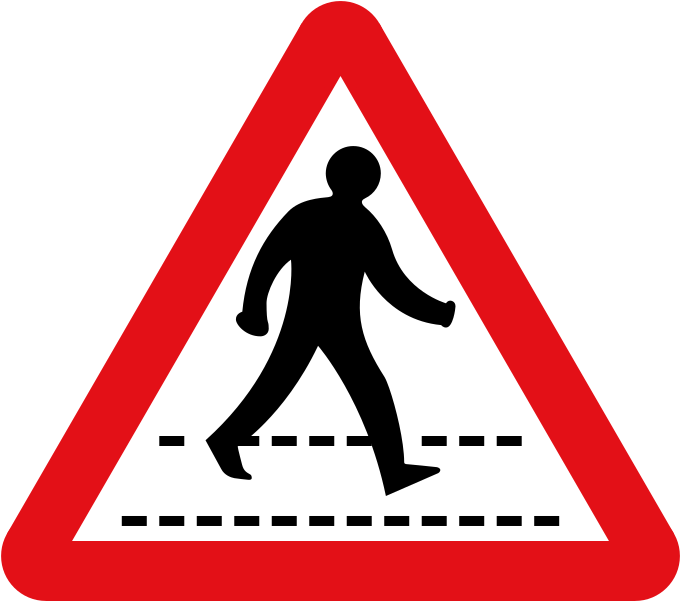

- Red light: stop behind the stop line.
- Steady amber: stop unless you are so close that stopping could cause a collision.
- Flashing amber: give way to pedestrians already on the crossing.
- Green: proceed only if it is safe and the crossing ahead is clear.
Puffin crossings: why there is no flashing amber
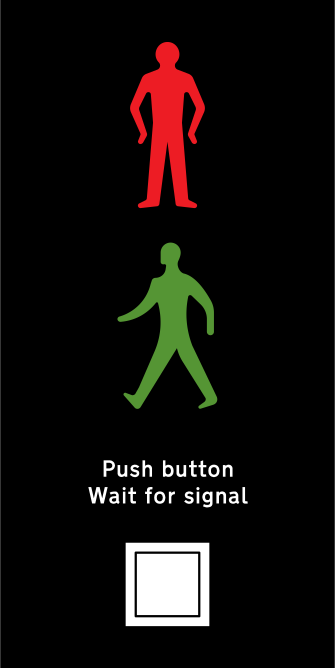
A puffin crossing is another signal-controlled pedestrian crossing, but it uses sensors to detect pedestrians. Unlike a pelican crossing, there is no flashing amber phase. The lights simply control you in the usual way: red means stop, amber means stop unless unsafe, and green means you may go if it is safe.
You will often spot a puffin crossing because the pedestrian signal box is on the near side of the road, not necessarily across the road. The sensors can adjust the crossing time if someone is slower, such as an elderly pedestrian, a child or someone with a mobility aid. As a driver, you do not need to second-guess the technology. You obey your lights and check the crossing before moving.
A common learner mistake is staring at the traffic light and forgetting the pedestrian. When the light turns green, always take a final look before moving. If someone has stumbled, turned back, or is still close to your path, do not surge forward. Examiners mark the safety of your action, not just whether the bulb changed colour.
Toucan, parallel and equestrian crossings
A toucan crossing is designed for pedestrians and cyclists to cross together. The name is often remembered as 'two can cross'. Cyclists are allowed to ride across a toucan crossing, unlike an ordinary zebra crossing where they should dismount if they want to use it as a pedestrian crossing. As a driver, expect a cyclist to arrive quicker than a pedestrian, especially on shared paths.
A parallel crossing has a zebra crossing for pedestrians with a separate cycle crossing alongside it. Highway Code Rule 195 includes parallel crossings and says you must give way when a pedestrian or cyclist has moved onto the crossing, and you should give way to pedestrians or cyclists waiting to cross. The danger for learners is spotting the zebra stripes but missing the cycle part beside it.
An equestrian crossing, sometimes called a Pegasus crossing, is for horse riders as well as pedestrians, and it may have higher push buttons. Give horses space and time. A horse can react to noise, sudden movement or a vehicle creeping forward. If a rider is crossing, wait calmly and avoid revving the engine.
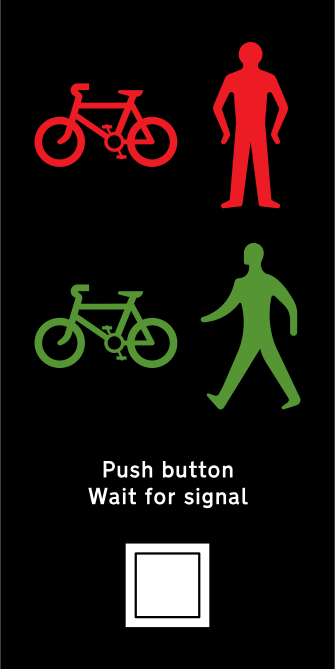
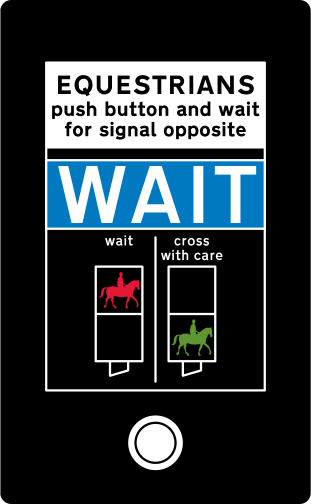
- Toucan: expect pedestrians and cyclists, often at shared-use paths.
- Parallel: look for the cycle crossing next to the zebra crossing.
- Equestrian: allow extra space, quiet engine control and no rushing.
- Cyclists may approach faster than you expect, especially from behind hedges or railings.
- Horse riders may need more time to start, stop and turn.
Crossings at junctions, refuges and school patrols
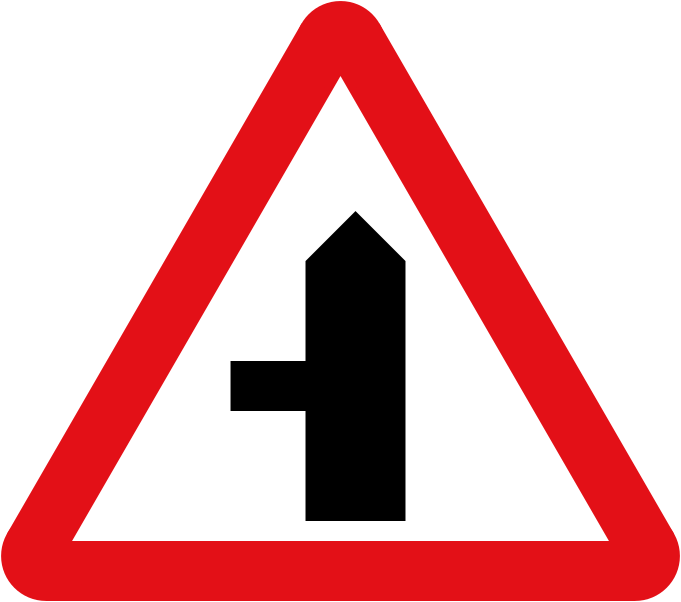
Not every place where people cross is a formal pedestrian crossing with lights or stripes. At junctions, Highway Code Rule 170 says you should give way to pedestrians crossing or waiting to cross a road into which or from which you are turning. This catches many learners out when turning left into a side road: they check mirrors and signal correctly, then fail to notice the pedestrian about to step across the mouth of the junction.
Central refuges and traffic islands help pedestrians cross in stages, but they do not automatically work like zebra crossings. Still, they are a strong clue that people may be in the road. If someone is already crossing your lane, you must deal with that safely. Slow early, check behind, and avoid squeezing through a narrow gap beside a refuge.
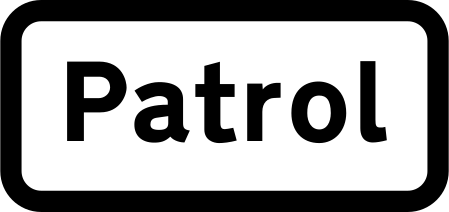
School crossing patrols are also important. If a school crossing patrol displays the stop sign, drivers must stop. Around schools, I coach learners to expect children to behave unpredictably: running back for a dropped bag, stepping out from behind parked cars, or following friends without looking properly. Your speed and position should show that you have anticipated that risk.
- 1Look well ahead for signs, zig-zags, islands, railings and groups of pedestrians.
- 2Check mirrors before reducing speed, especially if traffic is close behind.
- 3Decide early whether you need to stop or can continue safely.
- 4Keep the crossing area clear if traffic is queuing ahead.
- 5Move away only when the crossing and your exit are safe.
Zig-zag lines, overtaking and stopping on crossings
The zig-zag lines before and after crossings are not decoration. Highway Code Rule 191 says you must not park on a crossing or in the area covered by zig-zag lines. It also says you must not overtake the moving vehicle nearest the crossing or the vehicle nearest the crossing which has stopped to give way to pedestrians. This is a serious safety rule because a pedestrian may be hidden by the vehicle in front.
Highway Code Rule 192 says that in queuing traffic, you should keep crossings clear. Learners sometimes follow traffic too closely and end up stopped across the stripes or blocking a dropped kerb at a signal crossing. On a test, that can become a serious fault if it affects pedestrians or shows poor planning. Before you enter the crossing area, ask yourself whether there is space to clear it fully.
Here is the fault pattern I see most often in the car.
- Fault: following traffic onto a crossing when the exit is blocked. Better action: wait before the crossing until there is room beyond it.
- Fault: overtaking a bus, van or car near zig-zags. Better action: hold back because a pedestrian may be hidden.
- Fault: stopping with the front wheels over the stop line at lights. Better action: brake earlier and finish behind the line.
- Fault: parking or waiting on zig-zags outside a shop or school. Better action: find a legal stopping place away from the controlled area.
- Fault: edging forward at pedestrians to hurry them. Better action: stay still and allow them to finish crossing safely.
How examiners assess pedestrian crossings on the driving test
On the practical driving test, pedestrian crossings can affect several marking areas: response to signs and signals, pedestrian crossings, junction observation, planning and awareness, and control. A driving fault may be recorded for a minor lapse that does not create danger. A serious or dangerous fault may be marked if your action creates risk, forces someone to change speed or direction, or needs the examiner to intervene.
The specific fault that costs people is usually not 'I forgot the name of the crossing'. It is failing to act on what was visible. For example, a learner sees a zebra crossing, a pedestrian standing at the kerb and a car close behind, but does not check mirrors or ease off until the last second. Even if the car stops, the examiner may judge that the planning was poor and the stop was harsh.
Another costly moment is moving away too early. If the lights change to green or amber flashes, some learners release the brake without checking whether a pedestrian is still in the road. The safe routine is simple: lights, crossing, mirrors, move. That final look is a professional habit, and it is one I still use every day.
A practical crossing routine for learner drivers
The safest drivers treat crossings as hazards long before they arrive at them. Look for the clues: Belisha beacons, zig-zags, railings, push-button boxes, tactile paving, school signs, bus stops and shops. Where there are people, there may be sudden crossing decisions, especially in town centres and near stations.
Use this routine on lessons and after you pass. It keeps your driving smooth and gives pedestrians confidence without you needing to wave, flash headlights or guess.
- 1Identify the crossing early and name the risk, not just the crossing type.
- 2Check mirrors before changing speed so you know what is behind you.
- 3Ease off the accelerator and cover the brake if pedestrians are near.
- 4Decide early: stop, continue, or prepare to stop if the situation changes.
- 5Stop behind the line or before the crossing, keeping the crossing clear.
- 6Wait calmly until pedestrians, cyclists or riders have cleared your path.
- 7Before moving, check the crossing again, check mirrors, then accelerate gently.
Common questions
What is the difference between a pelican and a puffin crossing?
A pelican crossing has a flashing amber phase. On flashing amber, you may go if the crossing is clear, but you must give way to pedestrians still on it. A puffin crossing has sensors and no flashing amber phase, so you follow the normal red, amber and green traffic lights.
Do drivers have to stop for pedestrians waiting at a zebra crossing?
The Highway Code says you must give way once a pedestrian has moved onto a zebra crossing, and you should give way to pedestrians waiting to cross. In practice, a safe driver plans to stop for someone clearly waiting, rather than driving through in a way that pressures them not to cross.
Can cyclists ride across pedestrian crossings in the UK?
Cyclists can ride across toucan crossings and the cycle part of a parallel crossing. An ordinary zebra crossing is for pedestrians, so a cyclist should dismount and walk if using it as a pedestrian crossing. As a driver, still be ready for cyclists near any crossing because mistakes happen.
What should I do if traffic lights turn green but someone is still crossing?
Do not move off into their path. A green light means you may proceed if it is safe, not that you can drive at a pedestrian who is still clearing the crossing. Wait, check again, then move away smoothly.
Is it a driving test fail to stop on a pedestrian crossing?
It depends on the situation, but it can be serious if you block pedestrians, stop on the crossing through poor planning, or create danger. If traffic ahead is queuing, wait before the crossing until there is enough room to clear it fully.
What are the zig-zag lines for at pedestrian crossings?
Zig-zag lines protect visibility around the crossing. The Highway Code says you must not park on them, and you must not overtake the nearest moving vehicle to the crossing or the nearest vehicle stopped to give way. They are there because pedestrians can be hidden very easily.
Browse driving lessons
Reading about it only gets you so far. Our instructors drill this with you in the car, on the roads around your test centre.