
The short version
- Only enter a box junction when your exit is clear, unless turning right and blocked by oncoming traffic.
- Yellow lines control waiting, not usually loading or stopping briefly for safety, but always check signs and kerb marks.
- Road markings give early clues about lanes, priorities, hazards and where you must not stop.
- For the test, examiners care about safe, legal decisions, not whether you can name every marking.
Why road markings catch learners out
Road markings are not decoration. They tell you where to position, when to stop, when to give way and whether you are allowed to wait. On busy UK roads, they often give you the first warning of what is coming before a sign or traffic light is easy to read.
What I see most often in the mirror is a learner looking too close to the front of the car. By the time they notice a yellow box, a lane arrow or a broken give way line, the decision has already become rushed. The cure is not memorising every page of The Highway Code; it is building a habit of scanning further ahead and asking, “What is the road telling me now?”
On the practical test, the examiner is not trying to catch you out on obscure markings. They are watching whether you obey mandatory markings, respond early to hazards and avoid blocking other road users. A small hesitation while you work something out is usually far better than rolling into a place you cannot legally or safely leave.
Box junctions: the rule learners must know
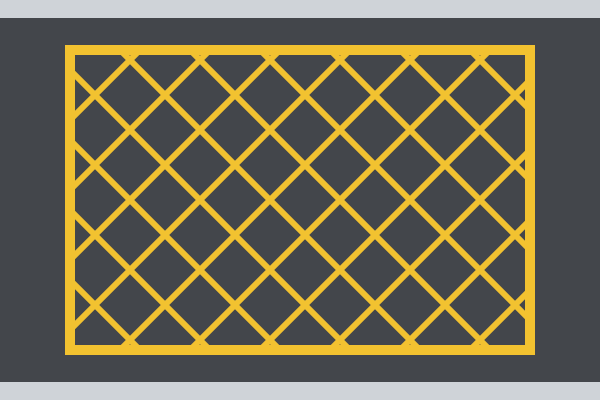
A yellow box junction has criss-cross yellow lines on the road. The basic Highway Code rule is that you must not enter the box until your exit road or lane is clear. The important exception is when you want to turn right: you may enter the box and wait if your exit is clear but you are prevented from turning only by oncoming traffic or by other vehicles waiting to turn right.
The mistake I see most often is following the vehicle in front into the box because the lights are green. Green means you may go if it is safe and legal; it does not cancel the box junction rule. Before your front wheels enter the box, you need to know where the whole car will fit on the far side.
Large box junctions can feel intimidating, especially near traffic lights. Take your speed down early, leave a clear view of the exit, and do not let the driver behind pressure you. If you stop before a box while traffic ahead clears, that is normally a good decision, even if someone behind looks impatient.
- Going straight ahead: enter only when there is space for your vehicle beyond the box.
- Turning left: treat it like going ahead; your exit must be clear before you enter.
- Turning right: you may wait in the box if your exit is clear and only oncoming traffic or right-turning traffic prevents you completing the turn.
- Never stop in a box just because traffic queues unexpectedly if you could reasonably have seen the blockage before entering.
How I drill box junctions in lessons
In lessons, I teach box junctions as a three-part decision made before the front of the car reaches the first yellow line. The learner says the answer out loud at first, because it slows the brain down and stops the “green light means go” habit.
We practise this at quiet junctions first, then at busier traffic-light junctions where the queue moves in short bursts. I am not looking for perfect commentary by test standard. I am looking for early observation, a gentle approach speed and a definite decision to wait or go.
What does not matter for the test is whether you can quote the rule number. What matters is that you do not block the junction, pedestrian crossing, cycle route or side road because you entered without a clear exit.
 Green traffic lightWhat it means
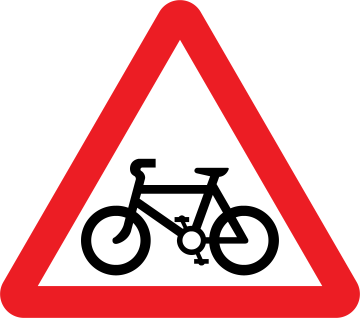 Cycle route aheadWhat it means
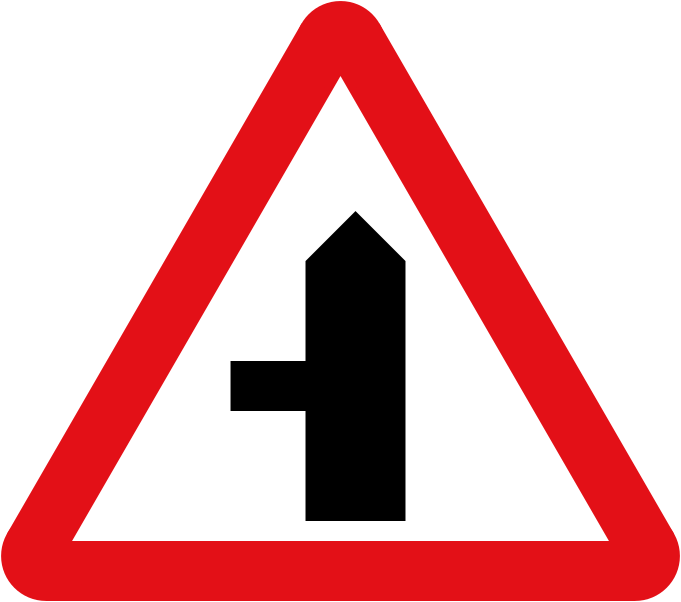 Side road ahead on the leftWhat it means
- 1Look well beyond the box to your exit lane, not just at the traffic light.
- 2Ask: can my whole car clear the box without stopping?
- 3If turning right, check that your exit is clear and identify what is stopping you: oncoming traffic or a queue.
- 4Choose a slow approach speed so you can stop before the box smoothly if needed.
- 5Once committed, keep moving positively and clear the box without hesitation if the path remains safe.
Single and double yellow lines
Yellow lines deal mainly with waiting restrictions. A single yellow line means there are restrictions at certain times, shown on nearby time plates or controlled parking zone entry signs. A double yellow line normally means no waiting at any time, although there can be exceptions shown by signs.
Learners often confuse waiting, parking, loading and stopping. For normal driving, the key point is simple: do not pull up on yellow lines unless you have checked that stopping there is legal and safe. You may need to stop briefly because of traffic, a red light, pedestrians or an emergency; that is different from choosing to wait or park.
Kerb markings matter too. Single or double yellow marks on the kerb indicate loading restrictions. If you see yellow kerb blips with a sign saying no loading at certain times, that is stricter than the yellow line alone. On red routes, used in London and some other areas, red lines have their own stopping controls and signs, so do not treat them like ordinary yellow lines.
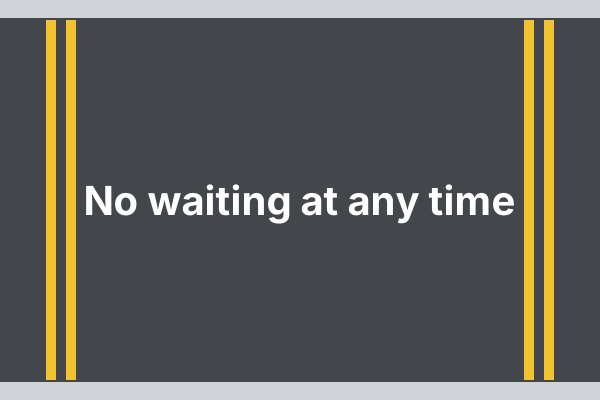 Double yellow linesWhat it means
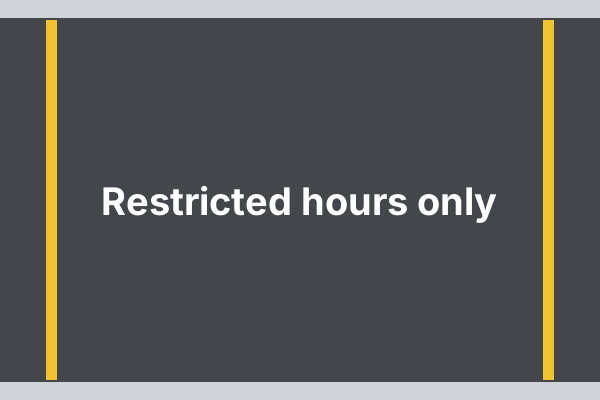 Single yellow lineWhat it means
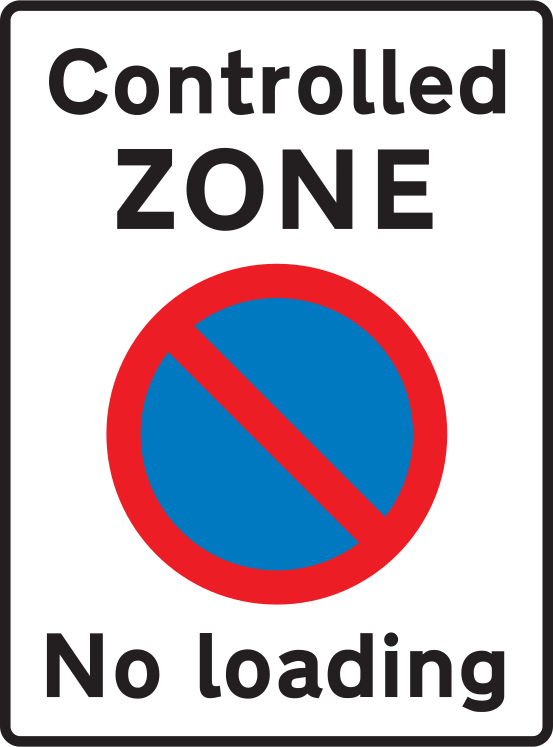 Controlled parking zone entry signWhat it means
- Single yellow line: check the nearby sign or controlled parking zone times.
- Double yellow lines: no waiting at any time unless signs show otherwise.
- Yellow kerb blips: loading restrictions apply; read the sign.
- Do not stop where you would block a junction, crossing, cycle lane, bus stop or create danger, even if the line itself seems to allow it.
White lines, give way markings and stop lines
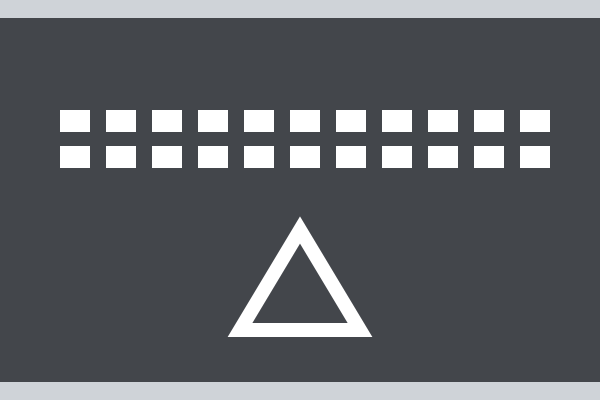
White road markings control lane position and priority. Broken white centre lines divide traffic moving in opposite directions. Longer lines with shorter gaps are a warning of a hazard ahead. Double white lines have stricter rules: if the line nearest you is solid, you must not cross it except in limited circumstances, such as passing a stationary vehicle, a pedal cycle, horse or road maintenance vehicle moving at 10 mph or less, when it is safe.
At junctions, a broken give way line means give way to traffic on the major road. A solid stop line with a Stop sign means you must stop completely, even if the road looks empty. This is a common test fault because learners roll very slowly rather than actually stopping. The wheels need to stop turning before you move off again.
At traffic lights, the first solid white line is normally your stop line. If there is an advanced stop area for cyclists, you should stop at the first line when the lights require you to stop, unless you have already crossed it when the lights change and cannot stop safely. Do not use the cycle box as spare car space.
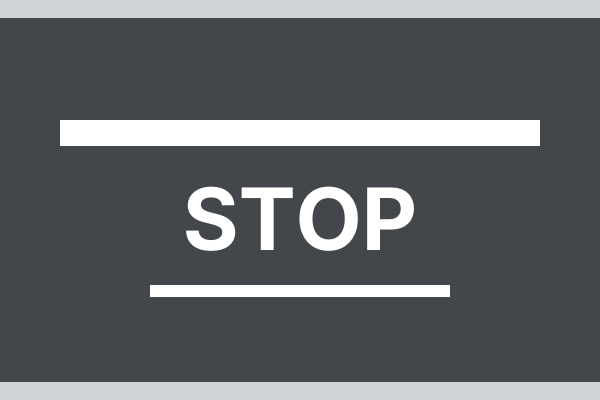
Lane arrows, bus lanes and cycle markings
Lane arrows are there to help you choose early. If the road marking says left only, do not continue ahead just because the sat nav or a late instruction confused you. On test, if you are in the wrong lane, it is usually better to follow the lane safely and let the examiner redirect you than to swerve across markings at the last second.
Bus lane markings must be read with the signs. The sign tells you the operating times and which vehicles may use the lane. Outside its hours, a bus lane may be available to normal traffic unless signs say otherwise, but many learners still avoid it automatically. That can cause poor lane discipline if you sit unnecessarily in the right lane.
Cycle lanes and cycle symbols need extra care. A solid white line cycle lane should not be driven or parked in during its hours of operation. A broken line cycle lane may be crossed if necessary and safe, but you still need proper mirror checks and clearance from cyclists. I usually drill this by getting the learner to identify the lane type early, then check mirrors before the road narrows.
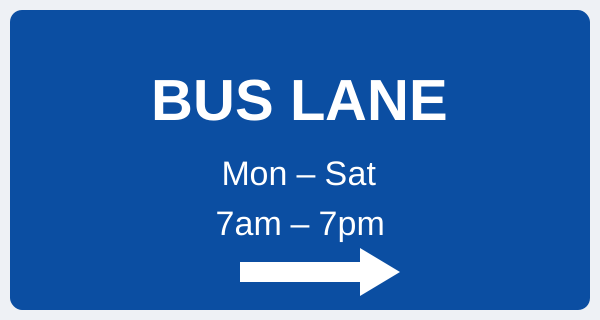 With-flow bus laneWhat it means
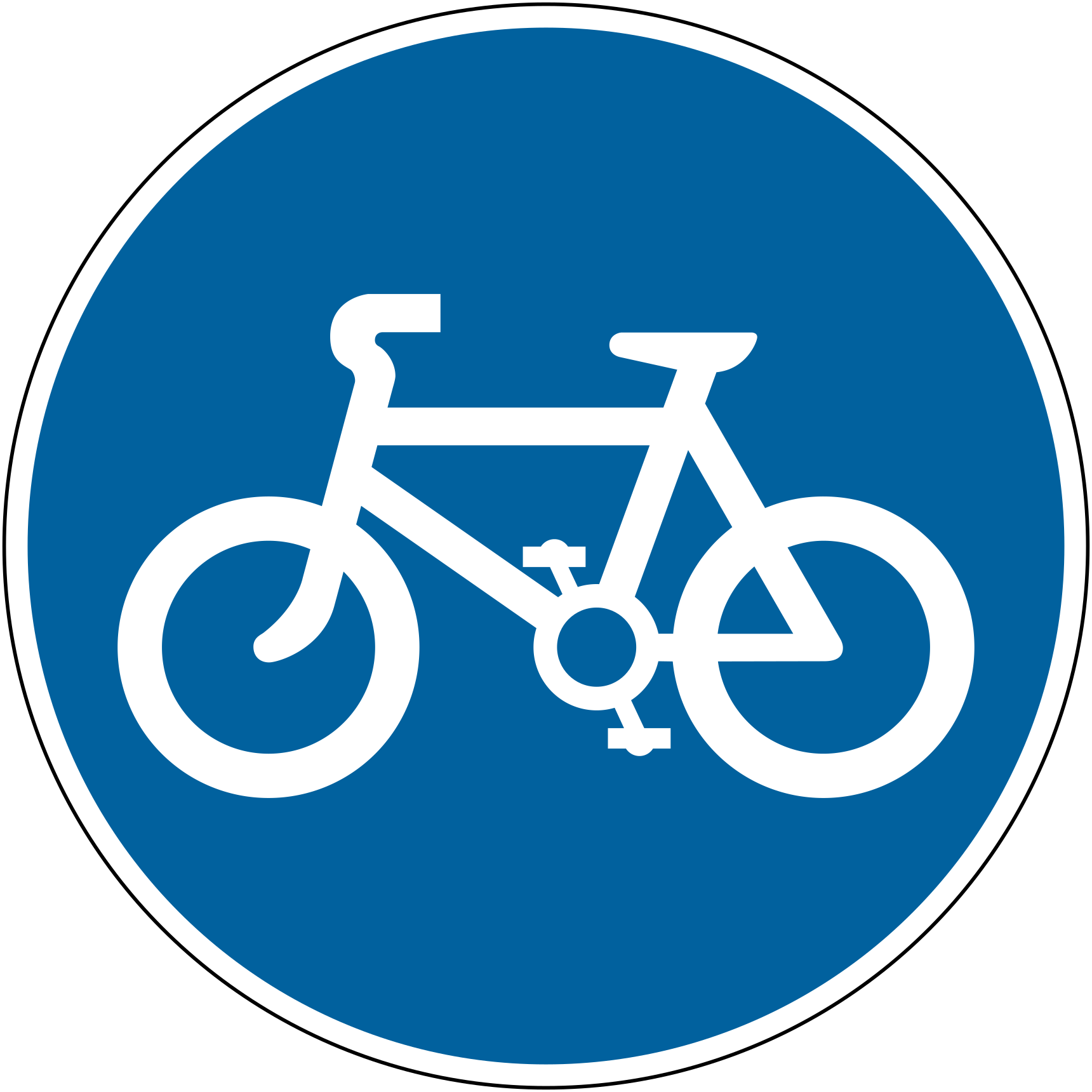 Mandatory cycle laneWhat it means
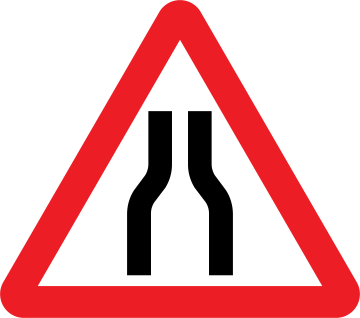 Road narrows on both sidesWhat it means
- Choose your lane from signs and arrows early, not at the last moment.
- If you make a lane error on test, stay legal and safe; do not force a correction.
- Read bus lane signs for times and permitted vehicles.
- Treat cycle lanes as active space for vulnerable road users, not as extra road width.
Yellow boxes and markings in the practical test
During the driving test, road markings are assessed through your planning, judgement and compliance with rules. The examiner will not ask you to list every marking, but they will mark faults if you ignore a stop line, block a box junction, enter a bus lane unlawfully, straddle lanes without reason or stop somewhere unsafe.
A serious fault can occur if your action creates danger, breaks a clear rule or significantly affects another road user. For example, stopping in a yellow box and blocking cross traffic, rolling through a Stop sign, or cutting across a lane arrow late could be serious depending on the situation. A minor driving fault might be recorded for late planning that is corrected safely without affecting anyone.
In an intensive course, we build this into normal route work rather than treating markings as a classroom subject. Fast Track Driving Lessons offers 10 to 40 hour courses at £61.23 per hour, and we include free theory test practice at /theory. The theory knowledge helps, but the practical skill is learning to spot markings early enough to make calm decisions.
Simple habits to use from your next lesson
The best drivers read the road in layers: signs, markings, traffic flow, pedestrians and escape space. If you only react to the car in front, yellow boxes and lane markings will always feel sudden. Lift your eyes, reduce speed early and keep asking where the road wants you to be.
When you are a passenger, practise spotting markings before the driver reaches them. Say quietly to yourself: box junction, keep clear, bus lane times, give way, stop line, lane arrow. It costs nothing and it makes your next driving lesson more productive.
Remember that road markings can be worn, covered by traffic or harder to see in rain and darkness. If you are unsure, slow down and use the surrounding clues: signs, traffic lights, kerbs, islands and the behaviour of other road users. Safe uncertainty is acceptable; confident guessing is not.
Common questions
Can I enter a yellow box junction if the traffic light is green?
Only if your exit is clear, unless you are turning right and are stopped by oncoming traffic or other vehicles waiting to turn right. A green light gives permission to proceed, but it does not override the box junction rule.
Will I fail my driving test for stopping in a box junction?
It depends why you stopped and what effect it had. If you entered when your exit was not clear and then blocked traffic, it could be a serious fault. If traffic changed unexpectedly after a reasonable decision, the examiner will judge the whole situation.
Can I stop on double yellow lines to let someone out?
Double yellow lines mean no waiting at any time, but stopping briefly because traffic conditions require it is different. Choosing to pull in and wait, even for a short time, may be unlawful and unsafe depending on the place. For lessons and tests, avoid using yellow lines as a convenient drop-off point unless signs and safety clearly allow it.
Do I need to memorise every road marking for the theory test?
You need to understand the common markings in The Highway Code and Know your traffic signs, especially stop lines, give way lines, box junctions, bus lanes and yellow lines. For the practical test, the examiner is more interested in whether you respond correctly than whether you can name the marking.
What should I do if I am in the wrong lane because of road arrows?
Follow the lane safely if changing would be late or risky. Examiners do not fail you for taking a wrong turn by itself; they mark unsafe correction. Use mirrors, signals and planning only if there is enough time and space to change legally.
Browse driving lessons
Reading about it only gets you so far. Our instructors drill this with you in the car, on the roads around your test centre.