
The short version
- Do not enter a box junction unless your exit road or lane is clear.
- The main exception is when turning right and you are only held by oncoming traffic or other right-turning vehicles.
- Green traffic lights do not automatically mean it is safe or legal to enter.
- On test, blocking a box junction can become a serious fault if you cause obstruction.
- Look beyond the car in front and decide before you cross the first yellow line.
The box junction rule in one sentence
For a learner driver, the rule is simple to say but harder to apply in moving traffic: you must not enter a yellow box junction unless your exit road or exit lane is clear. That is the direct answer to when you can and cannot enter. If traffic ahead might make you stop inside the box, wait before the box, even if the traffic light is green and drivers behind are impatient.
The Highway Code, Rule 174, says you must not enter the box until your exit road or lane is clear. It also gives the key exception: you may enter the box and wait when you want to turn right, provided you are stopped only by oncoming traffic or by other vehicles waiting to turn right. That wording matters. It is not a general permission to sit in the box because the lights are green.
In lessons, I see learners focus on the car immediately in front and forget to check whether there is room beyond the junction. The decision point is not when you are already in the yellow markings. It is before you cross them. If you cannot see a definite space for your vehicle after the box, hold back.
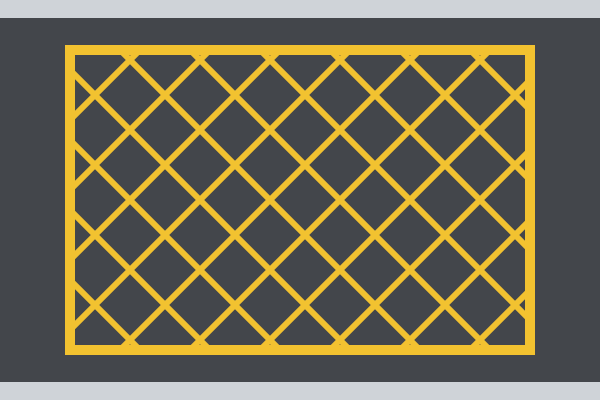

- Going ahead: enter only if your exit lane is clear.
- Turning left: enter only if the road you are turning into has space for you.
- Turning right: you may wait in the box only if oncoming traffic, or other right-turning traffic, is the thing stopping you.
- Green light: still check the far side before entering.
- Pressure from behind: ignore it and obey the rule.
What a box junction is for
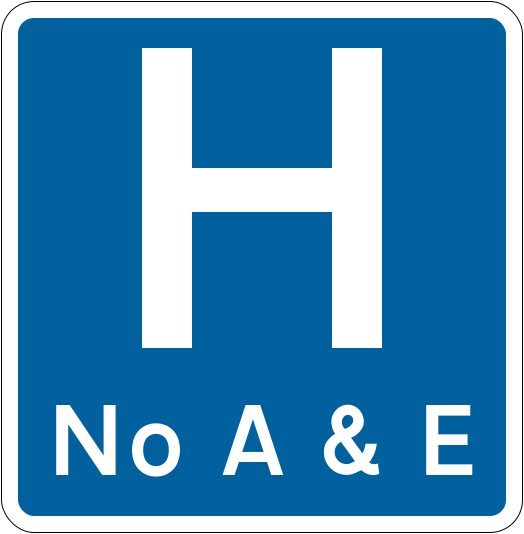
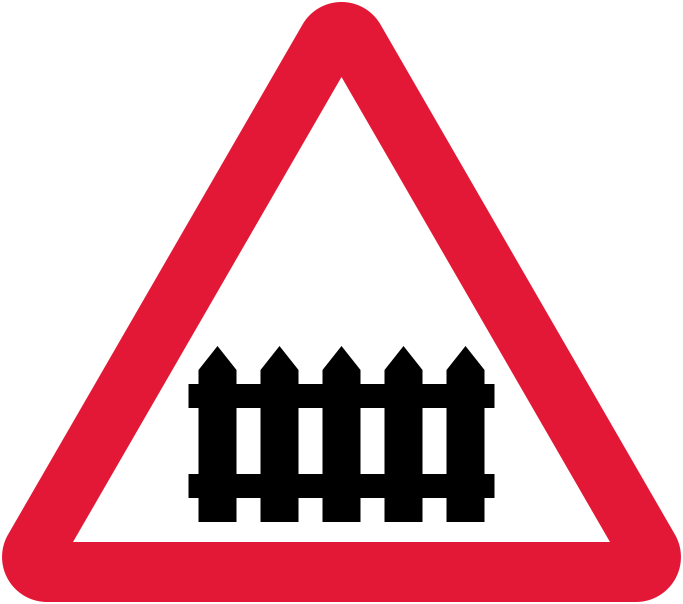
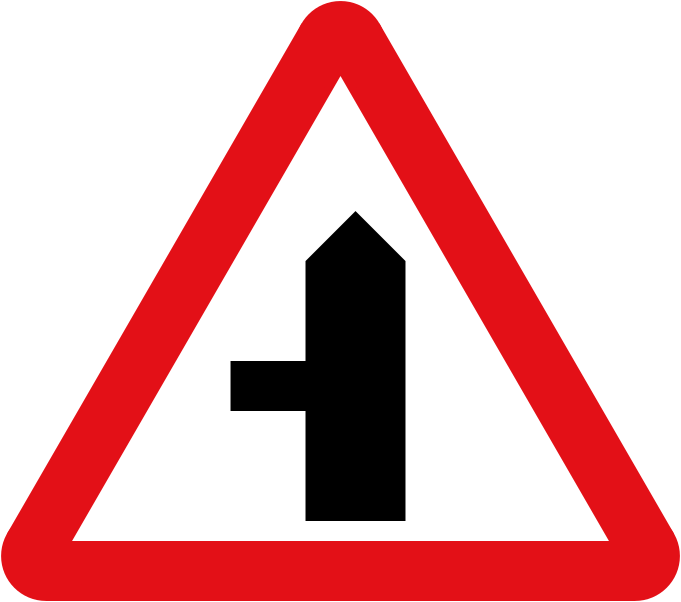
A box junction is the area marked with criss-cross yellow lines, usually at a busy junction, outside a fire station, near a hospital entrance, at a level crossing approach or where side roads must be kept clear. The marking is there to stop vehicles blocking traffic that has a green light from another direction. If everyone rolls into the box and gets stuck, the whole junction can lock up.
The mistake learners often make is treating the box as just another road marking. It is not like a keep clear marking where the rules are different and the layout may be advisory depending on context. A yellow box junction is backed by traffic law, and Rule 174 uses the strong Highway Code wording must not. On a driving test, the examiner is not looking for a perfect legal lecture, but they are looking for safe, legal judgement.
A useful way to think about it is this: the box is not a waiting area, except for the right-turn exception. It is a crossing area. You enter it to pass through it, not to join the back of a queue inside it.

Going straight ahead or turning left
When going straight ahead, you need to know that there is enough space beyond the box for your whole vehicle. Not just the bonnet, not just half the car. If you enter and the queue stops, leaving your rear end across the yellow lines, you have still caused the problem the box is designed to prevent. In a test, that can quickly move from a driving fault to a serious fault if you obstruct crossing traffic.
Turning left works in the same way. Learners sometimes assume that because they are leaving the main road, they can enter while the side road is still blocked. You cannot. If the road you are turning into is congested, pedestrians are crossing, a bus is stopped just after the turn, or parked vehicles have narrowed the space, you must wait before the box until your exit is clear.
The practical skill is early observation. As you approach, lift your eyes beyond the vehicle in front. Look through windscreens if you can, check traffic flow on the far side and ask yourself, can I clear the box completely if the vehicle ahead brakes now? If the honest answer is no, ease off and stop before the markings.
The right-turn exception explained properly
The right-turn exception is the part that confuses most new drivers. You may enter the box and wait if you are turning right and your exit road is clear, but you are prevented from completing the turn by oncoming traffic, or by other vehicles also waiting to turn right. That is normal at traffic-light controlled junctions, where one or two cars move into position and then turn when the oncoming stream stops or the lights change.
What you must not do is enter to turn right if the road you are turning into is blocked. If your intended exit is full, the exception does not help you. You would not be waiting because of oncoming traffic, you would be waiting because your exit is not clear. That is the specific fault I see when a learner says, but I was turning right. Turning right is not a magic pass.
Position matters too. Move into the box only when you can wait without blocking the path of vehicles going ahead, and keep the wheels straight while waiting if possible. If you sit with the wheels turned right and are hit from behind, the car may be pushed into oncoming traffic. Examiners notice calm positioning, good observation and a clear plan, not a rushed lunge into the middle.
- Allowed: entering to turn right when the side road is clear but oncoming traffic stops you.
- Allowed: waiting behind another right-turning vehicle if that is the only reason you cannot complete the turn.
- Not allowed: entering when the road you want to turn into is already full.
- Not wise: entering so far forward that you block traffic going straight ahead.
- Best practice: keep observing ahead, to the right, and for pedestrians before completing the turn.
Traffic lights do not override the box
A green light means you may proceed if it is safe and legal to do so. It does not cancel the box junction rule. This is where learners feel the most pressure, especially when the lights have just changed and the driver behind is close. If your exit is blocked, stay behind the stop line or before the box as appropriate. You may get hooted at, but you will not be the one blocking the junction.
At some junctions, the stop line is before the box. At others, you may have passed the stop line and still need to wait before the yellow markings. Read the road layout early. If the lights are green but the traffic beyond the box is stationary, cover the brake and prepare to stop smoothly before entering. Do not creep into the box hoping the queue will move. Hope is not a driving plan.
On test, I often see a learner do everything right on approach, then get pulled forward by the movement of the vehicle in front. The examiner watches whether you have made your own decision. Following blindly is a common reason for unnecessary faults at busy urban junctions.

Multi-lane boxes, buses, cyclists and blocked lanes
Rule 174 refers to your exit road or lane. That is important on multi-lane approaches. If you are in the right-hand lane and that lane is blocked after the box, you cannot enter just because the left lane is moving, unless you can lawfully and safely use that lane and it is part of your planned route. Drifting across lane markings inside or after a junction because your lane has stopped is poor planning and can be dangerous.
Buses and large vehicles make judgement harder because they hide the exit. Leave extra space and avoid committing until you can see what is happening beyond them. If a bus stops just after the junction, a learner may suddenly find the exit gone. The safe answer is to hang back until you have a clear view or a clear space.
Cyclists and motorcyclists can also appear alongside queues and through gaps. Before you enter, check mirrors and blind spots as needed, especially if you intend to turn left or right. A box junction does not remove your normal duties for observation, signalling and positioning.
- Use the lane that matches your route and road markings.
- Do not enter because another lane is clear if your lane is blocked.
- Leave extra space behind buses, lorries and vans that hide the far side.
- Watch for cyclists filtering near the junction.
- Avoid last-second lane changes to escape a blocked box.
What examiners mark and what can cost you
In the driving test, the examiner marks the outcome and the risk. If you stop in a box for a moment because traffic ahead unexpectedly brakes after the exit was clearly available, that is different from entering when the far side was obviously blocked. The serious fault usually comes when your decision causes obstruction, shows poor anticipation or forces other road users to change speed or direction.
The most expensive fault in test terms is committing too early. Learners often say, the car in front went, so I went. That tells the examiner you were not reading the junction yourself. Another common issue is stopping with the back of the car still in the box because the learner misjudged the length of their vehicle. You need space for the whole car, not just the front wheels.
This is general guidance, not legal advice. Outside the test, box junctions may be enforced by police or local authorities, including by camera in some areas. Penalties and enforcement arrangements vary by location and can change, so check the wording on any official notice or penalty charge notice and the relevant authority guidance.
- Fault: entering behind a queue with no clear space. Likely issue: poor anticipation and possible serious fault if you block traffic.
- Fault: stopping with the rear of the car in the box. Likely issue: misjudged space or vehicle length.
- Fault: using the right-turn exception when the exit road is blocked. Likely issue: misunderstanding Rule 174.
- Fault: rushing because of a green light. Likely issue: letting signals override road markings.
- Fault: changing lanes suddenly to avoid stopping in the box. Likely issue: unsafe planning and observation.
A practical approach to every box junction
The best drivers make the box junction decision early and calmly. On approach, check mirrors, ease off if traffic is building, and look past the junction. You want to arrive slowly enough that you can stop before the yellow lines without harsh braking, but not so slowly that you confuse following traffic when the exit is clearly open.
When I coach learners, I use a simple question: where will the back of my car be in five seconds? If the answer is still on the yellow lines, do not enter unless the right-turn exception applies. This one question improves judgement because it makes you think about the whole vehicle and the traffic beyond the junction.
Practise this in normal driving, not only at obvious yellow boxes. The same anticipation helps at roundabouts, crossroads, pedestrian crossings and busy side roads. You are training yourself to look for space, not just permission.
- 1Identify the box early and check your mirrors.
- 2Look beyond the vehicle in front to your exit road or lane.
- 3Ask whether your whole vehicle can clear the yellow markings.
- 4If going ahead or left, wait unless the exit is clear.
- 5If turning right, enter only if your exit is clear and only oncoming or right-turning traffic is stopping you.
- 6Keep observing while waiting, especially for pedestrians, cyclists and signal changes.
- 7Move off positively when it is safe, but do not follow blindly.
Common questions
Can I enter a box junction if the traffic light is green?
Only if your exit road or lane is clear, unless you are using the right-turn exception correctly. A green light gives permission to proceed, but it does not override Highway Code Rule 174.
Can I stop in a box junction when turning right?
Yes, if you are turning right and you are stopped only by oncoming traffic or by other vehicles waiting to turn right. Your exit road must still be clear. If the road you want to turn into is blocked, you should not enter the box.
What if traffic moves when I enter but then suddenly stops?
Examiners and enforcement bodies look closely at whether your exit was genuinely clear when you entered. If traffic ahead unexpectedly stops after you had a clear space, that is different from gambling on a queue moving. In lessons, I teach learners to avoid entering unless the space is definite.
Do I need to clear the box completely?
Yes, you should have enough room for the whole vehicle to clear the yellow box markings. Stopping with your rear wheels or back bumper still in the box can still obstruct traffic and may be marked on test.
Can I change lanes after a box junction if my lane is blocked?
Only if it is lawful, safe and properly planned. Do not enter a box relying on a last-second lane change to escape a blocked lane. On test, that shows poor anticipation and may create danger for vehicles beside you.
Will stopping in a box junction fail my driving test?
It depends on the circumstances and the risk created. If you entered when the exit was clearly blocked or you obstruct other traffic, it may be marked as a serious fault. If the situation changed unexpectedly after a sound decision, the examiner will judge what actually happened.
Browse driving lessons
Reading about it only gets you so far. Our instructors drill this with you in the car, on the roads around your test centre.