
The short version
- Blue signs give motorway route, junction and destination information.
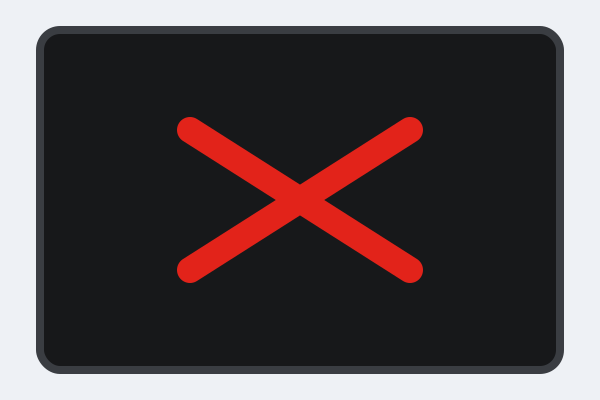
- A red X means the lane is closed and you must not use it.
- Speed limits in a red circle are mandatory and enforceable.
- Overhead arrows and lane signs help you choose the correct lane early.
- Emergency area signs and driver location signs are vital if you break down.
Motorway signs explained in plain English
Motorway signs are there to reduce surprise. They tell you three things: where the road is going, what you must do now, and what may affect you shortly. On a lesson, the mistake I see most often is not that a learner cannot recognise a sign, but that they read it too late. At motorway speed, a late decision quickly becomes a rushed mirror check, a sharp lane change or braking harder than necessary.
The main motorway sign colour is blue. Direction signs, route confirmation signs and junction signs use blue backgrounds with white writing. Lane control signs are often shown above the carriageway on gantries or roadside signal boards. Red circles give mandatory instructions, such as a speed limit. A red X closes a lane. Amber flashing lights and warning symbols mean adjust your driving because conditions ahead may change.
This article is general guidance for UK learners and new drivers, not legal advice. The Highway Code motorway rules, particularly Rules 253 to 273, should be read alongside the road signs guidance in The Traffic Signs Regulations and General Directions and official DVSA learning material.
Blue motorway direction signs and route numbers
A blue sign with a route number such as M1, M6 or M25 is telling you that you are on, joining or being directed towards a motorway. Place names on the sign are not always the town you personally want, so learn to follow route numbers as well as destinations. I often ask pupils to say out loud, quietly, which road number they need. It stops them chasing the wrong place name at a busy junction.
Advance direction signs usually appear before a junction, then again closer to the exit. You may see the junction number, the road you will join, and destinations served by that exit. Countdown markers with three, two and one bars count down to the start of the slip road, not to the point where you should make a last-second swerve. If you are leaving, you should already be in the correct lane before the final marker where possible.
Route confirmation signs after a junction reassure you that you have stayed on the correct motorway and show distances to key destinations. New drivers sometimes ignore these because they are not making an immediate decision, but they are useful for checking that a missed exit has not turned into a much bigger problem.
- Blue background: motorway direction or information.
- White route number starting with M: motorway route.
- Junction number: the numbered exit or interchange.
- Countdown bars: distance reducing towards the exit slip road.
Overhead gantry signs, lane arrows and the red X
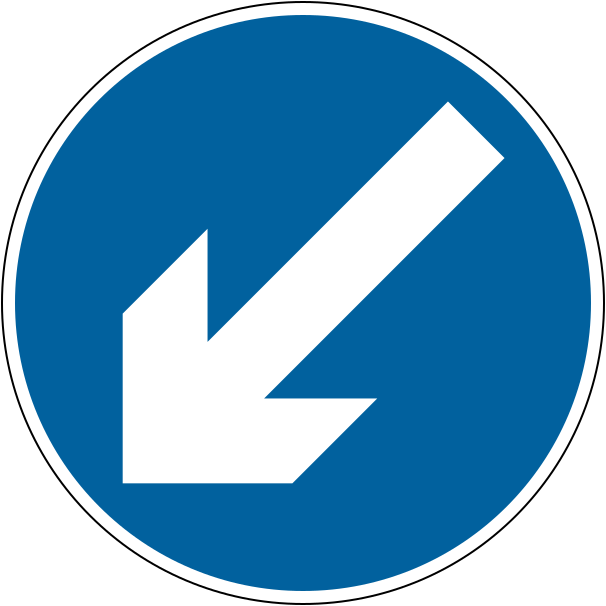
Gantry signs are the signs above the motorway lanes. Treat them as lane-specific instructions. If an arrow above your lane points down, it confirms that lane is open for traffic subject to any speed limit shown. If a diagonal arrow points down towards another lane, it is telling you to move in the direction shown when safe. That means mirrors, signal if needed, then a smooth lane change. Do not dive across just because the sign has appeared.
A red X means the lane is closed. Highway Code Rule 258 says you must not drive in a lane closed by a red X. Ignoring it is one of the motorway behaviours most likely to put people at risk because there may be a broken-down vehicle, road worker, debris or an emergency service vehicle ahead. Enforcement cameras may be used. GOV.UK and police guidance commonly refer to a fixed penalty of £100 and three penalty points for red X offences, but penalties can change.
From an instructor's seat, the costly fault is hesitation followed by panic. A pupil sees a red X two gantries ahead, freezes, then tries to move at the last moment without properly checking the blind spot. The correct response is early planning. Ease off if safe, assess gaps, signal where helpful and leave the closed lane before you reach the red X.
Speed limit signs on motorways
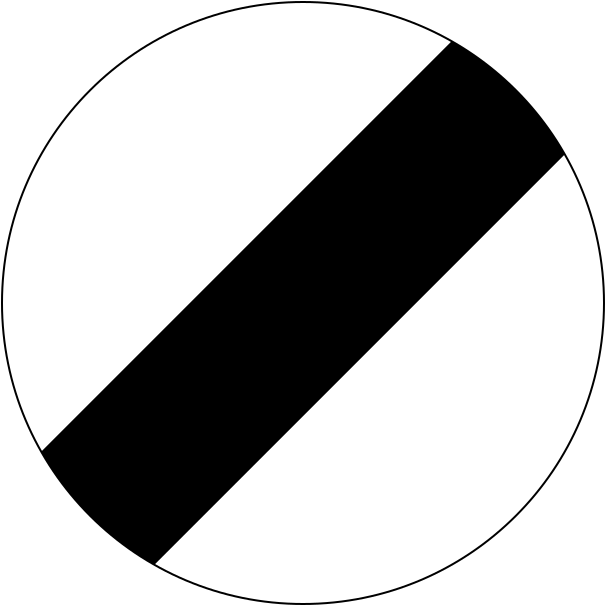
For cars and motorcycles, the national speed limit on a motorway is 70 mph unless a lower limit applies. That is set out in the Highway Code Rule 124 and national speed limit guidance, but it is not a target. You still need to drive at a speed that is safe for the traffic, weather, visibility and your vehicle. In heavy rain, fog or standing water, 70 mph may be far too fast.
A number inside a red circle, for example 60, 50 or 40, is a mandatory speed limit. On smart motorways this may appear above each lane or on roadside signs. You must obey it from the point the sign applies until it is changed or ended. Speed enforcement can be by cameras as well as police patrols. The standard fixed penalty for speeding is commonly £100 and three penalty points according to GOV.UK, though fines, points and court outcomes can vary and change.
You may also see advisory speeds, often linked with amber warning lights or road works information. Advisory does not mean ignore it. If the sign says congestion ahead or incident ahead and suggests a lower speed, an examiner or instructor would expect you to respond sensibly. The fault is continuing at the same speed while your stopping distance is clearly becoming inadequate.
Junction signs, lane destination signs and slip roads
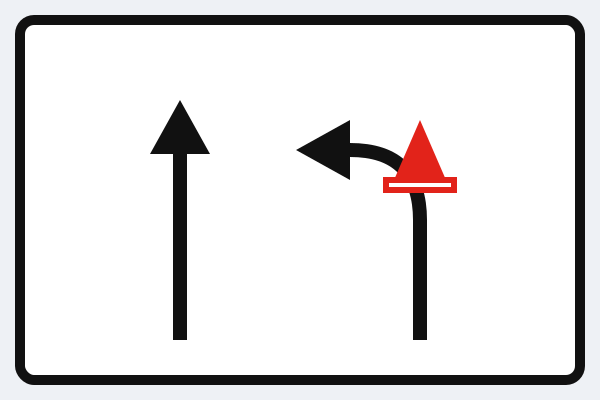
Motorway junction signs often show which lanes go where. A sign may place destinations above lane arrows, meaning lane one leaves at the junction while lanes two and three continue, or that two lanes leave together. Read the whole sign, not just the destination. Many new drivers spot their town name and move left too early, only to find that the left lane becomes a different road before the junction.
At a motorway exit, the slip road is part of your planning area. Check mirrors before moving left, signal in good time where it will help others, then adjust speed on the slip road rather than slowing heavily on the main carriageway. If you miss the exit, carry on to the next junction. Examiners on ordinary dual carriageways mark the same principle: late lane changes, cutting across hatch markings or braking sharply because of poor sign reading can all become serious faults.
When joining by a slip road, signs may show lane merges, lane gains or road numbers. Use them to decide whether your lane continues as a new lane or whether you must merge. The sign changes the plan. If it is a lane gain, you may not need to squeeze straight into lane one immediately, but you still need to build speed and fit in safely with the traffic around you.
Hard shoulder, emergency area and SOS signs
Traditional motorways have a hard shoulder marked by a solid white line. It is not a running lane except in specific signed circumstances. Highway Code Rule 269 says you must not use the hard shoulder except in an emergency, if directed by the police, traffic officers or signs, or on some motorways where it is opened as a running lane. If a sign shows the hard shoulder is open, treat it like a normal lane until signs say otherwise.
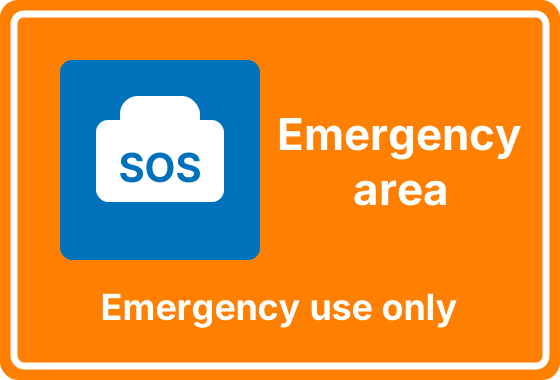
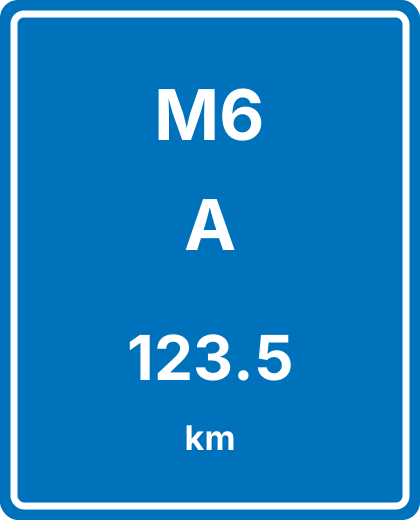
On all-lane running smart motorways there may be no permanent hard shoulder. Emergency areas are signed in orange and blue, often with an SOS telephone symbol. If you break down and can reach one safely, use it. You will also see driver location signs, small blue signs giving the motorway, carriageway direction and distance reference. These help control rooms and emergency services locate you accurately.
Learners tend to notice emergency area signs only after something has gone wrong. Build the habit earlier. Every so often, especially on a smart motorway, register where the next emergency refuge or SOS sign is. You are not planning to break down, but good motorway driving is about keeping options open.
- Solid white line at the edge: hard shoulder boundary.
- Orange SOS sign: emergency telephone or emergency area information.
- Driver location sign: precise motorway reference for emergencies.
- Hard shoulder open sign: use only when the signs clearly permit it.
Warning signs, road works and restrictions
Motorways still use warning signs to prepare you for hazards, even though the road has no pedestrians, cyclists or normal side roads. You may see signs for queues, animals, debris, fog, flooding, side winds, lane closures or road works. The sign is not asking for a dramatic reaction. It is asking for earlier observation, more space and a speed that gives you time to deal with the hazard if it is worse than expected.
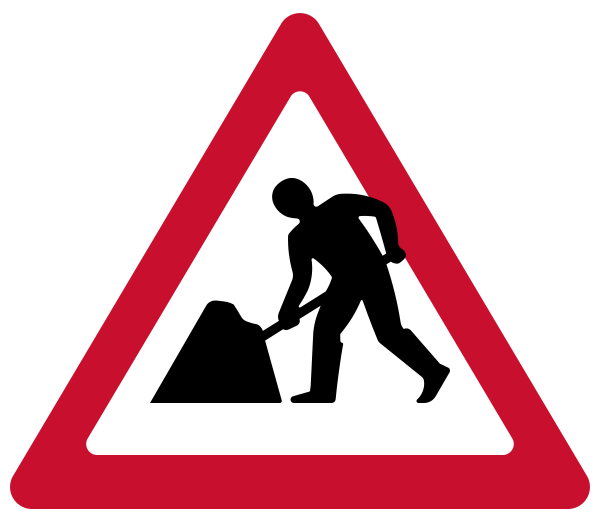
Road works signs are especially important because lanes may be narrow, layouts may change overnight and temporary speed limits are often enforced. Follow yellow temporary signs, cones, temporary lane markings and speed limit signs rather than relying on memory. In lessons, I see drivers drift towards cones because they stare at them. Look through the lane, keep a light grip and use the signs to plan rather than to panic.
Restriction signs may apply to certain vehicles, such as height, width or weight restrictions, or to lanes used by particular vehicle types. Most learner car drivers will not be directly affected by every restriction, but recognising them matters because lorries and coaches may change lanes earlier than you expect. Give them room and avoid sitting alongside them unnecessarily.
How to read motorway signs without getting overloaded
The motorway can feel sign-heavy at first: sat-nav instructions, blue direction signs, gantry signals, road markings and traffic all arrive together. The trick I teach is priority. First, obey safety and legal signs: red X, speed limits, lane closure arrows and police or traffic officer instructions. Second, read navigation signs. Third, use confirmation signs to check you are still right.
Do not stare at signs. A glance should gather the key information, then your eyes return to the road. If there are two signs close together, take the urgent one first. A red X above your lane matters more than whether the next services has your preferred coffee. Sat-nav is helpful, but it never outranks the physical signs on the road. If the road signs and sat-nav disagree, follow the road signs.
A useful driving-test mindset still applies even though the practical test does not normally use motorways. The examiner marks planning, observation, lane discipline and response to signs. On faster dual carriageways, the same faults appear: late lane changes, staying in the wrong lane, missing a speed limit, or signalling after the movement has already started.
- 1Scan far ahead for gantries, junction boards and brake lights.
- 2Say the key instruction in your head: lane open, lane closed, 50 limit, exit one mile.
- 3Check mirrors before any speed or lane change.
- 4Signal when it will help another road user understand your plan.
- 5Move smoothly and early, never across solid markings or closed lanes.
- 6Re-check the next sign because motorway instructions can change quickly.
- Red X: serious fault and legal risk if you continue in that lane.
- Mandatory speed missed: too fast for the signed limit, even if traffic is flowing.
- Late exit: harsh braking or cutting across lanes to reach a slip road.
- Wrong lane held: failing to keep left when not overtaking, contrary to Highway Code Rule 264.
- Sign fixation: staring at a gantry and drifting from lane position.
Common questions
What does a red X mean on a UK motorway?
A red X means the lane is closed and you must not drive in it. Highway Code Rule 258 covers this, and there may be a broken-down vehicle, road worker, debris or emergency incident ahead. Enforcement cameras may be used, and published GOV.UK guidance commonly refers to £100 and three penalty points, though penalties can change.
Are motorway speed limits on gantries legally enforceable?
Yes, if the speed is shown inside a red circle it is a mandatory speed limit. On smart motorways, variable speed limits are commonly shown on overhead gantries or roadside signs and can be camera enforced. An advisory speed without a red circle should still influence your driving if conditions demand it.
What colour are motorway signs in the UK?
Motorway direction signs are mainly blue with white writing. Green signs are used for primary routes, white signs for local routes, and yellow signs often appear for temporary diversions or road works. On motorways you will also see electronic signs on gantries and roadside signal boards.
Can learner drivers go on the motorway to practise signs?
In England, Scotland and Wales, learners can have motorway lessons only with an approved driving instructor in a car fitted with dual controls. They cannot drive on the motorway with a parent or friend. The practical driving test does not normally include motorway driving, but motorway-style sign reading is still tested on faster dual carriageways.
What should I do if I realise I am in the wrong lane for a motorway exit?
Check whether you can move safely and legally in good time. If you cannot, continue to the next junction rather than braking hard or cutting across lanes. Missing an exit is inconvenient, but a sudden lane change at motorway speed is dangerous and is the kind of fault examiners treat very seriously on similar roads.
What do emergency area and SOS signs mean on a smart motorway?
They show places or equipment for use in an emergency, especially where there is no permanent hard shoulder. If you break down and can reach an emergency area safely, stop there, use the SOS telephone if available, and follow official breakdown guidance. Driver location signs can also help you tell National Highways or the emergency services exactly where you are.
Browse driving lessons
Reading about it only gets you so far. Our instructors drill this with you in the car, on the roads around your test centre.