
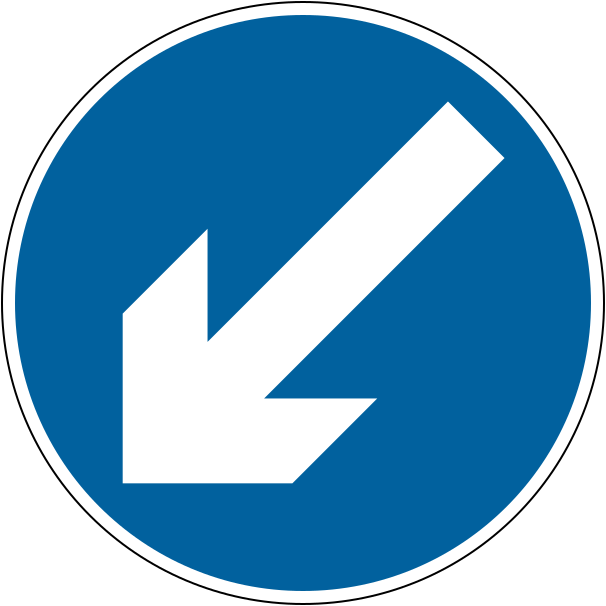
A circular blue sign containing a bold white arrow pointing downward to the left orders drivers to pass on the left of the sign.
It is installed on traffic islands, pedestrian refuges, street bollards, and central reservations to guide vehicles safely around obstructions.
What this sign means
Drivers must pass to the left of the sign or bollard upon which it is mounted.
Passing to the right of a Keep Left sign is illegal and risks oncoming traffic collisions or striking road hazards.
- White arrow pointing diagonally down to the left on a blue circular disc.
- Mandatory directional command.
- Positioned on bollards, central refuges, and dual carriageway starts.
What to do when you see it
Steer smoothly to pass to the left side of the sign or street structure.
Maintain appropriate lane alignment and check mirrors for surrounding traffic.
How this sign is tested
DVSA theory test questions test candidate knowledge of mandatory blue circular signs.
Image questions check whether you can distinguish 'Keep Left' from 'Turn Left' arrow signs.
Common mistakes
Confusing 'Keep Left' (arrow pointing diagonally down-left) with 'Turn Left Ahead' (arrow pointing horizontally left).
Attempting to overtake slow traffic by passing on the right side of a Keep Left refuge island.
Test yourself on this one
Road and traffic signs is the biggest category in the question bank with 102 questions, and signs turn up inside other categories too. Work through them free, no sign-up needed.
Practise road sign questionsFrequently asked questions
What is the difference between Keep Left and Turn Left?
Keep Left guides you around an obstacle, whereas Turn Left instructs you to turn into a side road.
Where are Keep Left signs most commonly seen?
On lit bollards at pedestrian refuge islands and at the start of dual carriageway central reservations.
Is passing on the right of a Keep Left sign a traffic offence?
Yes, failing to comply with mandatory blue directional signs is a motoring offence.