
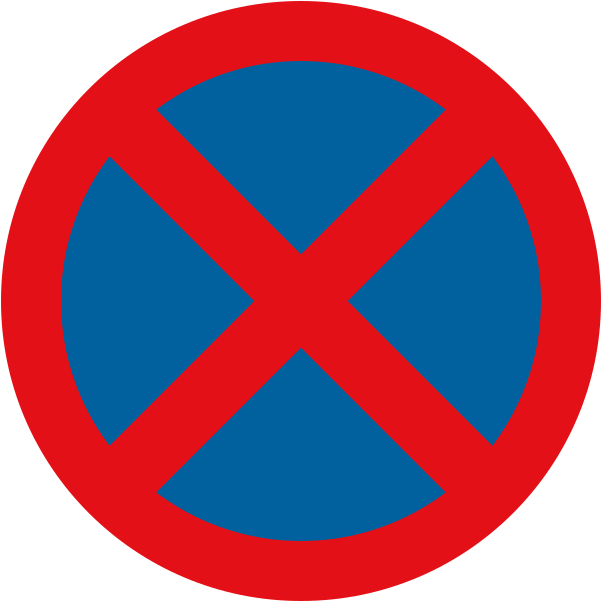
The clearway sign is a blue circle with a red border and a red diagonal cross. It prohibits stopping on the main carriageway, not merely parking.
Urban clearways operate only at the times shown, while a full clearway applies at all times.
What this sign means
You must not stop on the carriageway, even briefly, except in an emergency. Lay-bys beside a clearway are not covered by the restriction.
An urban clearway allows you to stop briefly to set down or pick up passengers.
What to do when you see it
Keep moving and use a lay-by if you need to stop.
- Do not stop on the carriageway for any reason short of an emergency.
- Use a marked lay-by for rest breaks or navigation checks.
- Read the plate to see whether an urban clearway applies only at peak times.
- Watch for the end of clearway sign.
How this sign is tested
Questions test that a clearway bans stopping rather than parking, which is a stronger restriction than a yellow line.
Others ask whether lay-bys are included, and they are not.
Common mistakes
Treating the sign as a no parking sign and stopping briefly to make a phone call.
Assuming an urban clearway applies all day, when it typically covers peak periods only.
Test yourself on this one
Road and traffic signs is the biggest category in the question bank with 102 questions, and signs turn up inside other categories too. Work through them free, no sign-up needed.
Practise road sign questionsFrequently asked questions
What is the difference between a clearway and no waiting?
A clearway bans stopping at all. No waiting allows brief stops to set down or pick up.
Can I stop in a lay-by on a clearway?
Yes. Lay-bys are outside the restricted carriageway.
Do urban clearways run all day?
No. They apply during the hours shown on the plate, usually peak times.