
The short version
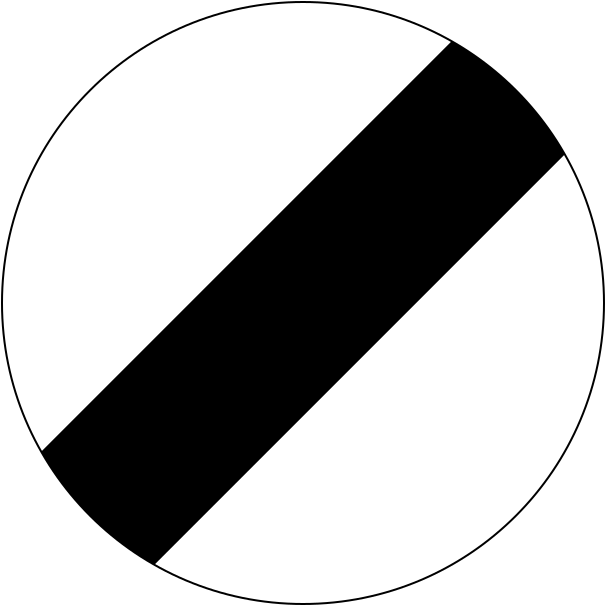
- The national speed limit sign is a white circle with a black diagonal stripe.
- For a car, it usually means 60 mph on a single carriageway and 70 mph on a dual carriageway or motorway.
- A dual carriageway is defined by a central reservation, not by how many lanes it has.
- The sign sets a maximum, not a target speed.
- On test, missing the sign, speeding, or making poor progress can all be marked.
What the national speed limit sign actually means
The national speed limit sign is the white circular sign with a single black diagonal stripe. When you see it, it means the national speed limit applies from that point. It does not mean “drive at 60”, it does not mean “the road is unrestricted”, and it certainly does not mean “go as fast as the car will manage”.
For most learner drivers in a car, the practical answer is simple: on a single carriageway road the national speed limit is normally 60 mph, and on a dual carriageway or motorway it is normally 70 mph. Those figures come from The Highway Code, rule 124, which lists national speed limits by vehicle type and road type. Limits can change, so always check current GOV.UK and Highway Code guidance if you are unsure.
This is general guidance, not legal advice. In the car, I teach learners to translate the sign into two questions: what road am I on, and what vehicle am I driving? Then we add the third, most important driving question: is it safe to do that speed here, today?
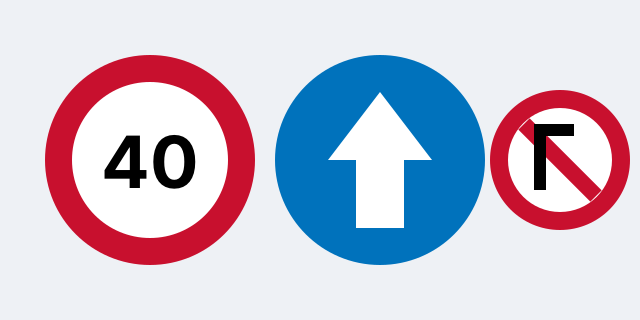
The car speed limits learners usually need to know
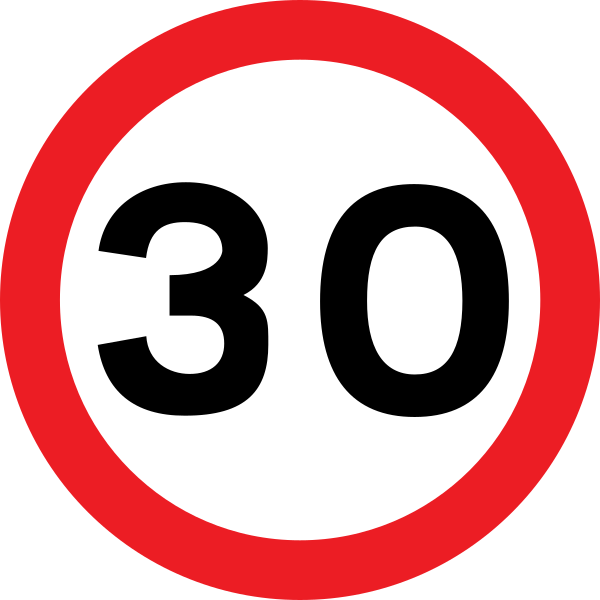
If you are learning in a normal car, the figures you need most often are 30, 60 and 70, with important exceptions. A restricted road with street lights is commonly 30 mph in England, Scotland and Northern Ireland unless signs show otherwise. In Wales, many restricted roads have a default 20 mph limit unless signs show a different limit, following the Welsh Government change introduced in 2023.
Once you pass a national speed limit sign on an open road, you must work out whether the road is single or dual carriageway. In a car, national speed limit is 60 mph on a single carriageway and 70 mph on a dual carriageway. On a motorway, the national speed limit for a car is also 70 mph unless signs show a lower limit, such as roadworks or variable motorway limits.
The mistake I see most is a learner treating every black-stripe sign as 60 mph. That is fine on a normal single carriageway in a car, but wrong on a dual carriageway where the car limit is 70 mph, and wrong if the vehicle or conditions require a lower speed.
- Car or motorcycle: 60 mph on a single carriageway, 70 mph on a dual carriageway or motorway.
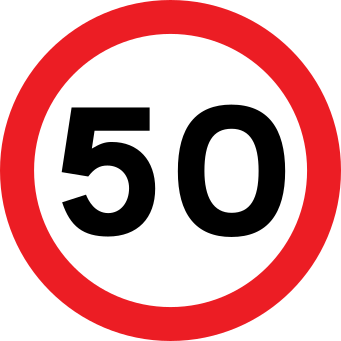
- Car towing a trailer or caravan: 50 mph on a single carriageway, 60 mph on a dual carriageway or motorway.
- Built-up or restricted roads: usually 30 mph where street lights apply, unless signs say otherwise.
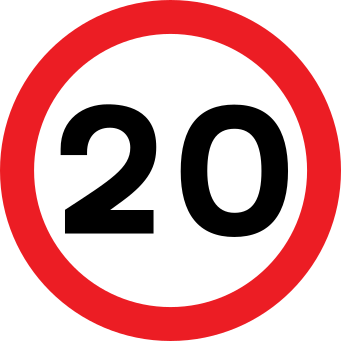
- Wales restricted roads: often 20 mph unless signs show another limit.
- Temporary limits, variable limits and local signs override the national speed limit.
Single carriageway or dual carriageway: the key difference
A single carriageway is a road where traffic in opposite directions is not separated by a physical central reservation. It can have one lane each way, or it can have two lanes in one direction and one in the other. The number of lanes is not the deciding factor.
A dual carriageway has a central reservation separating opposing traffic. That central reservation might be a grass verge, a barrier, raised kerbs or another physical separation. If there is no central reservation, it is not a dual carriageway for speed limit purposes, even if it feels wide and fast.
This catches learners out on wide urban roads and rural overtaking sections. I often hear, “It has two lanes, so it must be 70.” Not necessarily. On test, that misunderstanding can lead to speeding, and exceeding the speed limit is commonly treated very seriously by examiners.
- One lane each way with no central reservation: single carriageway.
- Two lanes one way and one lane the other, with no central reservation: still single carriageway.
- Opposing traffic separated by a physical central reservation: dual carriageway.
- A painted line or hatched markings alone do not make it a dual carriageway.
- Slip roads may have their own signed limits before you join the main road.
What driving examiners actually mark
On the practical test, the examiner is not looking for a memorised speech about speed limits. They are looking to see whether you notice signs, understand the road, and choose a safe, legal speed. Speed faults can appear under areas such as response to signs and signals, progress, use of speed, planning and awareness, depending on what happened.
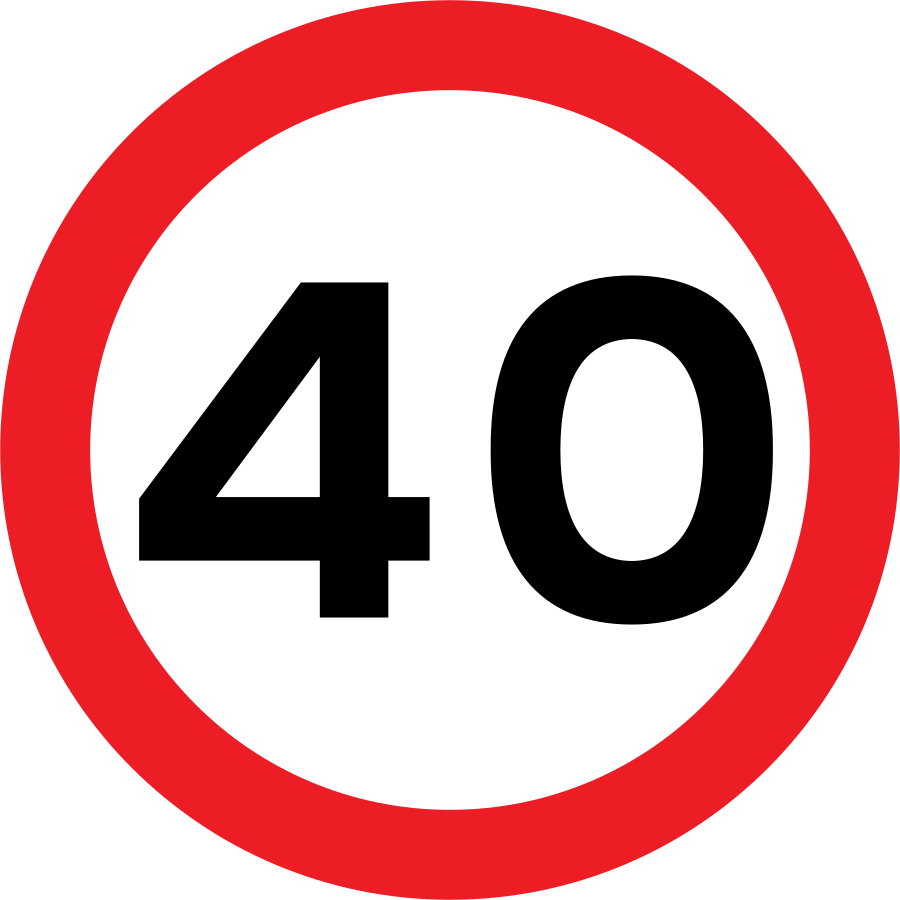
If you go over the speed limit, even briefly, the result depends on the circumstances, but do not assume it will be ignored. If you miss a 30 sign and continue at 40, or you treat a single carriageway national speed limit as 70, that can easily become a serious fault. If you drive far too slowly after an NSL sign for no good reason and hold up traffic, that can also be marked because you are not making reasonable progress.
A good test standard drive is not about charging up to the limit every time. It is about showing judgement. If the road opens, visibility is good and the vehicle ahead is well clear, you should build speed confidently. If there are bends, parked vehicles, mud, rain, junctions or horses, you may need to stay well below the maximum.
- Exceeding the limit: likely serious if clear and avoidable, especially near schools, villages or lower-limit terminals.
- Misreading the road type: treating a single carriageway as 70 mph can be a test-losing error.
- Poor progress: staying at 35-40 mph on a clear 60 mph road without reason may be marked.
- Late reaction to signs: braking harshly after the sign shows poor planning.
- Inappropriate speed for conditions: legal speed can still be unsafe.
The sign gives a maximum, not a target
The phrase I use with pupils is: “limit, not target.” The national speed limit is the highest speed legally allowed in ideal circumstances for that vehicle and road type. You still have to drive at a speed that lets you stop safely within the distance you can see to be clear.
The Highway Code is clear that stopping distances increase with speed, and rule 126 reminds drivers to leave enough space to stop safely. Rules 227 and 230 also warn that stopping distances can be at least double in wet weather and can be ten times greater on icy roads. Those figures are published in The Highway Code and are not just theory; you feel them very quickly in a real car.
On rural national speed limit roads, I regularly see learners become fixated on “getting to 60” just as the road starts bending through trees or passing farm entrances. That is the wrong priority. The correct priority is position, observation and the ability to stop. If you can only see 40 mph worth of road, 40 may be the right speed even though the sign says NSL.
Where the limit starts, ends and changes
A speed limit begins at the sign, not fifty metres later when it feels convenient. If you are moving from a 60 mph road into a 30 mph village, you should be down to 30 by the time your vehicle reaches the 30 signs. Coasting through the gateway at 38 and then easing down is exactly the sort of thing an examiner can mark.
The national speed limit sign is often used when leaving a lower limit, such as a village or a 40 mph stretch. You may also see it on the exit from roadworks. Once you pass it, the lower limit has ended, but you still need to assess the road before increasing speed. Do not accelerate hard just because the sign has appeared.
Repeaters are smaller signs placed along some roads to remind you of the limit. On restricted roads with street lights, you may not see regular 30 mph repeaters, because the system of street lighting is part of how the limit is indicated. On faster roads, repeaters and road layout help you confirm what applies, but if you are unsure, choose the safer legal option until you can confirm the limit.
- Slow down before a lower speed limit sign, not after it.
- Do not accelerate until you have passed the higher limit sign and checked the road ahead.
- Street lights can indicate a restricted road limit unless signs show otherwise.
- Roadworks and temporary signs override the normal limit.
- If signs and sat nav disagree, obey the road signs.
Vehicles where the national speed limit is lower
Most learners take lessons and tests in a category B car, so the car limits are usually enough for the practical test. After passing, however, many new drivers get behind the wheel of vans, tow small trailers, or drive work vehicles. The national speed limit may then be lower than it is for a car.
For example, a car towing a trailer or caravan is limited to 50 mph on single carriageways and 60 mph on dual carriageways and motorways. Many goods vehicles and some vans also have lower national limits, depending on weight and classification. A car-derived van can be treated differently from a larger goods van, so do not guess from the shape of the vehicle alone.
If you drive a work van, check the vehicle documents, employer guidance and current Highway Code rule 124 before assuming you can do car speeds. The police and courts will not accept “I thought it was like my instructor’s car” as a good explanation, and for new drivers the consequences of points can be especially harsh.
- Check the V5C or employer information for the vehicle classification.
- Towing usually reduces your national speed limit.
- Some vans are not allowed to use the same limits as cars.
- Motorhomes, buses and goods vehicles can have different limits.
- The Highway Code speed-limit table is the place to check the current rules.
Penalty points, new drivers and why it matters
Speeding is not just a test issue. A fixed penalty for speeding is commonly £100 and 3 penalty points, according to GOV.UK guidance, although penalties can vary and more serious cases may go to court. Figures and enforcement processes can change, so check current official guidance if you receive a notice.
New drivers need to be particularly careful because if you get 6 or more penalty points within 2 years of passing your first driving test, your licence can be revoked under the New Drivers Act. That means you would need to apply for a provisional licence again and pass both theory and practical tests before driving unaccompanied.
In lessons, I try to build the habit before the test: see the sign, say the limit in your head, match it to the road type, and then choose a safe speed. That habit protects your licence and keeps your driving calmer.
- 1Spot the sign early and say “national” to yourself.
- 2Identify the road: single carriageway, dual carriageway or motorway.
- 3Apply the correct limit for your vehicle, not just for a car in general.
- 4Check for hazards, weather, bends, junctions and traffic.
- 5Build speed smoothly only if it is safe and useful.
- 6Keep scanning for the next lower limit sign.
Common questions
Does the national speed limit sign mean 60 mph?
Not always. In a car it normally means 60 mph on a single carriageway, but 70 mph on a dual carriageway or motorway. It can also mean a lower limit for vehicles such as cars towing trailers, some vans and larger goods vehicles.
How do I know if a road is a dual carriageway for the speed limit?
Look for a physical central reservation separating traffic going in opposite directions. The number of lanes does not decide it. A road with two lanes each way but no central reservation is still a single carriageway for speed limit purposes.
Can I fail my driving test for going too slowly after a national speed limit sign?
Yes, if there is no good reason and your slow speed affects progress or other road users. An examiner expects you to make safe, reasonable progress when conditions allow. However, staying below the maximum is correct if there are bends, poor visibility, hazards or bad weather.
Do I have to be at 30 mph before I reach a 30 sign after an NSL road?
Yes. You should reduce speed before the sign so that you are at or below the new limit as you pass it. Braking late after entering the lower limit is a common learner fault.
What does the national speed limit sign mean in Wales?
On open roads, the national speed limit sign works in the same basic way: the limit depends on road type and vehicle type. The important difference for learners is that many restricted roads in Wales are now 20 mph by default unless signs show another limit, so do not assume a street-lit road is 30.
Should I trust my sat nav speed limit or the road signs?
Obey the road signs. Sat navs can be out of date, especially near roadworks, new housing estates and recently changed local limits. If you are unsure, slow to a safe legal speed and look for confirmation from signs and the road environment.
Browse driving lessons
Reading about it only gets you so far. Our instructors drill this with you in the car, on the roads around your test centre.