
The short version
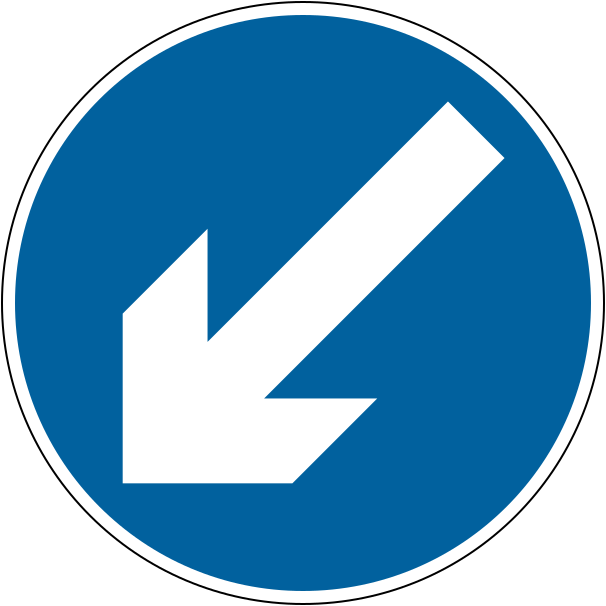
- Keep left unless road markings, signs or your route tell you otherwise.
- Choose your position early so other road users can understand your plan.
- Avoid drifting between lanes, especially at roundabouts and junctions.
- Leave safe clearance from parked cars, cyclists and vulnerable road users.
- On test, examiners mark late lane changes, poor lane control and misleading positioning.
What road positioning and lane discipline mean
Road positioning is where you place your vehicle on the road. Lane discipline is how well you choose, enter and maintain the correct lane. For a learner or new driver, the aim is simple: be in the right place, at the right time, without surprising anyone. That includes normal driving on the left, taking up the correct position for turns, following lane arrows, and staying within your lane on roundabouts and multi-lane roads.
In lessons, I often see learners think of positioning only when they are turning. In reality, it matters all the time. If you sit too close to parked cars, clip the inside of a bend, drift across a lane line, or move right too early for a turn, you create uncertainty. Other drivers start guessing what you are doing, and that is when small errors become dangerous.
On the driving test, the examiner is not looking for perfection in a robotic sense. They are looking for safe, controlled and predictable positioning. A brief correction within your lane may be fine. A lane change without adequate observation, straddling two lanes for no reason, or cutting across another vehicle’s path can become a serious or dangerous fault depending on the risk created.
- Road positioning is the physical placement of your vehicle.
- Lane discipline is choosing and keeping to the correct lane.
- Good positioning makes your intentions easier to read.
- Poor positioning often leads to steering, mirror and signalling faults.
- Examiners judge the effect of the fault, not just the movement itself.
The basic rule: keep left, but read the road
The Highway Code, Rule 160, tells drivers to drive on the left and keep well to the left on right-hand bends. Rule 133 explains lane markings and Rule 134 covers lane discipline, including keeping in your lane when traffic is moving in queues. This article is general guidance for learners, not legal advice.
The phrase ‘keep left’ does not mean hugging the kerb. You still need a safe line, clearance from drains, debris, cyclists, pedestrians stepping off the kerb, and parked vehicle doors. A good normal driving position is usually around the centre of your lane, adjusted for hazards. If there are parked cars on the left, your position moves out. If there is oncoming traffic and limited space, your speed and judgement become more important than forcing through.
A common learner fault is treating the left kerb like a rail. The car ends up too close to the edge, then the learner makes repeated little steering corrections. It feels untidy and it gives you less time to react. I would rather see a learner hold a steady, sensible line with proper clearance than try to be ‘as left as possible’ and become unsafe.
Positioning for parked cars, cyclists and narrow roads
Parked cars are one of the biggest positioning tests in everyday driving. Leave enough room for a door to open, for someone to step out, or for a vehicle to move away. Where possible, I teach learners to plan early: mirrors, assess oncoming traffic, ease out smoothly, then return to normal position only when fully past the hazard. Do not swerve out late at the last moment.
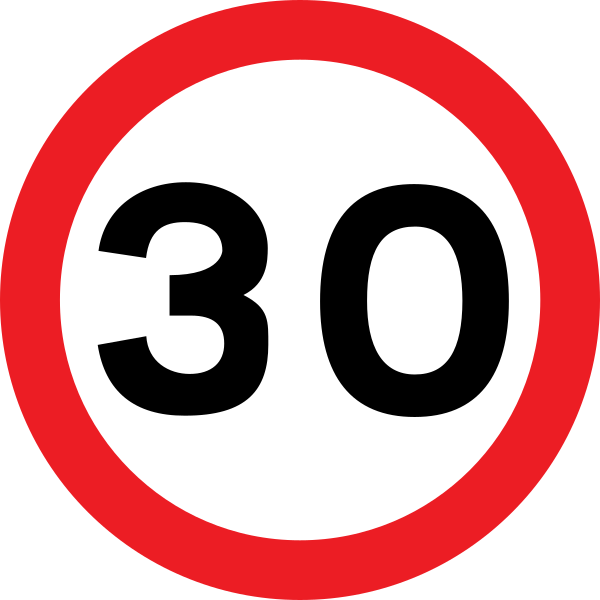
Cyclists, horse riders and pedestrians need extra space. Highway Code Rule 163 says you should leave at least 1.5 metres when overtaking cyclists at speeds up to 30 mph, and give more space at higher speeds. The Code also says to pass horse riders and horse-drawn vehicles at under 10 mph and allow at least 2 metres of space. These figures come from the published Highway Code and can be updated, so always check the current version.
On narrow roads, the safest position may be a compromise. If there is not enough room to pass a parked car and an oncoming vehicle safely, hold back. A frequent test fault is the learner continuing because they ‘had priority’, even though the gap was clearly too tight. Priority is not a force field. If your position would make another road user brake, mount the kerb, or squeeze through, wait.
- Look well ahead for parked vehicles and door-opening risk.
- Move out gradually after checking mirrors and the road ahead.
- Do not cut back in until the rear of your car has cleared the hazard.
- Give cyclists and horse riders the Highway Code clearance.
- If the road is too narrow, reduce speed or give way early.
Lane discipline on roundabouts
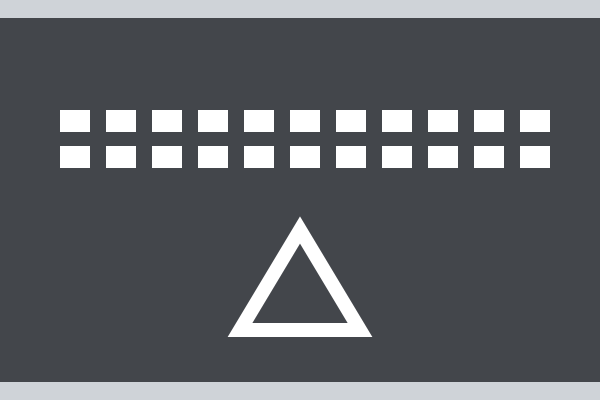
Roundabouts expose lane discipline very quickly. Learners often know the theory but lose the lane once steering, observation and signalling happen together. The usual guide is left lane for left or straight ahead, right lane for right turns or going full circle, unless signs or road markings say otherwise. The words ‘unless signs or markings say otherwise’ matter, because many UK roundabouts have local lane layouts that override the basic pattern.
The biggest fault I see is entering correctly, then drifting across a lane while going around. Sometimes the learner follows the curve of the kerb rather than the lane markings. Sometimes they look at the exit too early and steer towards it, cutting across another driver. Examiners may mark this as lane discipline or observation, and if another vehicle is affected it can quickly become serious.
Use the approach to reduce the workload. Read the destination board, choose the lane early, check mirrors, signal if needed, and position decisively. Once on the roundabout, look where your lane goes, not just where your exit is. Before exiting, check mirrors, especially the left mirror if leaving from an inner lane, and signal left when it will help others without misleading them.
- 1Read the roundabout signs and lane arrows early.
- 2Choose your lane before the give-way line, not on it.
- 3Enter only when the path is safe, then stay in your lane.
- 4Follow the lane markings around the roundabout.
- 5Check mirrors before changing lane or exiting.
- 6Signal left to leave when it is useful and not misleading.
Lane discipline on dual carriageways and motorways
On dual carriageways and motorways, lane discipline becomes more about planning than steering. Highway Code Rule 264 says you should keep in the left lane unless overtaking. When you have finished overtaking, move back to the left when it is safe. Sitting in the middle or right lane unnecessarily is poor discipline and can frustrate traffic behind, but moving left too soon and cutting up the vehicle you passed is also unsafe.
Learners who practise on dual carriageways often make two opposite mistakes. Some stay left at all costs and run up behind a slower vehicle, then make a rushed lane change. Others move out early and remain there long after the overtake is complete. The better habit is mirror, signal if needed, manoeuvre, make progress, then return left with a safe gap visible in your interior mirror.
Rule 268 says you must not overtake on the left or move to a lane on your left to overtake, although in congested conditions traffic in left lanes may sometimes move faster than traffic to the right. For learner drivers, the practical point is to avoid weaving. Choose a lane for a reason, hold it steadily, and only change when there is a clear benefit and a safe gap.
- Keep left unless overtaking or following signs and markings.
- Check mirrors before every lane change, especially the relevant side mirror.
- Signal when it will benefit other road users.
- Avoid sitting in the middle or right lane after an overtake.
- Do not weave between lanes to gain a small advantage.
Positioning at junctions and bends
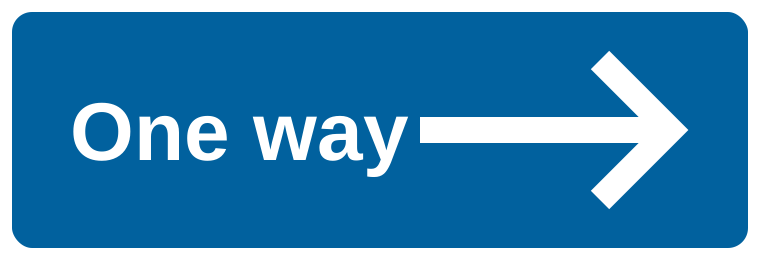
At junctions, your road position tells people what you intend to do. For a left turn, position normally to the left without swinging out first. For a right turn, move towards the centre line when it is safe and useful, but do not cross the line or intimidate oncoming traffic. On one-way streets, the correct position for turning right is usually towards the right-hand side, unless road markings direct you differently.
A classic learner error is ‘banana steering’ at turns: moving left before turning right, or moving right before turning left. It often comes from worrying about the kerb. In a car, you rarely need a big swing for an ordinary junction. Set your speed early, look into the new road, and steer smoothly. If the turn is genuinely tight, go slower rather than taking an exaggerated position that misleads others.
Bends need a different mindset. Keep to your side of the road and adjust your speed so you can stop within the distance you can see to be clear, as the Highway Code advises in Rule 126. Do not cut the corner on right-hand bends, and do not let the car drift towards the centre line on left-hand bends. The fault that worries examiners is not just touching a line; it is showing that you could meet oncoming traffic in the wrong place.
What examiners mark as road positioning faults
In the practical test, road positioning can be marked under several headings, including normal driving, lane discipline, junctions, roundabouts and manoeuvres. The examiner looks at timing, safety and effect. If your position is slightly untidy but you correct it safely without affecting anyone, it may be a driving fault. If your position causes another road user to brake, swerve or hesitate significantly, it may become serious.
I tell learners not to chase the centre of the lane with tiny steering movements. Examiners prefer a calm driver who plans and holds a safe line. The faults that cost people are usually not mysterious: choosing the wrong lane then changing late, drifting on roundabouts, getting too close to parked cars, or positioning so badly at a junction that the intended direction is unclear.
Use this fault table as a quick self-check after lessons or private practice.
- Too close to parked cars: risk of doors opening, pedestrians appearing or mirrors clipping.
- Late lane change: usually caused by reading signs too late or not checking mirrors early.
- Straddling lanes: makes your path unclear and may block vehicles on both sides.
- Cutting a roundabout lane: often serious if another vehicle is alongside or behind.
- Wrong position for a turn: can mislead others or leave too little room to complete the turn.
- Returning left too soon after overtaking: risks cutting in before a safe gap has opened.
A simple practice routine for better lane control
Good lane discipline is built before you reach the hazard. The routine I use in the passenger seat is ‘look far, choose early, hold steady’. Looking far ahead gives your brain time. Choosing early prevents rushed steering. Holding steady keeps the car predictable. If you are always reacting at the last second, your lane position will look nervous even if you know the rules.
Practise on a mix of roads: quiet residential streets for parked-car clearance, simple roundabouts for lane holding, busier multi-lane roads for signs and arrows, and faster roads when your instructor says you are ready. Private practice can help, but the supervising driver must be qualified and insured for the vehicle, and the learner must follow provisional licence rules set by DVLA. Check the current DVLA guidance if unsure, as requirements can change.
After each drive, pick one positioning target rather than trying to fix everything. For example, ‘I will spot lane arrows earlier’ or ‘I will leave better clearance from parked cars’. Small, specific improvements work far better than vague advice like ‘stay in lane’. If you can explain why you chose your lane and you can keep it without affecting others, you are driving in the way examiners want to see.
- 1Look as far ahead as you can, not just at the car in front.
- 2Identify signs, lane arrows, parked vehicles and bends early.
- 3Check mirrors before any change in position.
- 4Choose a lane or road position for a clear reason.
- 5Adjust speed before steering if space is limited.
- 6Hold your line smoothly and avoid sudden corrections.
- 7Review one specific positioning point after the drive.
Common questions
What is the correct road position for normal driving in the UK?
Normally, you should drive on the left and keep a steady position within your lane. That does not mean driving close to the kerb; you still need safe clearance from drains, parked cars, pedestrians and cyclists. Use the centre of your lane as a general guide, then adjust for hazards.
Can I fail my driving test for being in the wrong lane?
Yes, if the lane choice creates risk, misleads others or leads to an unsafe late change. Being in the wrong lane is not automatically a fail if you deal with it safely, for example by continuing in that lane and following the road markings. The serious fault usually comes from panicking and cutting across.
How do I stop drifting between lanes on roundabouts?
Look at where your lane goes, not just at the exit you want. Slow down enough on approach so you have time to steer accurately, and follow the road markings around the roundabout. If you are leaving from an inner lane, check mirrors before moving across or exiting.
Should I always keep in the left lane on a dual carriageway?
You should keep left unless overtaking, following road signs or preparing for a right turn where permitted. After overtaking, move back left when there is a safe gap. Do not return left so early that you cut up the vehicle you have passed.
How much space should I leave when passing cyclists?
Highway Code Rule 163 says to leave at least 1.5 metres when overtaking cyclists at speeds up to 30 mph, and more space at higher speeds. If you cannot give enough clearance, wait until it is safe. The Highway Code can be updated, so check the latest official version.
What should I do if I realise I am in the wrong lane at a junction?
Stay calm and avoid a sudden swerve. Check mirrors and only change lane if it is clearly safe, legal and not too late. If it is not safe, follow the lane you are in and let your sat nav or examiner redirect you.
Browse driving lessons
Reading about it only gets you so far. Our instructors drill this with you in the car, on the roads around your test centre.