
The short version
- You pass with no serious or dangerous faults and 15 or fewer driving faults.
- A driving fault is not automatically a fail, but repeated faults in the same area can become serious.
- The examiner marks what they see at the time, not what you meant to do.
- Common problem areas are mirrors, junction observation, lane discipline, speed and hesitation.
- Your test report is most useful when you turn each marked box into a specific practice plan.
The driving test mark sheet explained in plain English
If you are searching for the driving test mark sheet explained, you probably want to know what the boxes mean, what counts as a fail and how to read the report you get after your practical test. In DVSA language, this is the driving test report. Many examiners now record the test digitally rather than on the old paper DL25 sheet, but the idea is the same: it is a record of faults seen during your test.
The key point is that the examiner is not giving you a score out of 100. They are assessing whether you can drive safely, legally and independently in normal road and traffic conditions. A blank box usually means no fault was recorded in that area. A marked box shows the type of fault and the section of driving it related to, such as use of mirrors, junctions, progress or control.
As an instructor, I often see learners focus on the number of faults and miss the important part: the pattern. One fault for mirrors might be a small lapse. Several faults in mirrors, especially before changing direction or speed, tells me the driver has not built a reliable observation routine. That is the sort of pattern an examiner will notice too.
- The report shows fault categories, not a percentage score.
- A driving fault is often called a minor, although DVSA uses the term driving fault.
- A serious fault means something potentially dangerous happened or could have happened.
- A dangerous fault means actual danger occurred to you, another road user or property.
- The same fault repeated can be treated more seriously, even if each one looked small on its own.
The three fault types: driving, serious and dangerous
DVSA explains that you can pass the car practical driving test with 15 or fewer driving faults, provided you do not make any serious or dangerous faults. Figures and test rules can change, so always check the latest DVSA guidance on GOV.UK before your test. This is general driving guidance, not legal advice.
A driving fault is a mistake that is not serious enough on its own to fail the test. Examples might include signalling a little late when no one is affected, touching the kerb gently during a manoeuvre without danger, or being slightly slow to move away when it is safe. Examiners still mark it because safe driving is about consistency, not just avoiding one big mistake.
A serious fault is marked when the mistake could have been dangerous. A dangerous fault is marked when actual danger is caused. In the car, the difference can feel tiny. For example, missing a mirror check before moving right could be a driving fault if nobody is affected, but it may be serious if there is a vehicle close behind that has to slow.
- Driving fault: a lower-level error, but still recorded.
- Serious fault: a potentially dangerous error, usually a test fail.
- Dangerous fault: an error causing actual danger, a test fail.
- Repeated driving faults: can become serious if they show a pattern.
- Examiner intervention: verbal or physical help often indicates a serious or dangerous issue, depending on the situation.
What is actually on the driving test report
The exact layout can vary between the old paper sheet and the digital report, but the headings are familiar to instructors and examiners. You will see areas covering control, moving off, mirrors, signals, junctions, positioning, speed, progress, awareness and planning, pedestrian crossings, manoeuvres and ancillary controls. Eco-safe driving can also be noted, although it does not decide the result in the same way as safety faults.
The report is arranged around skills, not around the route. That means a fault at a roundabout might be marked under junctions, mirrors, signals, positioning, lane discipline or response to road signs, depending on what actually went wrong. Learners often say, “I failed on the roundabout.” The report usually tells a more precise story, such as poor lane discipline on approach or not checking the right mirror before changing lanes.
You may also see items relating to the eyesight check, vehicle safety questions, the controlled stop if used, and the reversing exercise selected on the day. The DVSA car test normally lasts about 40 minutes, includes about 20 minutes of independent driving, and may include an emergency stop. Those timings and test content are published by DVSA and should be checked on GOV.UK for any updates.
- Control: steering, pedals, gears, clutch, braking and parking brake use.
- Observations: mirrors, blind spots, looking properly at junctions and during manoeuvres.
- Road position: normal driving position, lane discipline and position for turning.
- Decision-making: meeting traffic, crossing traffic, overtaking, speed choice and progress.
- Legal responses: traffic lights, road markings, road signs and pedestrian crossings.
How examiners decide which box to mark
Examiners mark the effect of your driving, not your intention. You might know you were planning to look in the mirror, but if the car moved before the check, the fault is judged on what happened. This is why I tell learners that a test drive needs to look safe from outside your head. Your routines have to be visible, timed and linked to the car’s movement.
Context matters. A late signal on an empty road may be a driving fault. The same late signal with a cyclist behind you or a car waiting at a side road may become serious because another road user is affected. A small roll back on a hill may be a driving fault if controlled immediately, but serious if it causes the driver behind to brake or if the examiner has to step in.
The specific fault that costs people is often not dramatic. It is usually a missed final check before changing position. Moving off from the left without checking the right blind spot, drifting lanes at a roundabout without a mirror check, or pulling out around a parked car while an oncoming vehicle is already committed are all common test-ending moments.
- Mirrors: driving fault if a check is late with no effect, serious if someone behind is affected.
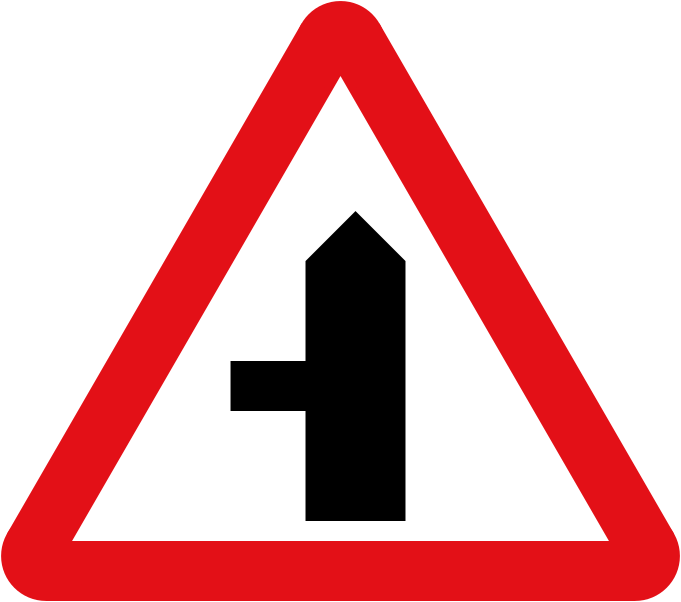
- Junction observation: serious if you emerge when you cannot see properly or make another vehicle slow sharply.
- Speed: driving fault for being slightly over-cautious, serious for entering a hazard too fast to deal with it safely.
- Positioning: driving fault for a minor lane wobble, serious for using the wrong lane and affecting traffic.
- Manoeuvre control: driving fault for a small correction, serious for mounting the kerb or ignoring nearby road users.
How faults are marked during each part of the test
The first marked part can be the eyesight check. For the car test, DVSA says you must be able to read a number plate from 20 metres, using glasses or contact lenses if you need them. If you cannot meet the eyesight requirement, the test will not continue. This figure is from DVSA guidance and, like all official requirements, should be checked on GOV.UK in case it changes.
The vehicle safety question, often called tell me, is normally asked before you drive. The show me question is asked while driving. A wrong answer or a loss of control while trying to operate a control can be marked. In lessons, I see learners overthink this. The examiner is not looking for a mechanic; they are checking that you can answer basic safety questions and operate controls without compromising control of the car.
During the main drive, faults are recorded as they happen. Independent driving does not mean you are on your own or that you fail for taking a wrong turn. If you go the wrong way safely, the examiner will redirect you. The mark sheet cares about the safety of the decision, not whether you followed the sat nav perfectly.
- 1Eyesight check: read the number plate at the required distance.
- 2Tell me question: answer a basic vehicle safety question before moving off.
- 3General driving: deal with normal roads, junctions, traffic and speed limits.
- 4Independent driving: follow sat nav directions or traffic signs safely.
- 5Manoeuvre: complete the selected reversing or parking exercise under control.
- 6Possible controlled stop: stop promptly and safely if the emergency stop is requested.
- 7Show me question: operate a control safely while driving.
The most common mark sheet areas learners ask me about
Use of mirrors is one of the biggest misunderstandings. Examiners do not want random mirror glances every few seconds. They want effective checks before you signal, change speed or change direction. If you check too early, then traffic changes, the check may not help. If you check after you have already started braking or steering, it is too late.
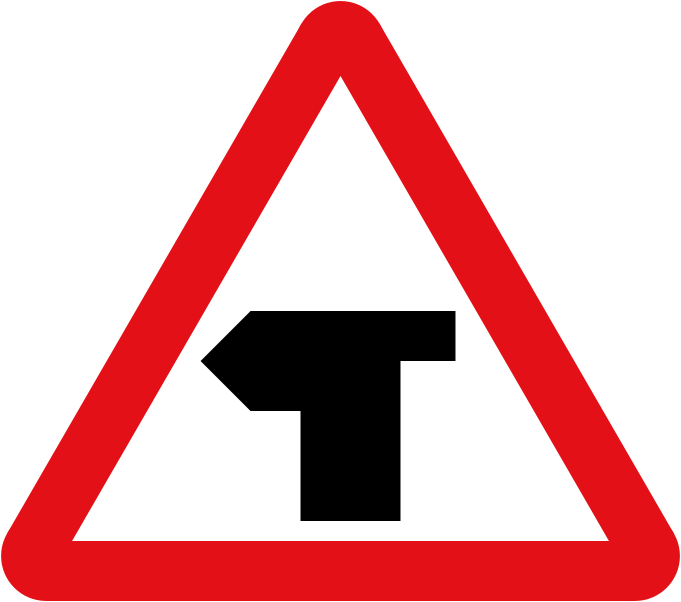
Junctions are another common area because several skills overlap. At a T-junction, the examiner may be judging approach speed, position, observation, clutch control, steering, decision-making and whether you cut the corner. A learner might think the fault was “stalling”, but the sheet may show junction observation because they looked only one way before emerging.
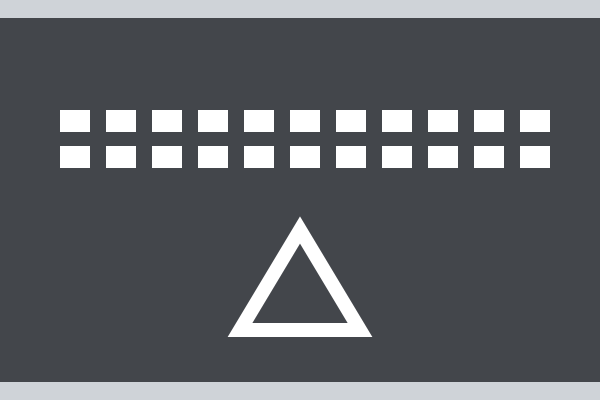
Progress and undue hesitation are not about rushing. Highway Code Rule 146 says you should adapt your driving to the appropriate type and condition of road. On test, that means making safe, positive decisions when it is clearly safe to go. Sitting at an empty roundabout for no reason, stopping at a clear give way line, or repeatedly missing safe gaps can be marked.
- Mirror routine: centre and relevant side mirror before signalling, braking, changing lane or turning.
- Junction routine: slow enough to look properly, position correctly and decide without panic.
- Roundabouts: pick the correct lane early, keep lane discipline and check before exiting.
- Speed choice: drive up to the limit when safe, but reduce for hazards, bends, weather and traffic.
- Hesitation: wait when you need to, but do not refuse clear safe opportunities.
What happens when you get the result
At the end of the test, the examiner will tell you whether you have passed or failed and normally offer a short debrief. Your instructor can listen if you want them there. If you pass, you receive a pass certificate and can usually drive straight away, provided you are insured to drive that vehicle. The examiner can send your licence details to DVLA for the full licence to be issued if your details are correct.
If you do not pass, the examiner will explain the serious or dangerous fault and may mention the most important driving faults. The report is there so you and your instructor can plan your next lessons. DVSA rules currently say that after failing a car practical test, you must wait 10 working days before taking another one. This waiting period is published by DVSA and can change, so check GOV.UK when rebooking.
Try not to argue the result at the roadside. You can ask a calm question if you do not understand a fault, but the examiner cannot turn the debrief into a full lesson. In my experience, the best debrief questions are specific: “Was that marked because I moved before checking the blind spot?” is far more useful than “But was that really dangerous?”
How to use your mark sheet to improve before the next test
The worst way to use the driving test report is to treat it as a list of embarrassing mistakes. The best way is to turn it into a training plan. I usually start with the serious or dangerous fault first, then look for repeated driving faults. A single mark in ancillary controls is less urgent than four marks in junction observation.
Do not practise only the road where the fault happened. If your report shows lane discipline at one roundabout, the skill is lane planning and mirror use, not memorising that roundabout. Examiners can use different routes and traffic will never be identical. Your aim is to fix the habit so it works anywhere.
Bring the report to your next lesson if you have one. If you are practising privately, make sure your supervising driver understands the exact fault rather than giving vague advice. “Be more confident” is not a plan. “Check the right mirror and right blind spot before moving out around parked cars, then decide whether the oncoming traffic has priority” is a plan.
- 1Read the result first: identify any serious or dangerous fault.
- 2Highlight repeated driving faults in the same category.
- 3Write the real driving situation next to each mark, such as roundabout exit or hill start.
- 4Practise the underlying skill on several different roads.
- 5Ask for a mock test once the fault has stopped appearing in lessons.
- 6Rebook only when the issue is fixed under normal traffic pressure.
Common questions
Is the driving test mark sheet the same as the driving test report?
Yes, learners often call it the mark sheet, while DVSA commonly refers to the driving test report. Many tests are recorded digitally now, but it still shows the areas assessed and any driving, serious or dangerous faults.
How many minors can you get on the UK driving test?
DVSA says you can pass with 15 or fewer driving faults, often called minors, as long as you do not make a serious or dangerous fault. Official figures and rules can change, so check the latest DVSA guidance on GOV.UK.
Can one small mistake fail a driving test?
Yes, if the mistake is judged serious or dangerous. A missed mirror check, wrong lane or poor observation may look small, but if it affects another road user or creates potential danger, it can be marked as a fail.
Do you fail if you go the wrong way on independent driving?
Not automatically. If you take a wrong turn safely, the examiner will redirect you. You are marked on safety, control and decision-making, not on perfect navigation.
What does repeated driving fault mean on the mark sheet?
It means the examiner has seen the same type of lower-level fault more than once. Repetition matters because it can show a weakness in your normal driving routine, and enough repeated faults in one area can become serious.
Can I appeal a driving test result if I disagree with the mark sheet?
You can complain or appeal through the official DVSA process, but an appeal does not normally change a fail into a pass. This is general guidance, not legal advice, so check GOV.UK for the current procedure and time limits.
See our pass guarantee
Reading about it only gets you so far. Our instructors drill this with you in the car, on the roads around your test centre.